India's Total Energy Consumption and Demand Explained
India's Total Enegry Needs: where does India get its oil, coal and gas from? Explore India's gets its energy from, including India's Total Coal Consumption and Deman, India's total oil consumtion and demand and India's total Gas consumtion and Demand. Learn about India’s energy Consumption and Demand, import dependence, energy security challenges, and renewable energy transition amind the West Asia disturbance.
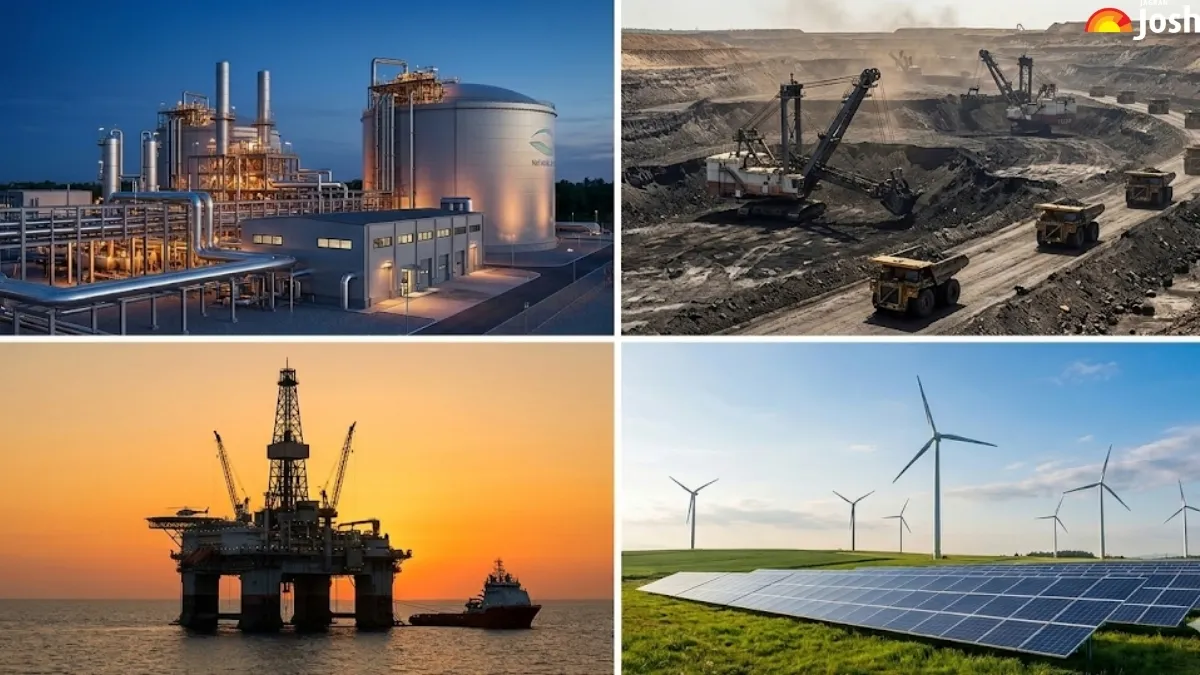
Key Points
- India relies heavily on fossil fuels: coal (55%), petroleum (30%), and natural gas (6%).
- Petroleum consumption for FY27 is estimated at roughly 250.8 million metric tonnes.
- Renewables and nuclear energy contribute 9% and are steadily increasing.
India’s energy system is the backbone of its fast-growing economy, making the question—“where does India get its energy from?” more relevant than ever as the third-largest energy consumer in the world.
India heavily relies on fossil fuels—especially coal, petroleum, and natural gas to sustain economic growth, industrial expansion, and rising household demand as India is world’s third-largest energy consumer.
India’s Total Energy Consumption, Demand and Source
India's energy consumption is still dominated by fossil fuels, though renewables are growing steadily. India is the 3rd largest energy consumer which reflects the expanding economy Despite rapid progress in renewable energy, traditional sources such as coal, petroleum, and natural gas remain the backbone of India’s energy system.
Sector-wise India Energy demand consumption drivers such as urbanisation, industrial growth, expanding manufacturing sector, rising middle class and rural electrification
India’s Total Energy Consumption Pattern
-
Coal: 55%
-
Oil (Petroleum): 30%
-
Natural Gas: 6%
-
Renewables + Nuclear: 9% combined

1. Coal (55%): Demand, Consumption & Import
Coal continues to dominate India’s energy mix, primarily due to its abundant domestic availability and cost-effectiveness. It fuels nearly 70% of electricity generation, ensuring base-load power supply for industries and households. However, this dependence also contributes significantly to carbon emissions and environmental degradation.
India holds the 5th largest coal reserves globally, ensuring energy availability with relatively lower import dependence. Coal-based thermal plants provide continuous and stable electricity, essential for industrial and urban demand.
Total Coal Demand in India & Consumption
Annual Consumption (1.2–1.3 Billion Tonnes): India’s high coal consumption reflects its structural dependence on thermal power for energy security.
-
Power Generation (70%): Majority of coal is used in thermal power plants.
-
Industrial Use (Steel & Cement): infrastructure and industrial growth.
-
1.2–1.3 billion tonnes annually: Reflects India’s heavy dependence on coal for energy security.
Top Coal Import Sources to India)
-
Indonesia (45–50%), Indonesia is the largest importer of coal to India
-
Australia (20–25%) high-grade coking coal
-
South Africa (10–15%)
-
USA & Others (5–10%)

2. Petroleum (Oil) 30%: Demand, Consumption & Import
Petroleum is the second-largest energy source, essential for the transport sector and industrial activities. However, with around 85% import dependence, oil exposes India to global price volatility, geopolitical risks, and trade imbalances, making it a critical concern for energy security.
Total Oil Demand in India:
India's total petroleum product consumption for FY2026-27 is estimated at roughly 250.8 million metric tonnes (TMT)
-
Consumption (5 Million Barrels/Day): India’s oil demand reflects rapid economic growth and transport dependency.
-
Transport Sector (Largest Consumer): Petroleum fuels mobility, logistics, and aviation, making it critical for economic activity.
-
Petrochemicals & Industry: Used in plastics, chemicals, and manufacturing, contributing to industrial value chains.
Top Petroleum Import Sources to India:
India relies heavily on imports around 85% of its total oil; Top Oil Import Sources of India
-
Iraq (20–23%): Iran is Oil supplier to India due to the conflict in the West Asia Russia became is the Largest Oil supplier to India
-
Saudi Arabia (16–18%): Long-term strategic partner ensuring energy security.
-
Russia (18–20%): Rising share post-2022 due to discounted crude imports.
-
UAE (10–12%): Key regional supplier with strong trade ties.
-
USA (5–8%): Diversification strategy to reduce Middle East dependence.

3. Natural Gas (6%): Demand, Consumption & Import
Natural gas is increasingly seen as a transition fuel, offering a cleaner alternative to coal and oil. Its usage is expanding in fertilizers, power, and city gas distribution, but its share remains limited due to infrastructure constraints, pricing issues, and reliance on Liquefied Natural Gas (LNG) imports.
Consumption (60–65 BCM Annually), Natural gas has a moderate but growing share in India’s energy mix.
-
Fertilizer Sector: Essential for urea production, supporting agricultural productivity.
-
Power Sector: Acts as a cleaner alternative to coal in electricity generation.
-
City Gas Distribution (CNG/PNG): Promotes clean urban mobility and household energy use.

Top LNG Import Sources to India :
India Imports its 45–50% of LNG : India depends partially on global LNG markets to meet its energy demand.
-
Qatar (40–45%): Qatar is Largest LNG supplie to India
-
Australia (15–20%): Major exporter contributing to energy diversification.
-
USA (10–15%): Growing supplier due to flexible LNG contracts.
-
Russia & Others (10–15%): Emerging sources supporting supply diversification.
4. Renewables + Nuclear (9%): The Emerging Pillar of Sustainable Energy
India's renewable energy major sources are solar, wind, and hydropower, along with nuclear energy are steadily increasing their share 9% of total energy consumption. The government initiatives and global climate commitments are accelerating this shift, positioning renewables as the future driver of India’s energy transition.
Key Challenges in India’s Energy Sector
- Import Dependence: Heavy reliance on imported oil and gas increases economic vulnerability.
- Energy Security: Exposure to global disruptions affects supply stability and pricing.
- Environmental Concerns: Coal-heavy energy mix leads to high carbon emissions and pollution.
- Infrastructure Gaps: Inadequate pipelines, storage, and grid systems limit efficient distribution.
- Global LNG Volatility: Dependence on imports exposes India to international market fluctuations which impacts supply and pricing stability.
- Strategic Concerns of Oil Dependence such as
-
Price Volatility: Global crude price fluctuations directly impact inflation and fiscal stability.
-
Geopolitical Risks: Conflicts in West Asia can disrupt supply chains and energy security.
-
Current Account Deficit Pressure: High import bills increase economic vulnerability and currency pressure.
India, the world's third-largest energy consumer, heavily relies on fossil fuels like coal (55%), petroleum (30%), and natural gas (6%) to power its growing economy. While renewables and nuclear energy contribute 9% and are expanding, traditional sources remain dominant. This dependence creates challenges like import vulnerability, price volatility, and environmental concerns, despite efforts towards a cleaner energy transition.

Manisha Waldia is a distinguished content strategist with 5 years of experience crafting premium educational content for UPSC and State PCS, with a focus on deep conceptual analysis across Polity, Geography, History, and Environment. She currently brings this expertise to Jagran Josh, where she covers major national and international events, current affairs, and static general knowledge. Over her career, Manisha's specialized insights have led her to curate high-impact materials and serve as a UPSC Mains answer-evaluator for India’s top institutes—including Drishti IAS, Shubhra Ranjan IAS, Study IQ, GS Score, and PWonlyIAS. She has also worked alongside leading NGOs like Oxfam India and Avani Kumaon.
Contact: manisha.waldia@jagrannewmedia.com