Gujarat Makes Mental Health Support Mandatory in Schools: Check New Rules for Classes 9 to 12
Gujarat has made mental health support mandatory in schools for Classes 9 to 12. Check rules on counsellors, wellness teams, Mano-Mitra and student safety.
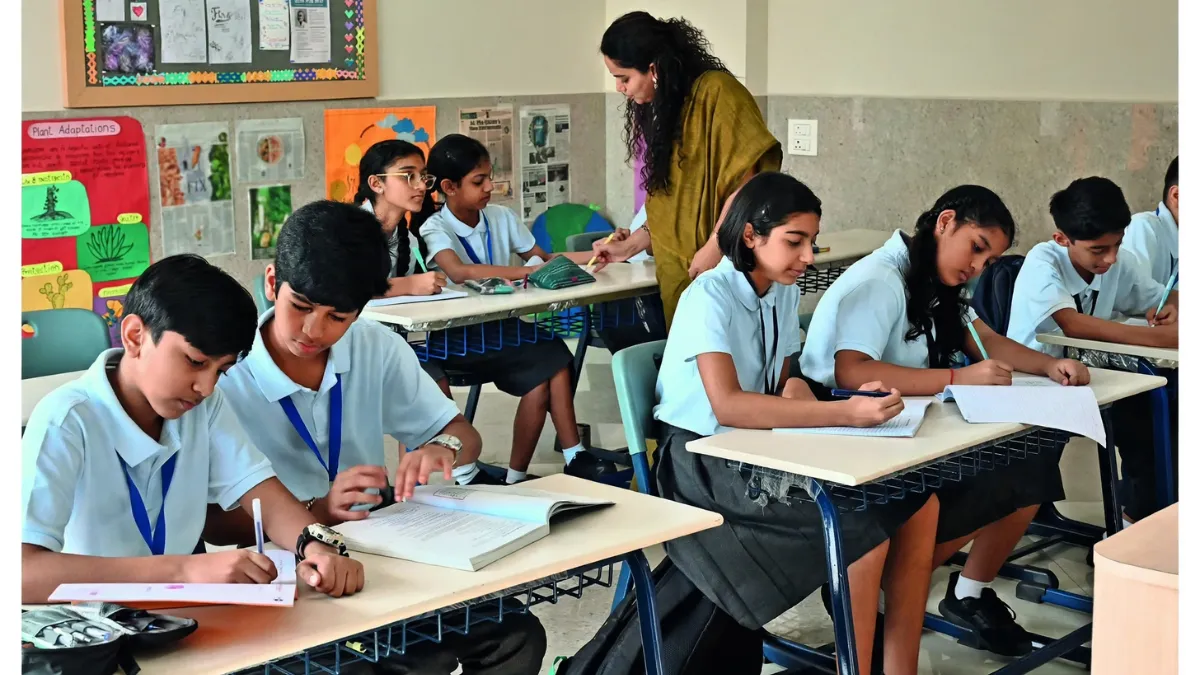
The Gujarat government has made mental health support and suicide prevention measures mandatory in schools for students of Classes 9 to 12. Under the new rules, schools affiliated with the Gujarat Secondary and Higher Secondary Education Board (GSHSEB) will have to set up wellness teams, provide counselling support and create systems to identify students facing emotional or mental distress.
The decision aims to ensure that students' mental health receives as much attention as their academic performance. The government has introduced these measures amid concerns about examination pressure, competition for marks, family expectations, excessive social media use and anxiety about future careers.
The new provisions have been introduced under the Gujarat Secondary and Higher Secondary Education Regulations, 1974. They are based on the Supreme Court's directions on student mental health and suicide prevention and also use the NCERT's UMMEED guidelines as a reference.
Gujarat School Mental Health Rules: Who Will Be Covered?
The new rules will apply to secondary and higher secondary schools affiliated with the Gujarat Secondary and Higher Secondary Education Board. They cover students studying in Classes 9, 10, 11 and 12.
| Details | Information |
| State | Gujarat |
| Applicable classes | Classes 9 to 12 |
| Schools covered | Schools affiliated with GSHSEB |
| Rules introduced under | Gujarat Secondary and Higher Secondary Education Regulations, 1974 |
| Main objective | Student mental health support and suicide prevention |
| Key measures | Wellness teams, counsellors and peer-support systems |
This means schools will have to create a formal system to identify students who may be struggling emotionally and connect them with appropriate support.
Every School Must Form a School Wellness Team
Under the new rules, every school offering Classes 9 to 12 must establish a School Wellness Team (SWT) at the beginning of each academic year. The team's work will also be reviewed every year.
The team will be responsible for looking after students' emotional well-being, identifying signs of mental distress and responding to emergencies.
The School Wellness Team will include the following members:
| Team member | Responsibility |
| School principal | Head of the team |
| Counsellor or designated teacher | Coordinator |
| Secondary-section teacher | Represents Classes 9 and 10 |
| Higher secondary-section teacher | Represents Classes 11 and 12 |
| School Management Committee representative | Represents the school management |
| Non-teaching staff member | Supports the team's work |
| Two student peer leaders | Help classmates through the Mano-Mitra initiative |
The team will receive training to recognise warning signs and guide students towards the right support.
Schools With 100 or More Students Must Appoint a Qualified Counsellor
One of the major provisions is the requirement to appoint a trained mental health professional. Schools with 100 or more students must appoint at least one qualified counsellor, psychologist or social worker who has training in child and adolescent mental health.
Schools with fewer than 100 students will not be required to appoint a full-time counsellor under this provision. However, they must establish formal arrangements with outside mental health professionals and nearby healthcare services.
| School strength | Requirement |
| 100 or more students | At least one qualified counsellor, psychologist or trained social worker |
| Fewer than 100 students | Formal arrangements with external mental health professionals and support services |
These arrangements may include nearby Community Health Centres (CHCs), Primary Health Centres (PHCs), the District Mental Health Programme and Tele-MANAS services.
Tele-MANAS is the government's national tele-mental health service that provides mental health support and guidance over the phone. It helps people access assistance without necessarily visiting a hospital or counselling centre.
What Is the Mano-Mitra Initiative?
The new rules also introduce a peer-support system called Mano-Mitra. The term refers to student friends who can offer initial emotional support to their classmates.
Schools will select two student peer leaders, one representing the secondary section and another representing the higher secondary section.
Their role will be to:
- Listen to classmates who want to share their concerns.
- Offer initial emotional support.
- Encourage students facing difficulties to seek help.
- Connect students with teachers, counsellors or other support services when professional assistance is needed.
Mano-Mitras are not trained counsellors or mental health professionals. Their role is to support classmates and guide them towards people who can provide appropriate help.
Extra Counselling During Board Exams and Important Academic Transitions
The government has also directed schools to provide additional mentoring and counselling during periods when students may experience greater academic pressure.
These include:
| Important period | Support required |
| Board examinations | Additional mentoring and counselling |
| Result announcements | Emotional support and guidance |
| Class 8 to Class 9 transition | Help students adjust to secondary education |
| Class 10 to Class 11 transition | Guidance about higher secondary education and subject choices |
These stages can bring changes in academic expectations, examination pressure and career decisions. The additional support is intended to help students manage these changes.
Schools Cannot Humiliate Students Over Marks or Exam Results
The new rules also seek to reduce unhealthy academic competition in schools.
Schools will not be allowed to separate or label students based on their examination marks or results. Publicly humiliating students, comparing them with classmates in ways that cause emotional distress, or making them feel inferior because of their academic performance will also be prohibited.
Instead, schools must create an environment based on equality, dignity, encouragement and cooperation.
The rules also encourage schools to organise activities such as:
- Yoga and meditation
- Art and music
- Gardening and dance
- Sports and other physical activities
These activities are intended to give students opportunities to relax, express themselves and maintain their overall well-being.
Teachers and Non-Teaching Staff Must Receive Mental Health Training
The new framework makes mental health training compulsory for all teaching and non-teaching employees at least twice a year. The training must be conducted by certified mental health professionals.
School staff will be trained to:
- Recognise early signs of mental distress
- Provide basic psychological first aid
- Identify possible warning signs of self-harm
- Respond appropriately during emergencies
- Connect students with qualified professionals when required
Psychological first aid means providing immediate, basic emotional and practical support to someone going through a difficult or distressing situation. It does not replace professional counselling or medical treatment.
What Must Schools Do If a Student Shows Signs of Self-Harm?
The regulations require schools to respond immediately if a student shows signs of self-harm, suicidal thoughts or serious mental distress.
If a student attempts self-harm, the student must not be left alone. The school must arrange appropriate medical or emergency assistance without delay and connect the student with the necessary support services.
Schools must also protect students' privacy. Information about their mental health and counselling records must remain confidential and should only be shared with authorised people directly involved in their safety, treatment or welfare.
Schools Must Provide Confidential Ways to Report Problems
Students should have safe and confidential ways to communicate their concerns to counsellors or designated teachers.
Schools will also be required to:
- Provide suggestion boxes for students to share concerns
- Display child helpline numbers prominently
- Display contact details of the School Wellness Team
- Establish confidential complaint-handling systems
These systems will also address bullying, cyberbullying, ragging, sexual harassment and discrimination based on caste, gender, religion, language, economic background or disability.
Cyberbullying refers to bullying or harassing someone through digital platforms such as social media, messaging applications, online games or other internet-based services.
Schools May Face Action for Failing to Respond to Serious Risks
The new rules also make schools accountable for responding to serious warning signs.
If a school knows, or should reasonably have known, that a student is at risk but fails to take timely and appropriate action, it may face institutional responsibility if that failure is found to have significantly contributed to serious harm, self-harm or a student's suicide.
Disciplinary or legal action may follow under applicable laws.
The regulations also provide for a district-level monitoring committee headed by the District Collector. It will monitor the implementation of the rules, review complaints and serious incidents, and recommend corrective measures. Schools will be required to follow the committee's directions.
What Are the NCERT UMMEED Guidelines?
The Gujarat government has adopted the NCERT's UMMEED guidelines as a reference framework for student mental health support.
UMMEED stands for:
| Letter | Meaning |
| U | Understand |
| M | Motivate |
| M | Manage |
| E | Empathise |
| E | Empower |
| D | Develop |
In simple words, these guidelines encourage schools to understand students' problems, motivate them, help them manage difficult situations, show empathy, build their confidence and support their overall development.
Read more:

Anjali is an education journalist with over a year of experience in digital and business journalism. She has previously worked with BW Businessworld and ANI, where she gained experience in news writing, editing, research, and fact-checking. At Jagran Josh, she writes education news and covers competitive exams and current affairs, with a keen interest in delivering accurate, informative, and reader-focused content. She holds a BA from Miranda House, University of Delhi, and a postgraduate diploma in English Journalism from the Indian Institute of Mass Communication (IIMC). Anjali enjoys reading and exploring new ideas and perspectives through books.


