CBSE Class 9 Social Science Exam Pattern 2026 with Marking Scheme and Topic-wise Weightage
The CBSE Class 9 Social Science curriculum is crucial for a strong base. Success requires understanding the exam structure and unit weightage for effective prioritization. The 80-mark theory paper assesses conceptual knowledge and application of social and political principles. Knowing the mark distribution and section breakdown is key to a strategic study plan.
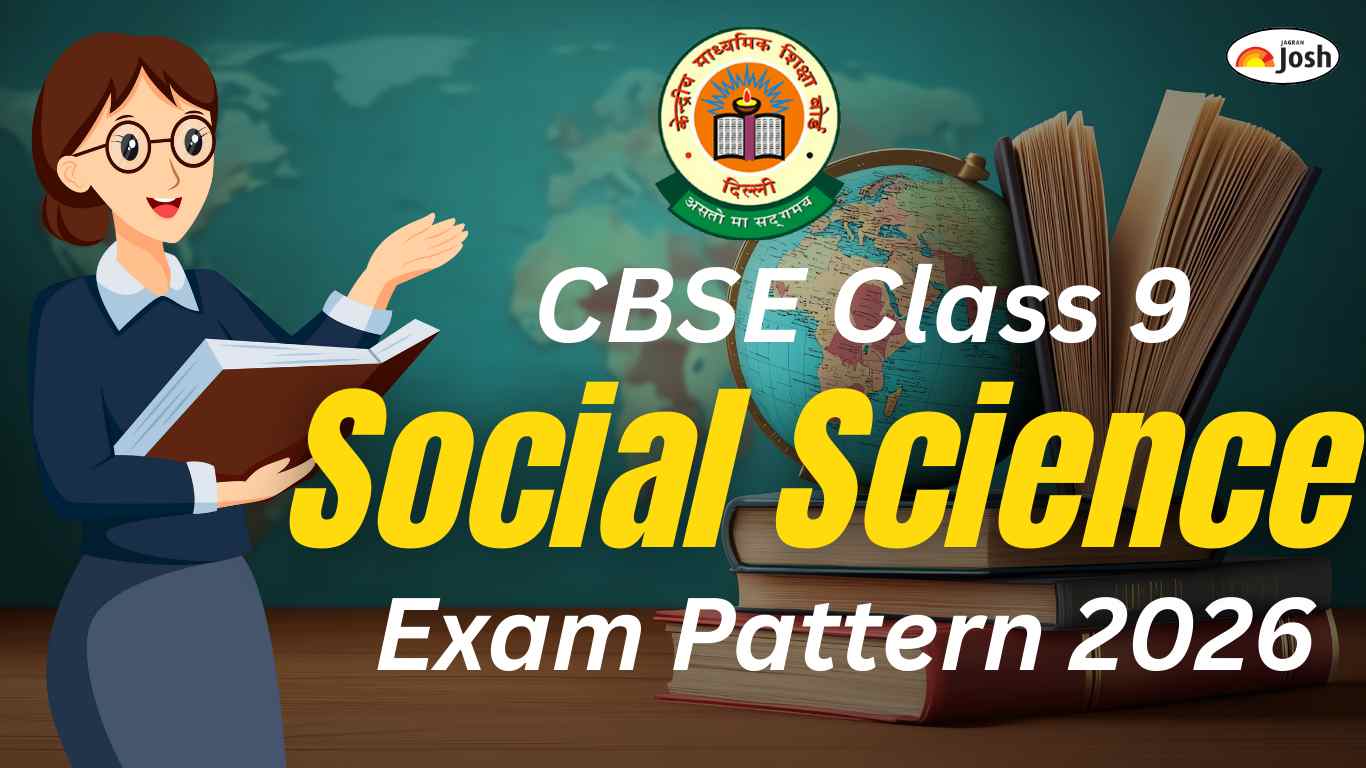
The CBSE Class 9 Social Science curriculum is essential for building a strong foundation for higher classes. To perform well in the final examination, students need a clear understanding of both the exam structure and the weightage assigned to each unit in the syllabus. This knowledge helps students prioritize their study efforts and allocate time effectively to different topics.
The examination is structured to test various skills, including conceptual knowledge, problem-solving abilities, and application of social and political principles. It covers all units of the syllabus, with a maximum of 80 marks for the theory paper. Knowing the mark distribution per unit and the paper's section-wise breakdown allows students to prepare a more strategic and targeted study plan.
Check: CBSE Class 9 Social Science Syllabus 2025-26 Downlaod PDF
CBSE Class 9 Social Science Exam Pattern
The following table details the structure of the CBSE Class 9 Social Science Question Paper for the 2026 examination, including the section-wise distribution of questions, question types, and the corresponding marks. This structure helps students understand how the 80-mark theory paper is organized.
Section | Questions | Type of Question | Marks per Question | Total Marks |
| A | 1 to 20 | Multiple Choice Questions (MCQs) | 1 | 20 |
| B | 21 to 24 | Very Short Answer (VSA) | 2 | 8 |
| C | 25 to 29 | Short Answer (SA) | 3 | 15 |
| D | 30 to 33 | Long Answer (LA) | 5 | 20 |
| E | 34 to 36 | Case-Based Questions (3 sub-parts) | 4 | 12 |
| F | 37a (History) | Map-Based Question | 2 | 5 |
| 37b (Geography) | Map-Based Question | 3 | N/A |
CBSE Class 9 Social Science Marking Scheme
The CBSE Class 9 Social Science curriculum is comprised of four distinct subjects: History, Geography, Political Science, and Economics. Review the detailed CBSE Class 9 Social Science Marking Scheme provided below.
Unit Name | Marks |
| Unit I India and the Contemporary World – II (History) | 20 |
| Unit II Contemporary India – II (Geography) | 20 |
| Unit III Democratic Politics – II (Political Science) | 20 |
| Unit IV Economics | 20 |
| Internal Assessment Periodic Assessment (5) + Portfolio (5) + Inter-Disciplinary Project (5) + Subject Enrichment Activity (Project Work) (5) | 20 |
| Total | 80 + 20 |
It is crucial for students to clear both the theory and internal assessment minimums and achieve the 33% overall aggregate to be declared successful in the subject.
To study well for the CBSE Class 9 Social Science exam, you must know the exam pattern and how the marks are divided. The exam is for 80 marks, split between four main subjects: History, Geography, Political Science, and Economics. Knowing how the marks are shared and what types of questions will be asked helps you plan your study time smartly. This careful approach, along with hard work, is the best way to get high marks and build a good base for your future studies.

Anisha Mishra is journalist with over 3 years of experience in covering the Indian education sector. She has worked extensively in the K12 domain, with focus on the state board as well as central board examinations, policy structure of seconday and higher secondary education as well as the entrance examinations like JEE, NEET, CLAT, etc. Her extensive experience in the domain has helped her provide students with concise accurate information in all aspectes of school life and education. Her key interest lies in decoding the changes in the curriculum, NEP implementation and changing education ecosystem in the country. Besides working, she enjoys traveling, exploring new places and cultures, and painting.



.jpg)

![[OUT] UPSSSC PET Admit Card 2026 LIVE: यूपी पीईटी एडमिट कार्ड जारी, upsssc.gov.in पर Direct Link](https://img.jagranjosh.com/images/2026/October/15102026/UPSSSC-PET-Admit-Card-2026.jpg)