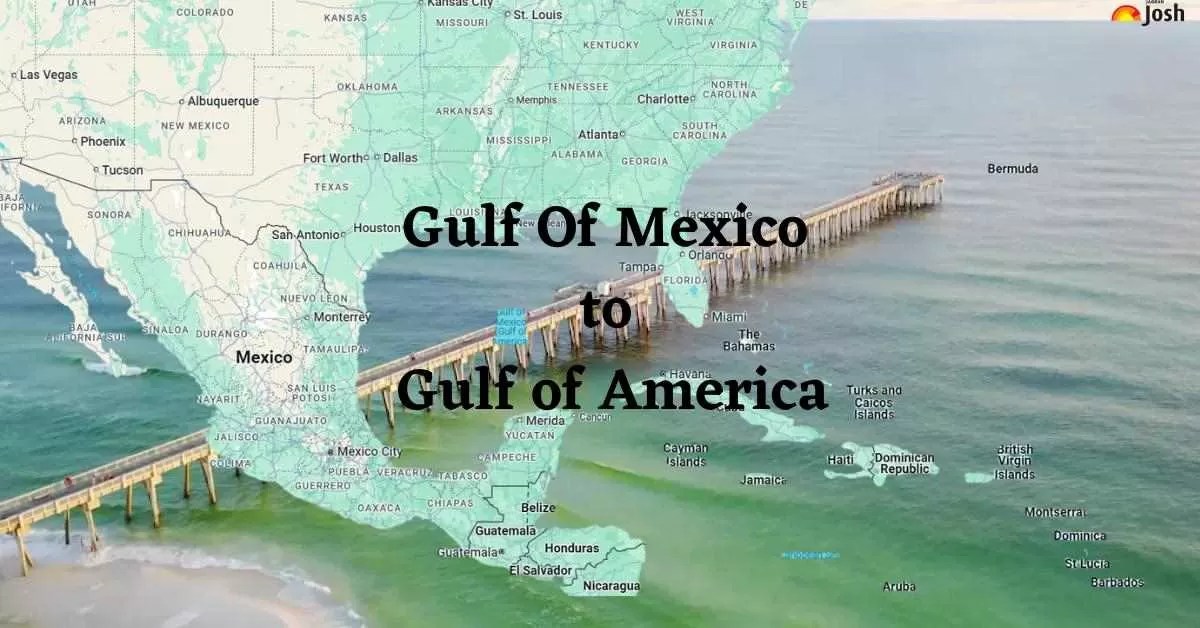
Gulf Of Mexico to Gulf of America: All you need to know
Google announced an official update on the U.S. Geographic Names Information System (GNIS) to change the name of the "Gulf of Mexico" to the "Gulf of America" for U.S. users. This renaming, initiated by Donald Trump’s executive order, has sparked global controversy, with Mexico rejecting the change and diplomatic tensions rising. Let’s explore this article in detail about why America changed its name
Recently, Google has given an official update on the U.S. Geographic Names Information System (GNIS), changing the name of the "Gulf of Mexico" to the "Gulf of America." In the United States, maps will display the name "Gulf of America," whereas in Mexico, it will appear as "Gulf of Mexico." For users in other regions, both names will be shown simultaneously.
The name shown in the Maps app depends on the user's location, which is determined by factors such as their phone's operating system (iOS or Android), SIM card, network settings, and locale. For those accessing Google Maps on a web browser, the displayed name is based on either the selected region in search settings or the device’s detected location if no preference is set.
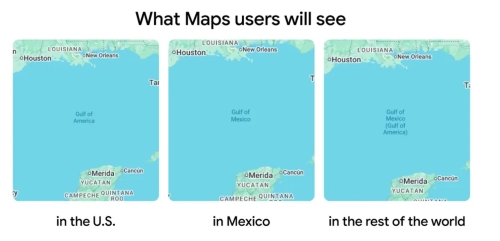
Source: blog.google
Understanding the Gulf of Mexico: Geography & Ownership
.jpg)
Source: google map
The Gulf of Mexico is a vast body of water bordered by three nations:
| Country | Territorial Waters | Exclusive Economic Zone (EEZ) |
| United States | 12 nautical miles | 200 nautical miles |
| Mexico | 12 nautical miles | 200 nautical miles |
| Cuba | 12 nautical miles | 200 nautical miles |
- No single country owns the Gulf of Mexico. Instead, each bordering nation controls specific portions of its waters based on international maritime laws.
- The United Nations Convention on the Law of the Sea (UNCLOS) grants coastal nations the right to manage natural resources within their Exclusive Economic Zones (EEZs), which extend 200 miles offshore.
- Beyond this limit, the Gulf is considered international waters, meaning no country has exclusive rights over it.
The Renaming Controversy: What Happened?
Trump’s Executive Order to Rename the Gulf
On his first day back in office, former President Donald Trump signed an executive order renaming the Gulf of Mexico to the "Gulf of America." According to Trump, this was meant to honor America’s history and legacy.
As part of this move, he also announced the renaming of Denali (Alaska’s highest peak) back to Mount McKinley, its original 19th-century name. He desires for the U.S. to take control of the Panama Canal, citing its importance for American trade and security.
Can the U.S. Legally Change the Name?
The United States has jurisdiction over its territorial waters (12 miles off its coast) and can call that portion "Gulf of America". However, Mexico and Cuba have their territorial waters, meaning the U.S. cannot enforce the name change beyond its borders. The name "Gulf of Mexico" is internationally recognized and appears in global treaties, maps, and legal documents.
Global Reactions to the Renaming
Mexico’s Response
Mexican President Claudia Sheinbaum Pardo rejected the renaming and called it a "historical insult" to Mexico. She wrote a formal letter to Google, demanding that U.S.-based maps use "América Mexicana" instead of "Gulf of America."
Cuba’s Position
Cuba has not officially responded to the renaming. However, Cuban officials have previously opposed unilateral changes to internationally recognized names.
The UK & Other Nations
The United Kingdom, along with other European countries, has stated that it will continue using the "Gulf of Mexico".
Implications of the Name Change
What Does This Mean for the U.S.?
The U.S. can enforce the name "Gulf of America" only within its territorial waters. However, the global community, including international organizations and maps, is unlikely to accept this change.
What Are the Possible Consequences?
- Diplomatic Tensions: Mexico and Cuba may see this as an aggressive political move.
- Economic Impact: It could affect U.S.-Mexico relations, trade agreements, and even Gulf-based industries like fishing and oil drilling.
- Legal Challenges: Other nations or organizations may challenge this name change in international courts.
Conclusion: Who Truly Owns the Gulf?
The Gulf of Mexico is shared by the U.S., Mexico, and Cuba—no single country owns it. While the U.S. can rename its territorial waters, the world at large is unlikely to accept "Gulf of America" as an official term.
This move raises critical questions about sovereignty, diplomatic relations, and the power of unilateral decisions in a globally connected world.

Prabhat Mishra is a Subject Matter Expert and digital journalist with an extensive background in the competitive exam landscape and over 4 years of experience in education, national and international news, and current affairs. Over his tenure with top knowledge platforms like Mentorship India, IAS BABA, IAS SARTHI, and now Jagran Josh, he has a deep understanding of government exams like UPSC and State PCS, including UP and Bihar, as he has already qualified for the UPPCS 2022 Mains and Bihar 68th Mains. With his core expertise in history, polity, geography & current affairs, he specialises in creating well-researched, aspirant-centric content and simplifying complex topics for competitive examinations.