How to Manage ₹15,000 Pocket Money? A College Student’s Guide to Budgeting for Rent, Groceries and Lifestyle
Managing ₹15,000 pocket money can be easier with proper budgeting. Learn how students can divide money between rent, food, travel, lifestyle, savings and emergency expenses every month.

For students going out of home for the first time to pursue a degree, handling money may be an entirely new reality. When at home parents may have handled rent, food, bills, travel and other living expenses. But once they come to a hostel, PG or rented room, students will have to handle such expenses on their own.
If you have a pocket money of ₹15,000 per month, a simple budget will help you manage your money better. A good budget will help you cater to essential needs, also enjoy your college life, and even save a little money for the future. Students can allocate their pocket money for specific purposes like food, travel, books, phone bills, savings etc.
They can keep a tab on the money they are spending and will never have to waste money. Besides, learning to budget from an early age helps in developing good money habits which can prove useful even when one is in the corporate world. Hence, this makes money handling much easier and less stressful.
Start With a Simple Budgeting Formula Plan
The first step in budgeting is to divide your ₹15,000 into different categories. A practical student budgeting formula can include rent, groceries, transport, lifestyle expenses, savings and emergency money.
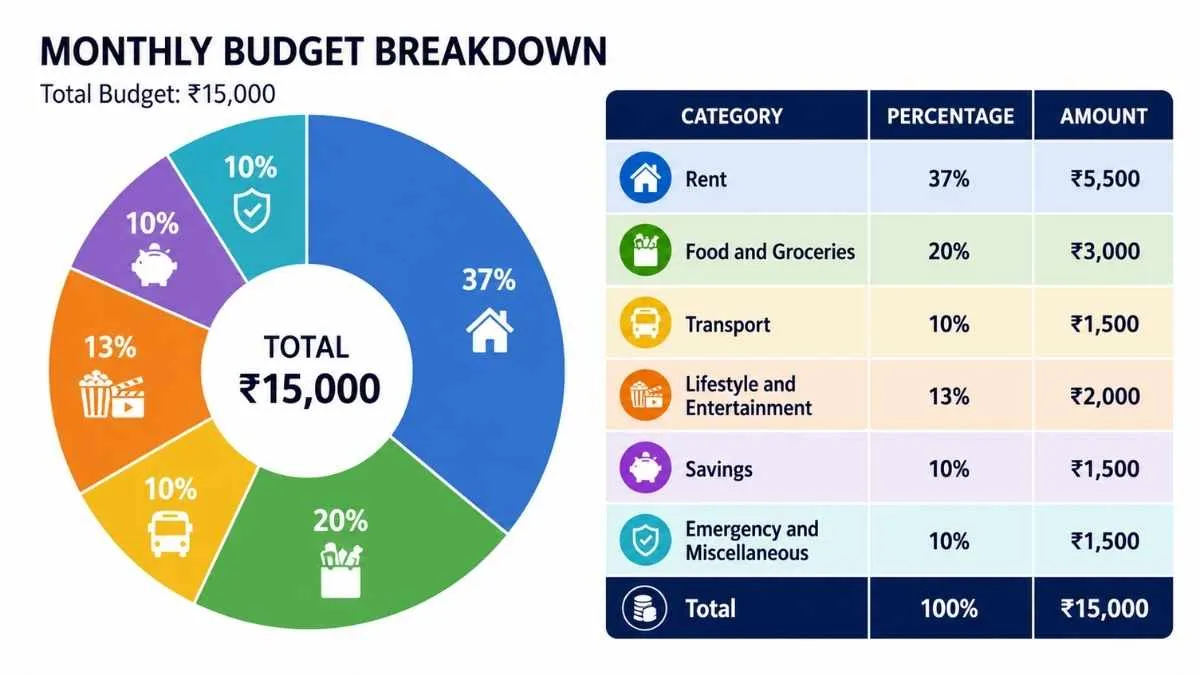
A possible monthly budget could look like this:
- Rent: ₹5,500
- Groceries and food: ₹3,000
- Transport: ₹1,500
- Lifestyle and entertainment: ₹2,000
- Savings: ₹1,500
- Emergency and miscellaneous expenses: ₹1,500
This is not a fixed rule. Students can change the amounts depending on their city, rent and personal needs.
What Percentage To Spend: Key Budgeting Formula or Students
Budgeting Rule 1: Make Rent Your First Priority
Rent is usually one of the most expensive services used by a student living away from home. Try to keep it to between ₹5,000-₹6,000. Sharing a room is a good way to slash the cost. Make sure electricity, Wi-Fi and maintenance costs are included. If your rent is ₹5,500, you have ₹9,500 left to spend on other things.
Budgeting Rule 2: Control Your Grocery and Food Costs
Aim to only spend around ₹3,000 on groceries and food. Get the basics: rice, dal, veg & fruit and milk. Simple cooking will help you stay down on costs. Don’t go out of your way to order food, as the delivery charges add up quickly. Keep food delivery and eating out within your lifestyle budget.
Budgeting Rule 3: Control Your Travel and Lifestyle Budget
Don’t spend more than ₹1,500 on transport, use public transport, the metro, or sharing a ride when the opportunity arises. Put ₹2,000 aside for shopping, movies, cafés and hanging out with friends. Have fun, live the student life, but stay within your own limits. Once this has been swallowed up, immediately refuse to dip into funds meant for rent, groceries and so forth.
Budgeting Rule 4: Put Money Aside for Emergencies
Even with a ₹15,000 purse, try to save some money. Keep ₹1,500 as a savings deposit, and another ₹1,500 as an emergency fund. This will be for medicines, sudden travel, urgent repairs and so forth. Having a little stash will help avoid debt traps in a real crisis.
How Budgeting Can Make College Life Easier?
For first-time college students, budgeting is not about stopping yourself from having fun. It is about knowing where your money is going. Track your spending, avoid unnecessary purchases and think before ordering food or buying something you do not need. A simple budgeting habit can help you enjoy your first year of college while also learning an important life skill, that is how to manage your own money responsibly.

Aishwarya Samant is a journalist with over 4 years of experience navigating the fast-paced corporate media landscape. She specializes in decoding business news, world economy, personal finance, and stock market trends, often adding a subtle touch of political perspective to keep things interesting.
Having worked with reputed organizations like ZEE, TV9, News24, and NewsX, she is no stranger to the newsroom hustle and the demands of real-time storytelling. Her writing style is fast-paced, engaging, and crafted to connect seamlessly with diverse audiences across platforms. She approaches every story from the reader’s point of view, breaking down complex topics into clear, relatable narratives backed by solid facts and credible sources. While she’s confident in expressing strong viewpoints, she ensures balance with insights. Sharp, fact-driven content that informs, engages, and keeps readers coming back for more.