SHE Marts Mission: Scheme Eligibility, How to Apply and Other Details for Retail Outlet
The SHE Marts Mission announced in the Union Budget 2026-27 an initiative to be set up as community-owned retail outlets within the cluster level federations, to transform rural women from credit-seekers into enterprise owners. Learn more about the eligibility and applicability of Scheme here.
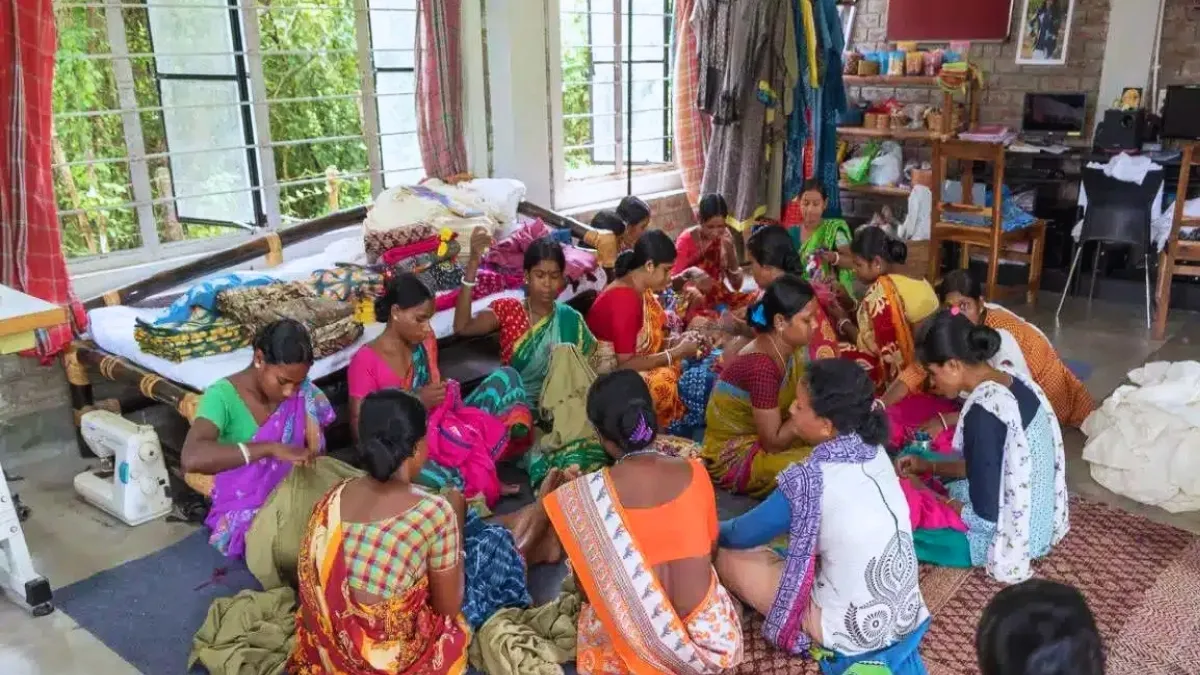
SHE Mart Mission: the mission announced in the Budget 2026 to transform rural women from credit-seekers into enterprise owners under this initiative, community-owned retail outlets will be established in every district as a platform to sell products made by women, where items produced by Self-Help Groups and rural women will get access to new markets.
"SHE" stands for ‘Self-Help Entrepreneur’. The state is now facilitating enterprise ownership, marts act as the "front-end" retail face for millions of women, allowing them to compete with established brands by offering professional branding and a reliable supply chain.
Objective of SHE Marts Mission:
The mission is introduced in the Budget 2026 after the success of Lakpati Didi scheme, main objective of the mission is to bridge the gap between rural production and urban/local consumption and women engaged in animal husbandry, agriculture-related activities and other occupations will no longer remain limited to subsistence livelihoods but will move forward as entrepreneurs. Its key objectives include:
-
Market Access: Providing a permanent physical and digital platform for Self Help Group(SHG) made products.
-
Enterprise Transition: Moving women beyond "credit-led livelihoods" to becoming "owners of enterprises" especially for the rural women.
-
Branding & Standardization: Helping rural products meet market standards through professional packaging and branding and market access.
-
Economic Independence: Ensuring sustainable and steady income opportunities for women which also contributes to the goal of creating 3 crore Lakhpati Didis mission.
-
Strengthening Grassroots: Empowering Cluster-Level Federations (CLFs) to manage and scale community-owned businesses.
Also Read: What Is Biopharma SHAKTI? Know the Key Objectives, Features & Budget 2026 Outlay
Union Budget Live | Women Leading India’s Growth Story!
— MyGovIndia (@mygovindia) February 1, 2026
SHE Marts will help turn rural women into enterprise owners through community-owned retail outlets run by SHG cluster federations. This will ensure an assured market for women-led products, while improving access to finance… pic.twitter.com/mV4vCEk2zM
Who Is Eligible For the Scheme?
The SHE Marts Mission is specifically designed for women operating at grassroots level although detailed state-specific guidelines are rolling out, the general eligibility includes:
-
SHG Mart Members: Women who are active members of a Self-Help Group (SHG) registered under the National Rural Livelihood Mission (NRLM).
-
Cluster-Level Federations (CLFs): The outlets are gerneally allotted to and managed by CLFs which act as the parent body for multiple village-level SHGs.
-
Lakhpati Didi Beneficiaries: Women already identified or trained under the Lakhpati Didi scheme are given higher priority.
-
Rural Artisans & Manufacturer: Women engaged in manufacturing, food processing, or traditional crafts within a rural cluster.
How You Can Apply?
SHE Marts are community-owned and operated through the existing SHG network, the application process is integrated into the State Rural Livelihood Missions (SRLM).
Here is the Step-by-Step Application Guidelines:
Step 1: Join/Verify SHG Status: Ensure you are part of an active SHG in your area. If not, contact your local Gram Panchayat or Block Development Office to join one.
Step 2: Express Interest via CLF: Your Self-Help Group must submit a proposal or Expression of Interest to its respective Cluster-Level Federation (CLF).
Step 3: Product Appraisal: The CLF and SRLM officials will evaluate the products which your group produces to check the quality, quantity, and marketability.
Step 4: Training & Skill Development: Once you are shortlisted, members receive training in inventory management, digital payments, and customer service.
Step 5: Access to Finance: Use the "Innovative Financing Instruments" mentioned in the budget to secure capital for your retail space or inventory.
Step 6: Digital Registration: States are launching dedicated portals like Jan Samarth where CLFs can register for ‘SHE Mart’ branding and support.
Note: SHE Mart initiative is a newly announced Budget 2026. You should keep an eye on your local District Rural Development Agency (DRDA) and State Rural Livelihood Missions (SRLM) for the official notification of shop allotments in your area.
What is the difference between Lakhpati Didi and SHE Marts?
Lakhpati Didi is an income-generation program, while SHE Marts provide the infrastructure and retail platform to turn those incomes into scalable, professional business enterprises while Lakhpati Didi is a targeted skill-building program designed to elevate the individual annual income of rural women to at least ₹1 lakh, SHE Marts serve as the physical and digital marketplace infrastructure that sustains this growth by providing community-owned retail outlets.
The mission transitions women from subsistence-level producers into professional enterprise owners with established branding. Essentially, if Lakhpati Didi provides the earning capacity, SHE Marts provide the commercial platform to scale those micro-businesses into competitive market brands.
What Are the Challenges?
Last-Mile Logistics like transporting perishable or fragile goods from remote village clusters to district-level marts often results in high costs or product damage and leveraging Cluster-Level Federations (CLFs) to aggregate products at a central point and partnering with local rural transport networks to create a shared "hub-and-spoke" delivery model.
Quality & Standardization competing with established urban brands is difficult if rural products vary in taste, texture, or packaging across different batches and implementing mandatory product appraisals and providing professional branding support to ensure every item meets FSSAI (for food) or other retail-ready benchmarks.
Digital Adoption & Financial Literacy moving from cash-based, informal recording to digital POS (Point of Sale) systems and UPI payments can be a steep learning curve for some SHG members and dedicated training modules on inventory management apps and digital payment security, supported by the national "Jan Samarth" portal for seamless business tracking.
Inventory like managing stock across multiple locations and accurately predicting which products will sell best in specific seasons can lead to either waste or "out-of-stock" scenarios. Using structured SKU tracking and data-driven replenishment planning managed by trained CLF cadres to align production with local market demand.
Socio-Economic Barriers, deep-rooted social norms may limit the mobility of rural women or their ability to dedicate time to "enterprise ownership" alongside household responsibilities. and the community-owned model allows for shared responsibility among group members, providing a support system that balances business operations with domestic roles.
The SHE Marts Mission, announced in Budget 2026, aims to transform rural women into enterprise owners. It establishes community-owned retail outlets to sell products made by Self-Help Groups (SHGs), providing market access, professional branding, and a reliable supply chain. This initiative, building on the Lakhpati Didi scheme, focuses on economic independence and empowering women beyond subsistence livelihoods, fostering entrepreneurship at the grassroots level.
Also Read: Migration Survey 2026: NSO To Conduct A Nationwide Comprehensive Survey, Check Highlights
Enter your Blink text here...
Manisha Waldia is a distinguished content strategist with 5 years of experience crafting premium educational content for UPSC and State PCS, with a focus on deep conceptual analysis across Polity, Geography, History, and Environment. She currently brings this expertise to Jagran Josh, where she covers major national and international events, current affairs, and static general knowledge. Over her career, Manisha's specialized insights have led her to curate high-impact materials and serve as a UPSC Mains answer-evaluator for India’s top institutes—including Drishti IAS, Shubhra Ranjan IAS, Study IQ, GS Score, and PWonlyIAS. She has also worked alongside leading NGOs like Oxfam India and Avani Kumaon.
Contact: manisha.waldia@jagrannewmedia.com



![[OUT] SSC CGL City Slip 2026 Live Updates: Download Tier 1 Exam City Slip, Direct Link Here](https://img.jagranjosh.com/images/2026/September/2192026/SSC-CGL-City-Slip.jpg)