What is New World Screwworm? Know All about its Symptoms in Humans and Cattles
Summary Excerpt: The USDA has confirmed the first New World Screwworm case in 60 years in a Texas calf. Discover what the New World Screwworm fly is, how it spreads, and the crucial symptoms of screwworm in humans and cattle to stay protected.
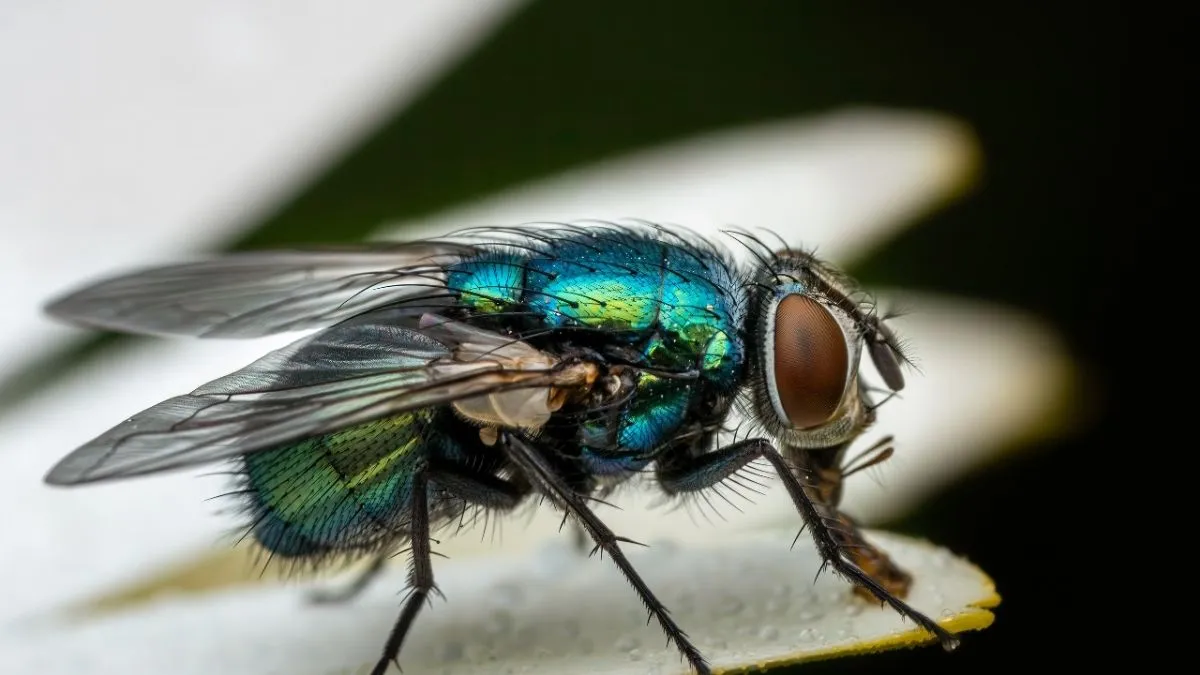
Key Points
- New World screwworm confirmed in South Texas on June 3, 2026, first in 60 years.
- The parasite threatens the $15 billion U.S. cattle industry and can infest humans.
- USDA combats outbreak using Sterile Insect Technique (SIT) by releasing sterile male flies.
A quiet agricultural county in South Texas just became the frontline of a major biological defense operation. On June 3, 2026, officials confirmed the New World screwworm fly had officially breached the U.S. border for the first time in sixty years. Discovered by USDA APHIS in a three-week-old calf in Zavala County, this flesh-eating parasite has triggered emergency local quarantines.
If you are wondering what the New World screwworm is, it is no ordinary pest; it is a lethal parasite that destroys living tissue. While livestock are the primary targets, New World Screwworm in humans is a rare but deeply serious medical threat. So, learning what screwworm transmission is and its early signs is now the first line of defense for American communities.
But if you are a Science student, don’t forget to read all about this major 2026 science and current affairs milestones, as we have a big biological event taking place right now.
What is a New World Screwworm?
To understand the nature of this threat, we have to look at its biological profile. Known scientifically as Cochliomyia hominivorax, the screwworm fly is a devastating parasitic insect native to the Western Hemisphere. The larvae of the New World screwworm are not like ordinary maggots that scavenge on dead and decayed tissue; they actively feed on the healthy living tissue of warm-blooded animals.
According to the Centers for Disease Control and Prevention (CDC), the female fly seeks out open wounds or natural body cavities, such as the nose, mouth, or ears, to lay her eggs. Once these eggs hatch, the tiny maggots physically burrow deeper into the tissue. They move similarly to a screw turning into wood, which is exactly how the pest earned its terrifying name.
Why is New World Screwworm a Problem?
The re-emergence of the screwworm fly poses a severe national security issue for the agricultural economy. If a producer misses an infestation, the larvae cause horrific tissue damage, frequently killing the host animal within a week to 14 days.
This is why health and agricultural officials are on high alert against the New World screwworm:
-
Economic Devastation: A widespread outbreak could severely damage the $15 billion U.S. cattle industry, causing immense production losses.
-
Rapid Expansion: The fly has spread rapidly north from Central America and Mexico in the past two years. It is now crossing borders and even causing a historic detection in South Texas in June 2026.
-
Cross-Species Threat: While livestock are the primary victims of the screwworm fly, the pest does not discriminate. It easily infests household pets, local wildlife, birds, and humans.
It is important to note, based on USDA Food Safety and Inspection Service (FSIS) guidelines, that screwworms do not infest meat, fruits, or vegetables. Any affected animal is removed from commerce immediately, meaning the commercial food supply remains entirely safe.
How do You Get New World Screworm?
Understanding transmission is the best way to prevent an infestation. You or your animals can contract a New World Screwworm infestation if an adult female fly lands on an open wound and deposits her eggs.
Common entry points include:
-
Minor Cuts and Scrapes: Even a wound as small as a tick bite, a superficial scratch, or a scraped knee can attract a female fly.
-
Surgical Sites: Recent operations, such as dehorning or castration in cattle, or post-surgical wounds in humans.
-
Natural Body Orifices: Flies may lay eggs in the mucous membranes of the eyes, ears, or nose.
The CDC warns that people who spend significant time sleeping outdoors during the day in infested areas, or individuals who cannot physically swat flies away, are at a higher risk of contracting screwworm myiasis.
Symptoms of New World Screwwom in Humans
Although rare, identifying the signs of a human infestation early can prevent extensive tissue damage. If you live in or have recently traveled to an infested area, watch for these distinct warning signs:
| Clinical Signs | Description of the Symptom |
| Sensation of Movement | Patients often report feeling actual movement within the wound or under the skin. |
| Visible Maggots | Small, white larvae might be visible at the surface of a wound or within body openings. |
| Rapidly Worsening Sores | Wounds that become deeper, larger, and incredibly painful within just a few days. |
| Foul Odor | The infested wound typically emits a highly distinct, foul-smelling odor of decay. |
| Bleeding and Discharge | Bloody discharge or secondary bacterial infections causing fevers and chills. |
If you suspect an infestation, never attempt to extract the maggots yourself. Seek immediate medical assistance, as healthcare providers must surgically remove every larva to stop the infection and prevent further environmental spread.
Symptoms of New World Screwworm in Cattles
Farmers, ranchers, and pet owners must remain highly vigilant against the spread of this flesh-eating parasite. The USDA APHIS urges anyone managing warm-blooded animals to monitor them daily. You are also advised to look out for the following symptoms in your livestock:
-
Behavioral Changes: Infested livestock will often show signs of extreme discomfort, act irritated, constantly shake their heads, or isolate themselves from the rest of the herd.
-
Visible Egg Masses: White, cigar-shaped eggs laid in a roof-tile pattern near the edges of wounds.
-
Draining Lesions: Unhealed wounds, especially in the umbilical region of newborn calves, that appear to be enlarging and draining fluids.
-
Smell of Decay: Similar to humans, an infested animal will carry a strong odor of rotting tissue.
-
Immediate veterinary intervention is critical. Approved veterinary drugs like Exzolt or Dectomax-CA1 can treat and prevent the condition, ultimately saving the animal's life.
Scientific Facts about Screwworm Fly
One of the most amazing trivias about the screwworm fly is that scientists use the pest’s unique biological vulnerabilities to effectively control it. Here are some more interesting facts about the insect you should note for General Knowledge:
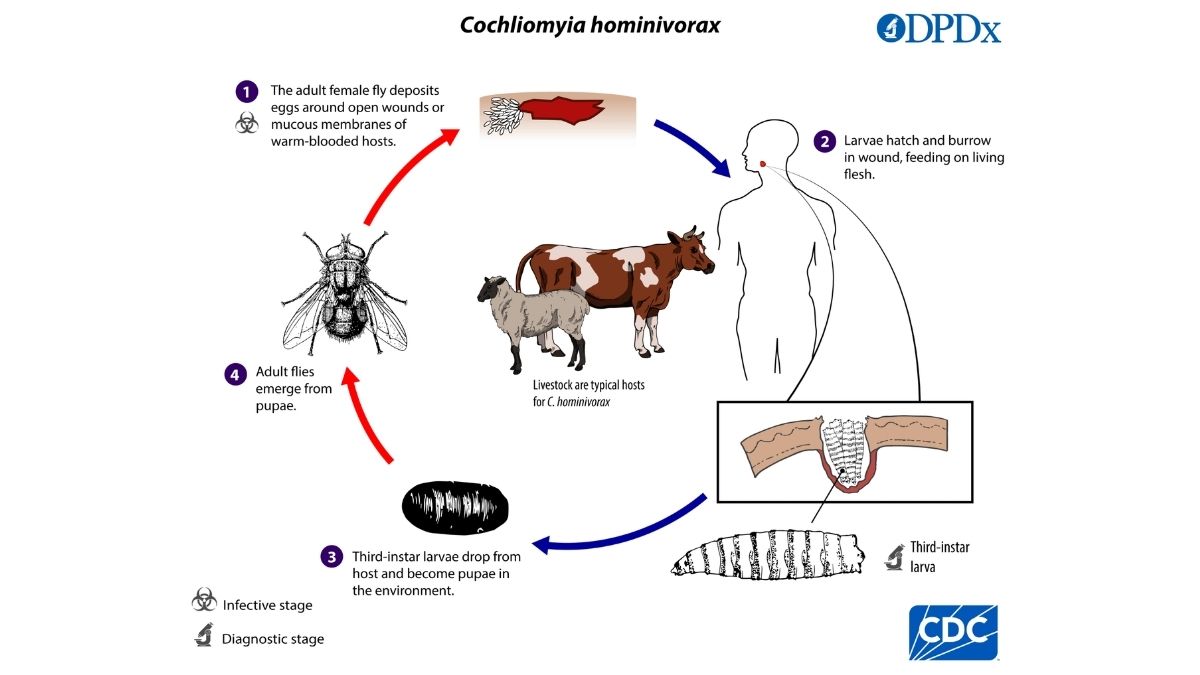
Life Cycle of a screwworm fly (Image Credit: cdv.gov)
-
Distinct Appearance: Adult screwworm flies are about the size of a standard housefly but feature striking orange eyes, a metallic blue or green body, and three dark stripes on their back.
-
Once-in-a-Lifetime Mating: A female screwworm fly mates only once in her entire lifespan.
-
The Eradication Method: The USDA employs the “Sterile Insect Technique” because the females mate only once. They release millions of sterilized male flies into the air. The males then mate with wild females. The eggs produced are completely non-viable, and the population crashes naturally without any harmful chemicals.
-
Life Cycle: The complete life cycle from egg to adult takes around 24 days in warm weather. The larvae feed for about a week before dropping into the soil to pupate.
As the USDA combats the recent South Texas outbreak with millions of sterile flies, vigilance remains our absolute best defense. Monitor your livestock and pets closely and inform authorities of any suspicious non-healing wounds. “Staying informed about the screwworm helps keep our agricultural communities safe.

Harshita Singh is an education and general knowledge journalist with over 5 years of experience in educational writing. Specializing in US affairs and GK, Harshita has a track record of breaking down intricate geopolitical and historical subjects into clear, digestible insights for learners. Her strong background in text analysis, coupled with a Bachelor of Arts (Hons) in English from the University of Delhi, helps her produce authoritative, thoroughly researched content that empowers readers to engage confidently with global current affairs. For inquiries or academic insights, you can reach out to her directly at harshita.singh@jagrannewmedia.com.