What Is PFBR? A 'Breeder Reactor' That Produces Its Own Fuel
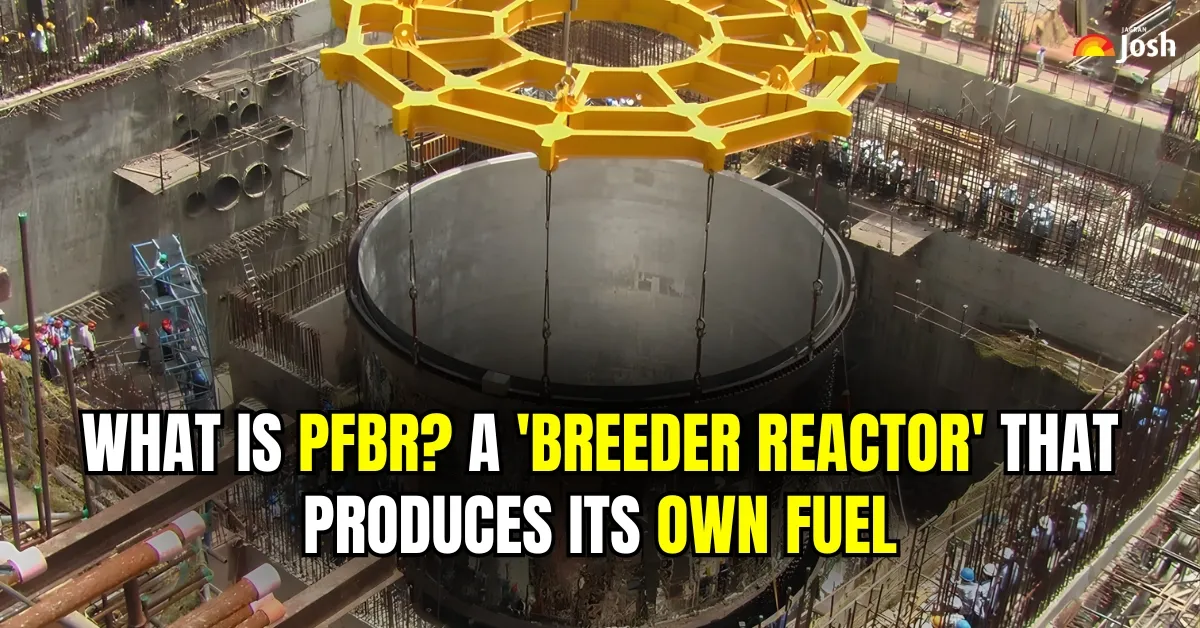
India’s 500 MWe Prototype Fast Breeder Reactor at Kalpakkam has reached criticality. This marks the start of the second phase of the country’s nuclear programme, which aims to use thorium reserves and reach net-zero emissions by 2070.
Key Points
- On April 6, 2026, India's PFBR achieved first criticality at Kalpakkam.
- PFBR places India among select nations with breeder reactor technology.
- India aims for 22.38 GW nuclear capacity by 2031-32 and 100 GW by 2047.
On April 6, 2026, India reached a significant milestone in energy independence when the Prototype Fast Breeder Reactor (PFBR) at Kalpakkam achieved first criticality. This marks the beginning of a sustained nuclear chain reaction and India's entry into the second stage of its three-stage nuclear power programme. Developed by Bharatiya Nabhikiya Vidyut Nigam Limited (BHAVINI), the 500 MWe reactor places India among a select group of nations. By adopting breeder technology, India advances toward a low-carbon future and its goal of net-zero emissions by 2070.
What is the Prototype Fast Breeder Reactor (PFBR)?

The PFBR is a high-tech nuclear reactor located at the Kalpakkam Nuclear Complex in Tamil Nadu. Unlike traditional reactors that simply "burn" fuel to create heat, the PFBR is designed to "breed" more fuel than it consumes. This is achieved through a complex process involving fast neutrons and a specialised fuel core.
- Capacity: It has a power generation capacity of 500 Megawatt electrical (MWe).
- Design: It was designed by the Indira Gandhi Centre for Atomic Research (IGCAR).
- Fuel Type: It uses Uranium-Plutonium Mixed Oxide (MOX) fuel.
- Coolant: Liquid sodium is used to transfer heat from the core to the steam generators.
Why Is "Criticality" Such A Significant Milestone?

Source: Wired Science
In nuclear physics, "criticality" is the state in which a nuclear reactor operates at a stable, self-sustaining fission chain reaction.
Attaining first criticality means the PFBR is now "alive" and capable of generating controlled energy.
- Sustained Reaction: It proves that the reactor's design can maintain a balance where each fission event releases enough neutrons to cause exactly one more fission.
- Validation of Tech: It validates decades of indigenous research and Indian engineering prowess.
- Global Standing: With this, India becomes only the second country, after Russia, to operate a commercial-scale fast breeder reactor.
How Does The Three-Stage Nuclear Programme Work?
India’s nuclear strategy stands out because it addresses a key challenge. The country has limited uranium but almost a quarter of the world’s thorium reserves. To solve this, Dr Homi J. Bhabha created a three-stage plan.
| Stage | Reactor Type | Primary Fuel Used | Key Objective |
| Stage 1 | PHWRs | Natural Uranium | Produce electricity and Plutonium-239. |
| Stage 2 | PFBR (Current) | Plutonium-239 | Breed more fuel and convert Thorium to U-233. |
| Stage 3 | Thorium Reactors | Uranium-233 & Thorium | Utilise vast thorium reserves for centuries of power. |
The PFBR acts as the essential bridge. It takes the "waste" (Plutonium) from Stage 1 and uses it to unlock the potential of Stage 3.
What are the Benefits of a "Closed Fuel Cycle"?
The PFBR operates on a "closed fuel cycle", which is a fancy way of saying that the reactor recycles its own fuel. This approach offers three major advantages:
- Resource Efficiency: It extracts much more energy from the same amount of original uranium than conventional reactors do.
- Waste Management: By reprocessing spent fuel, the volume of long-lived radioactive waste is significantly reduced.
- Breeding Future Fuel: While producing power, the reactor's "blanket" of Uranium-238 absorbs neutrons, producing Plutonium-239, which can then be harvested to start new reactors.
What Is The Future Of Nuclear Energy In India?
The success at Kalpakkam is part of a much larger vision known as the Nuclear Energy Mission. The Indian government has set ambitious targets to ensure nuclear power becomes a cornerstone of the national grid.
- Capacity Growth: The goal is to reach 22.38 GW by 2031-32 and a massive 100 GW by 2047.
- Small Modular Reactors (SMRs): The government has allocated Rs 20,000 crore to develop smaller, more flexible reactors like the BSMR-200.
- Legal Framework: The SHANTI Act of 2025 has been enacted to allow limited private participation and modernise nuclear laws.
- Energy Security: By scaling up to Stage 3, India can eventually stop importing uranium and rely entirely on domestic thorium.
Conclusion
The successful start-up of the PFBR is a major milestone for India’s scientific community. It shows the transition from planning to the actual construction of the second stage of the country’s nuclear programme. By developing fast breeder technology, India is securing its long-term energy needs and offering a strong alternative to fossil fuels. As the country works toward its 2070 net-zero goal, the experience at Kalpakkam will help guide a future powered by thorium and strengthen India's role as a leader in clean, homegrown nuclear technology.

Kriti Barua is a skilled digital journalist and communications professional with 4+ years of experience, currently writing for the General Knowledge section at Jagran New Media. She has established herself as a subject matter expert in History, Geography, Trending National and International News, Sports, Science, and Defence, producing clear, reliable, and search-optimised content that connects with readers worldwide.
Kriti holds a BA degree from Delhi University and a one-year diploma in TV Production and Journalism, an academic background that adds research depth and strong storytelling instincts to her writing. Her experience spans brand writing, content marketing, and digital media, giving her a sharp understanding of what makes content both helpful to readers and visible in search.
At Jagran New Media, she applies this expertise to national and international news coverage, query-based articles, and in-depth pieces across her specialist subject areas. Her content is defined by easy language, factual accuracy, strong keyword strategy, and reader-friendly storytelling.