Which Island is known as the Coral Island of India?
Coral Island of India: Lakshadweep, India's smallest Union Territory, is renowned as the Coral Island of India. This stunning archipelago in the Arabian Sea consists of 36 islands, which are unique for being true coral atolls. The islands' existence is built on ancient coral reefs, which support vibrant marine life and create clear, shallow lagoons and a pristine marine ecosystem.
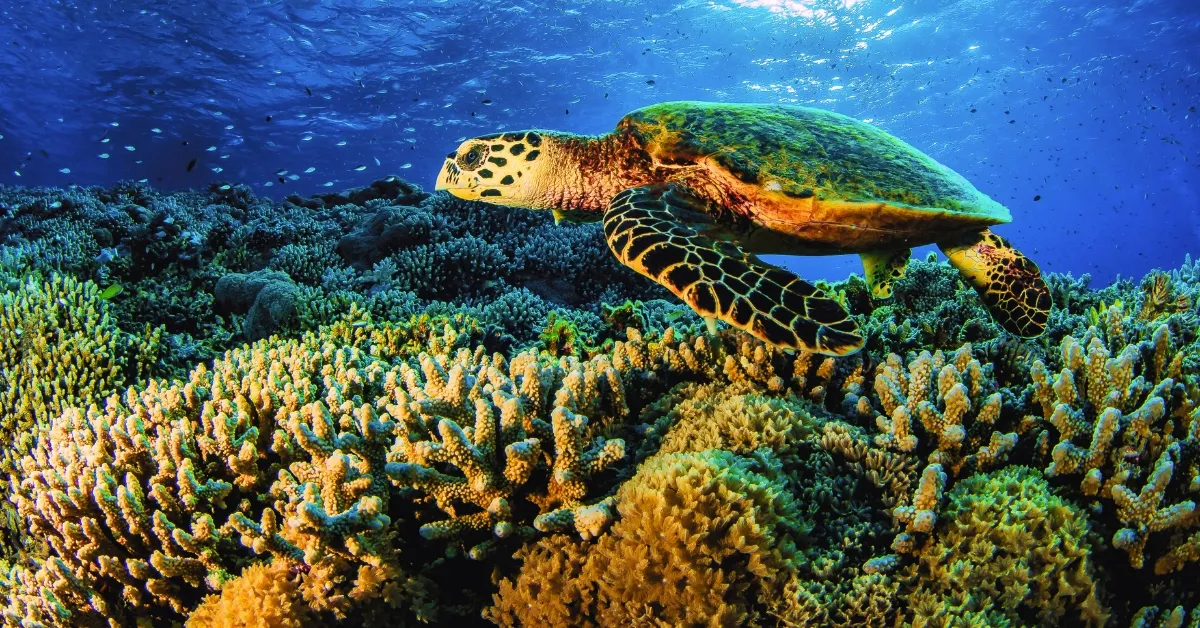
Did you know the Earth is home to hundreds of thousands of islands? From vast continents like Australia (often considered an island continent) to tiny, uninhabited specks of land, these formations are simply landmasses surrounded by water. Around the world, islands usually earn beautiful nicknames: some are called the "Spice Isle", others the "Emerald Isle". India itself is blessed with many stunning island territories, like the volcanic Andaman Islands and the serene Lakshadweep archipelago. These islands, each with unique flora and fauna, are sometimes given notable titles based on their most dominant natural features. For example, one incredible Indian island is famous for its vibrant marine life and stunning white sandy beaches. It is often called the "Jewel of the Sea". Do you know which one it is? In this article, we'll take a close look at the island known as the Coral Island of India, exploring its geography, history, and the breathtaking reason behind its famous name.
Which Island is known as the Coral Island of India?
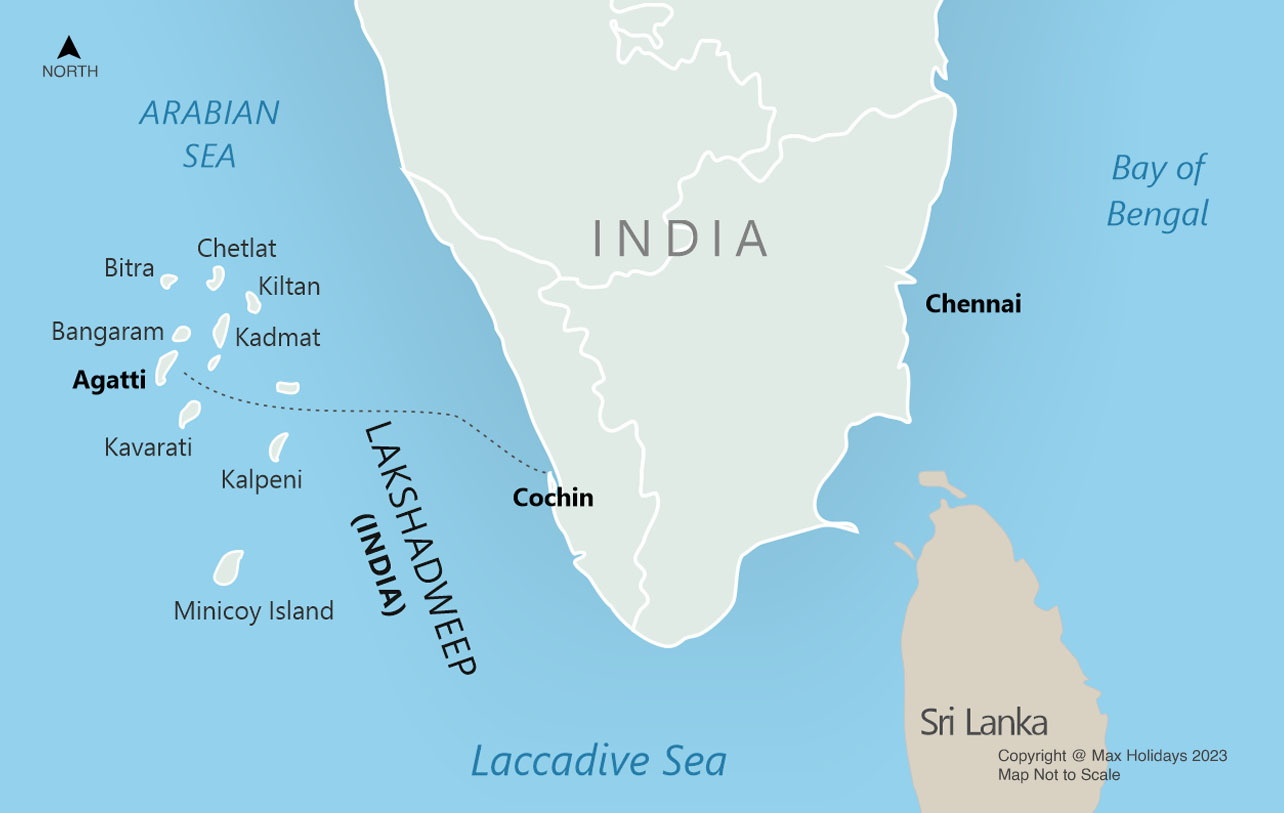
The island group, famously known as the Coral Island of India, is Lakshadweep. This Union Territory is India's smallest, a stunning archipelago of 36 islands located in the emerald-blue Arabian Sea, approximately 200 to 440 km off the Malabar Coast of Kerala. It is called the "Coral Island" because, unlike the volcanic Andaman Islands, the Lakshadweep Islands are formed entirely by the growth and accumulation of coral reefs, specifically, coral atolls.

The word "Lakshadweep" is derived from Sanskrit and Malayalam and means "a hundred thousand islands". Its unique geographical formation and pristine coral lagoons make it an ecological hotspot and a critically crucial marine ecosystem.
10 Lesser-Known Facts About Lakshadweep
- Lakshadweep is the only region in India that contains true coral atolls, which are ring-shaped coral reefs that nearly or entirely enclose a lagoon.
- The coral formations here are estimated to be over 60 million years old, making them older than the mighty Himalayan mountain range.
- The majority of the indigenous Muslim population on the islands traditionally followed a matrilineal system (property and lineage are traced through the mother).
- Since the islands are formed purely from coral and sand, they have no natural rivers or mountains, and their highest elevation is just 15 metres (49 feet) above sea level.
- Despite being a group of 36 islands, Lakshadweep is India's smallest Union Territory, covering a total land area of just 32 square kilometres.
- Even Indian citizens require a special entry permit from the administration to visit and stay on the islands, a measure taken to protect the fragile ecosystem.
- The uninhabited Pitti Island within the archipelago is an important protected area and is home to a dedicated bird sanctuary.
- On the southernmost island, Minicoy, the native language spoken is Dhivehi (Mahl), which is also the official language of the Maldives.
- Some islands, like Bangaram, occasionally witness the spectacular natural phenomenon of bioluminescence, where the water on the beach glows blue at night due to phytoplankton.
- Of the 36 islands, atolls, and coral reefs, only 10 are currently inhabited, preserving the vast majority of the delicate environment.
Why is Lakshadweep known as the Coral Island of India?
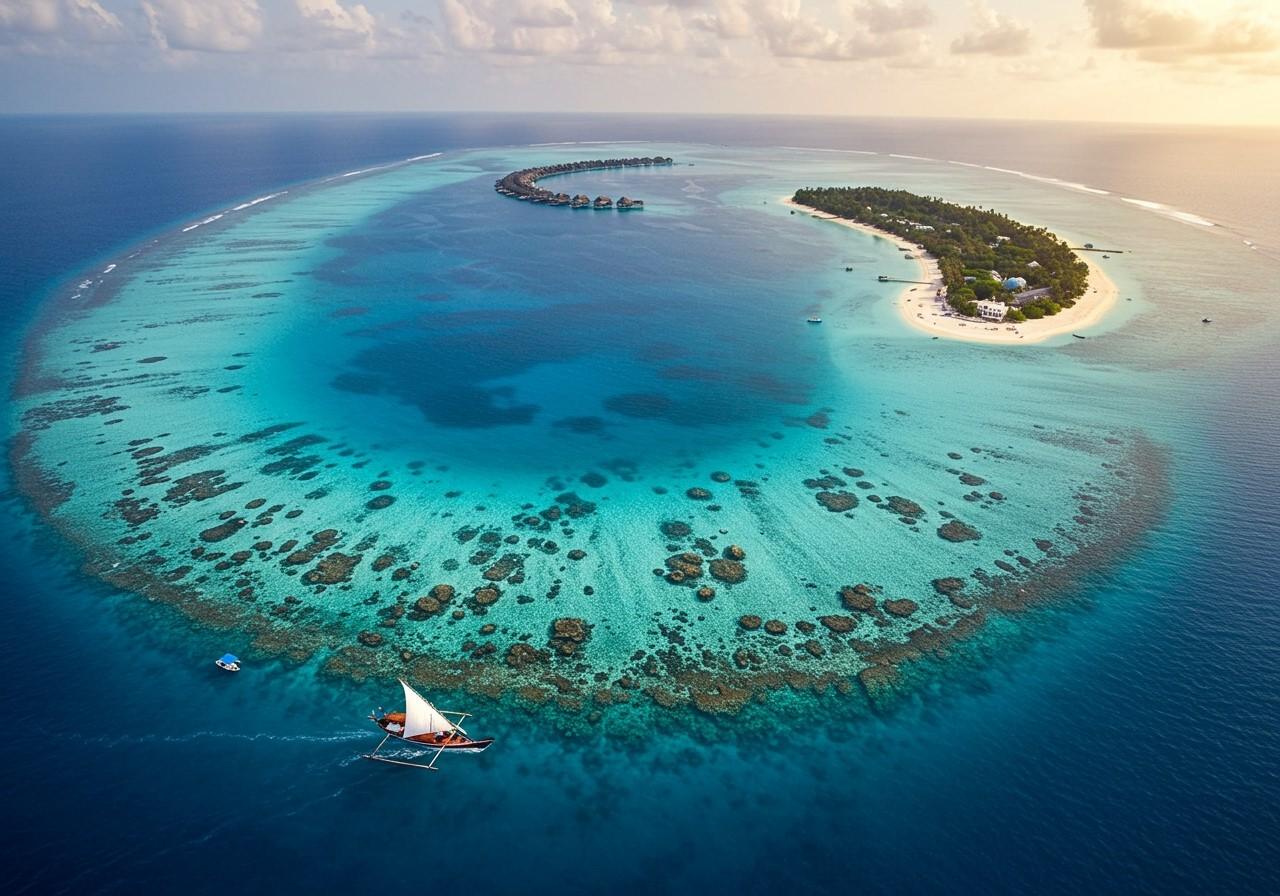
Lakshadweep is famously known as the Coral Island of India because of its unique geological origin: its islands are formed entirely from the continuous growth and accumulation of coral reefs, making it the only true coral atoll region in India.
Formation and Structure
- Coral Atolls: Unlike the volcanic origins of the Andaman and Nicobar Islands, the landmass of Lakshadweep is the result of the skeletal remains of tiny marine animals called coral polyps.
- The Building Process: Coral polyps extract calcium carbonate from seawater to build a hard, protective skeleton. When they die, these skeletons are left behind, and new polyps grow on top, repeating the cycle over millions of years. This slow accumulation forms massive, cemented structures known as reefs.
- Atoll Structure: The Lakshadweep islands are primarily atolls, ring-shaped coral reefs that encircle a shallow lagoon.
- Island Landmass: The islands themselves are formed by the deposition and cementing of coral detritus (fragments of coral, shell, and other organic material) that builds up on the reef surface and rises above sea level.
Key Features and Ecosystem
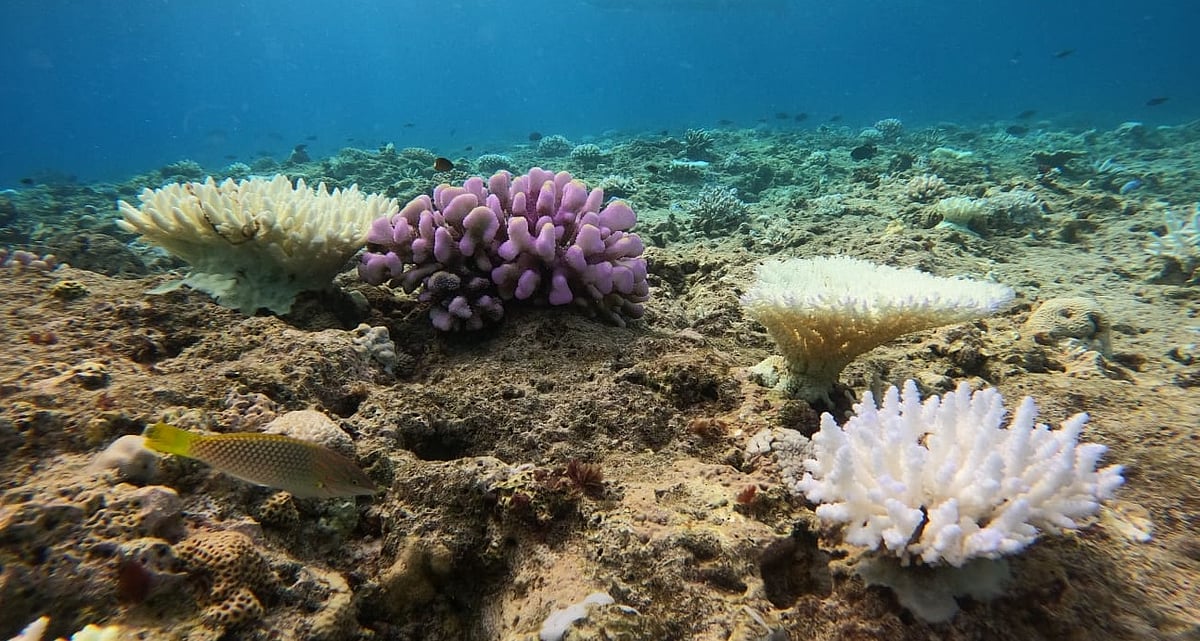
The unique coral structure gives Lakshadweep distinct and beautiful features:
- The atolls create extensive, shallow, clear, turquoise-blue lagoons that are sheltered from the open sea, providing ideal conditions for swimming, snorkelling, and the growth of delicate marine life.
- The surrounding coral reefs are among the richest in India, acting as critical underwater ecosystems. They are home to an incredible diversity of marine species, including various corals (like staghorn and brain corals), tropical fish, sea turtles, and molluscs.
- The coral reefs act as a natural buffer, protecting the fragile islands from the erosive power of ocean waves and storm surges.
Lakshadweep's existence and its entire geography depend on coral formations, earning it the nickname "Coral Island of India".

Kriti Barua is a skilled digital journalist and communications professional with 4+ years of experience, currently writing for the General Knowledge section at Jagran New Media. She has established herself as a subject matter expert in History, Geography, Trending National and International News, Sports, Science, and Defence, producing clear, reliable, and search-optimised content that connects with readers worldwide.
Kriti holds a BA degree from Delhi University and a one-year diploma in TV Production and Journalism, an academic background that adds research depth and strong storytelling instincts to her writing. Her experience spans brand writing, content marketing, and digital media, giving her a sharp understanding of what makes content both helpful to readers and visible in search.
At Jagran New Media, she applies this expertise to national and international news coverage, query-based articles, and in-depth pieces across her specialist subject areas. Her content is defined by easy language, factual accuracy, strong keyword strategy, and reader-friendly storytelling.


-1792761794673_t.webp)
-1792850902708_t.webp)





.jpg)
![[OUT] UPSSSC PET Admit Card 2026 LIVE: यूपी पीईटी एडमिट कार्ड जारी, upsssc.gov.in पर Direct Link](https://img.jagranjosh.com/images/2026/October/15102026/UPSSSC-PET-Admit-Card-2026.jpg)