Word of the Day: Mercy
Word of the Day: 'Mercy' is the featured word of the day. Comprehending the definition of 'Mercy' is crucial for acquiring advanced English vocabulary commonly encountered in international news and competitive examinations.

Mercy Meaning and Use: Imagine a soccer player accidentally trips an opponent during a big game. The referee has the power to give a red card and remove the player from the field. However, seeing it was a genuine accident, the referee chose to give a simple warning instead. This act of being kind when you have the power to be harsh is called mercy. It means showing forgiveness or compassion to someone who might deserve punishment. It is about choosing kindness over being strict. In this article, we'll take a look at the meaning, history, and usage of this powerful word.
What is Mercy? Meaning and Definition
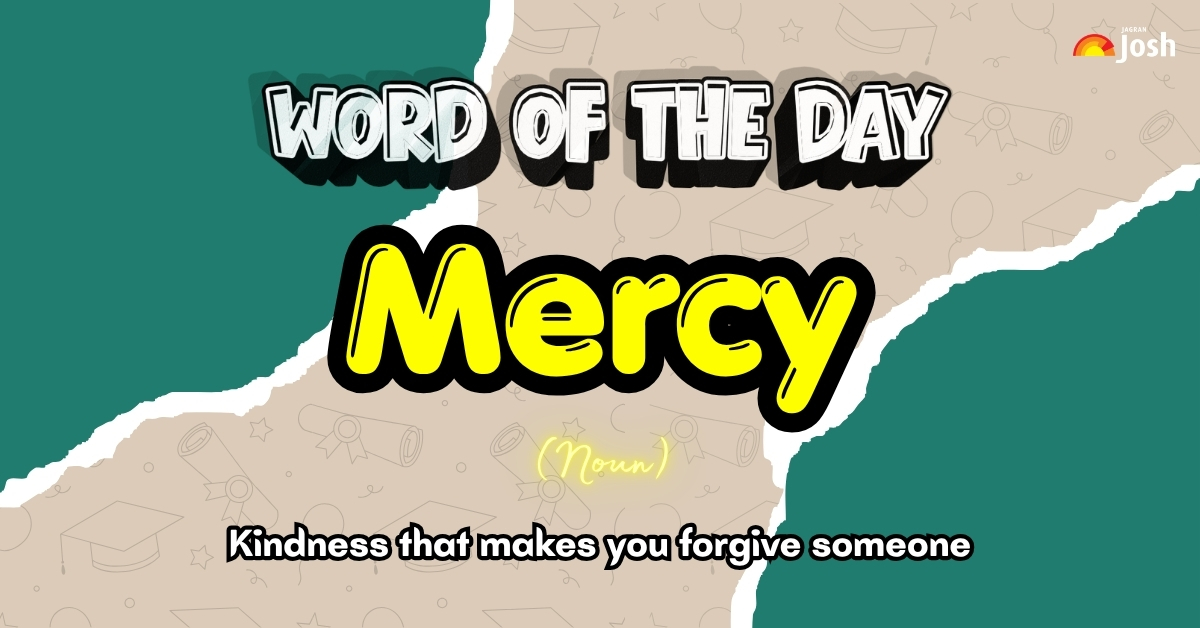
Mercy means treating someone with compassion, especially if they are in a weak position or have made a mistake. People in authority, such as judges, teachers, or parents, can choose to show kindness instead of giving a strict punishment. Showing mercy means focusing on a person's intentions and feelings, not just the rules.
Feature Details
| Feature | Details |
| Type | Noun |
| Pronunciation | MUR-see |
| Root | Latin merces (reward or price) |
Example Sentences:
- The king showed mercy to the prisoner and let him return home to his family.
- "Please have mercy on us and don't give us extra homework over the weekend!" joked the students.
Mercy Origin & Etymology
The word "mercy" has a very interesting journey through time. It comes from the Latin word "merces", which originally meant a "reward", "wages", or a "price paid for goods". You might wonder how a word about money became a word about forgiveness.
In the early days of the English language, around the 1200s, the word moved through Old French as merci. At that time, it started to mean a "recompense" or a "pity". It described a situation where someone who was "in debt" or "guilty" was let go without paying the full price.
Eventually, the meaning shifted away from money and toward the heart. It became a word for the "reward" of kindness given to someone who expected a "punishment".
Use of Mercy in a Sentence
You can use "mercy" when discussing history, law, or your own daily interactions. It is a formal word that carries a lot of weight and respect.
- Example: The king showed mercy to the prisoner and let him go.
- We should always treat animals with mercy and kindness.
- The tired hikers were at the mercy of the cold weather.
- She begged for mercy after making a big mistake.
- It was a mercy that the rain stopped before the race started.
- The judge decided to grant mercy to the young man.
- They cried out for mercy during the violent storm.
- Learning to forgive others is a great act of mercy.
- The soldiers showed mercy by helping the wounded enemy.
- We were thankful for the mercy of a cool breeze on a hot day.
Quick Tip
Remember, "mercy" is the noun. If you want to describe a person who is full of mercy, you use the adjective 'merciful'. Using this word correctly helps you talk about fairness and compassion in a much deeper way than just using the word "kind".
Mercy Synonyms and Antonyms
These words help you see the difference between letting someone go and holding them to the rules.
Synonyms (Similar Words):
- Compassion: Sympathetic pity and concern for the sufferings or misfortunes of others.
- Lenity: Kindness or gentleness, especially when being a judge.
- Clemency: Mercy or lenience shown by a person in power.
- Forbearance: Patient self-control; restraint and tolerance.
Antonyms (Opposite Words):
- Cruelty: Callous indifference to or pleasure in causing pain and suffering.
- Severity: The fact or condition of being very strict or harsh.
- Vengeance: Punishment inflicted or retribution exacted for an injury or wrong.
- Ruthlessness: A lack of pity or compassion for others.
Did You Know?
In French, the word "Merci" means "Thank you." Long ago, if someone showed you mercy, you would recognise the reward or favour they gave you. In English, we kept the part of the word that describes the kindness, while the French kept the part used to express thanks.

Kriti Barua is a skilled digital journalist and communications professional with 4+ years of experience, currently writing for the General Knowledge section at Jagran New Media. She has established herself as a subject matter expert in History, Geography, Trending National and International News, Sports, Science, and Defence, producing clear, reliable, and search-optimised content that connects with readers worldwide.
Kriti holds a BA degree from Delhi University and a one-year diploma in TV Production and Journalism, an academic background that adds research depth and strong storytelling instincts to her writing. Her experience spans brand writing, content marketing, and digital media, giving her a sharp understanding of what makes content both helpful to readers and visible in search.
At Jagran New Media, she applies this expertise to national and international news coverage, query-based articles, and in-depth pieces across her specialist subject areas. Her content is defined by easy language, factual accuracy, strong keyword strategy, and reader-friendly storytelling.