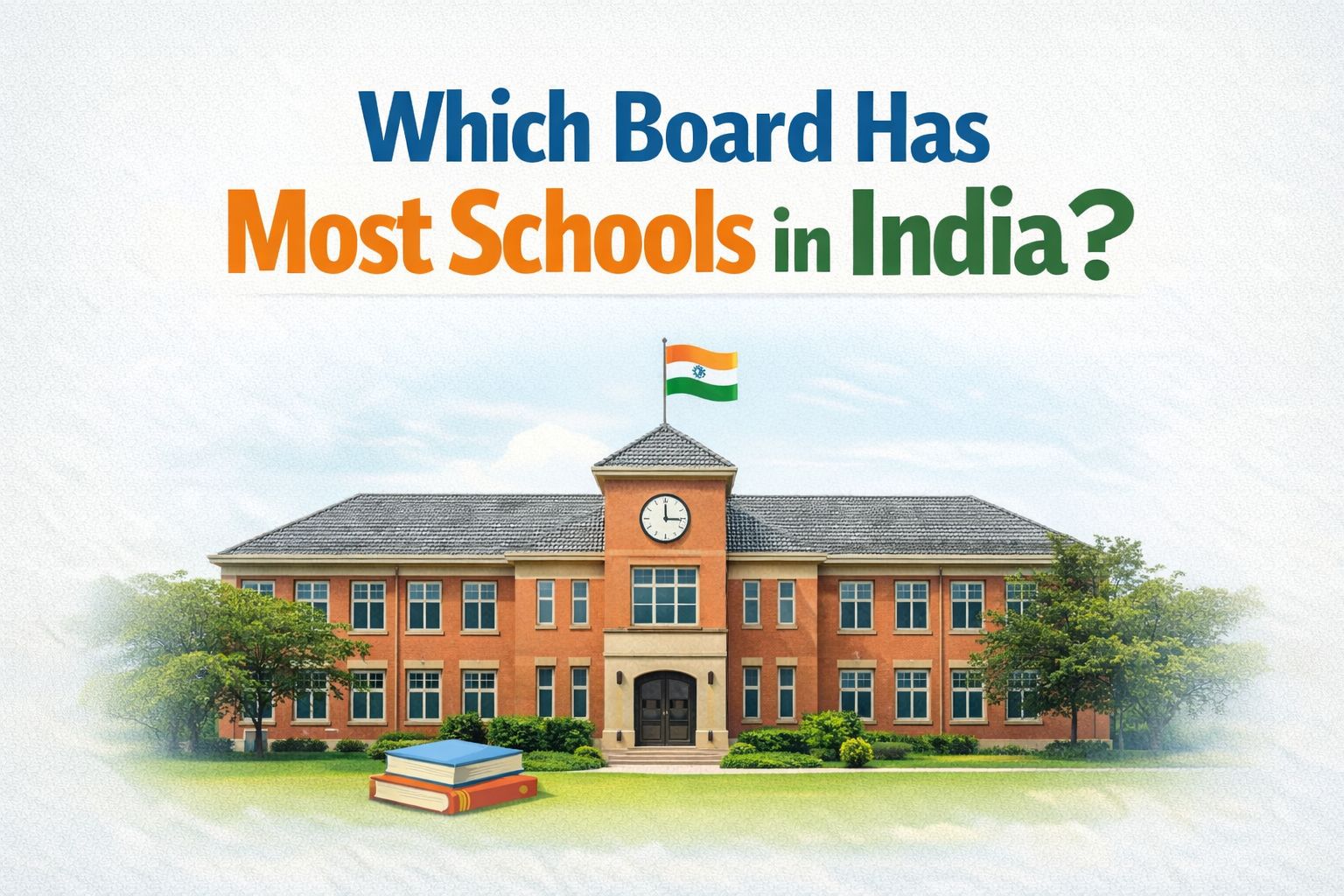
Which Board Has Most Schools in India? Check Official Stats
The largest national board in India, with over 29,179 affiliated schools (as of 2024), is the Central Board. It is influential due to its standardised curriculum and competitive exam preference. However, State Boards collectively have more schools, dominating rural and small-town areas across India. The Central Board is the single largest national board, but State Boards have a larger overall presence.
-1769757634364.webp)
Key Points
- CBSE has over 29,179 affiliated schools in 2024, including schools abroad.
- CBSE offers a standardized curriculum, aiding student mobility and test prep.
- In 2019, CBSE established 6 new Regional Offices for better administration.
The school education scenario in India is quite diverse, but the Central Board of Secondary Education (CBSE) is the most dominant and prominent among all the national-level boards. As of 2024, the CBSE has an impressive network of more than 29,179 affiliated schools, which include schools in India as well as a substantial number of schools abroad. Dominance and Recognition.
The CBSE's broad reach and common curriculum make it the first choice for a major chunk of people, especially those who might shift to another state. The dominance of the CBSE is a result of its long-standing reputation for quality and its contribution to the educational landscape of the country.
CBSE’s Role in the Indian Education Ecosystem
The CBSE is the most widely recognized and prominent educational board in the country. It is a government-managed board, which lends it a high degree of credibility and standardization. This management structure ensures that the curriculum, examination patterns, and affiliation standards are consistently maintained across all its schools. The board's primary goal is to offer a standardized, pan-Indian curriculum that facilitates student mobility across states and prepares them uniformly for national-level competitive examinations. Comparison with Other Boards. While the CBSE holds the title of the largest national board, it is essential to consider the presence of other educational bodies:
- Council for the Indian School Certificate Examinations (CISCE): This is a non-governmental board that conducts the ICSE (Class 10) and ISC (Class 12) examinations. It is highly regarded, particularly among urban and elite schools, but its number of affiliated schools is significantly smaller than that of the CBSE.
- State Boards: These boards, managed by individual state governments (e.g., Maharashtra State Board, UP Board), collectively have a greater number of schools overall, primarily because they dominate rural areas and small towns. State Boards often tailor their curriculum to the specific linguistic and cultural context of their respective state.
Growth of CBSE
The Central Board of Secondary Education (CBSE) has expanded significantly to enhance administrative efficiency and support its vast network of schools. In 2019, the board established six new Regional Offices—located in Bengaluru, Bhopal, Chandigarh, Delhi West, Noida, and Pune—to improve responsiveness across the country. Furthermore, to focus on quality and continuous teacher development, the CBSE operates 13 dedicated Centres of Excellence that provide in-service teachers with essential capacity building programs and training on the latest educational strategies.
Affiliated Institutions
The new Regional Offices were established to enhance the efficiency of service delivery to affiliated institutions throughout India. This organizational restructuring was necessary to improve responsiveness and ensure better administrative support for the schools under its jurisdiction. By decentralizing operations, the board aims to address local issues more effectively and facilitate smoother communication with the numerous educational establishments across the diverse regions of the country.
Curriculum and Impact
One of the main reasons the CBSE is so popular is that it offers a standard course of study. It makes sure students learn a mix of school subjects, extracurricular activities, and practical skills. Plus, the CBSE syllabus often matches what's needed for big national tests like the JEE (for engineering) and NEET (for medical). That's why it's the top choice for students who want to go to college for those careers. Basically, while State Boards have more schools in local areas, the CBSE is clearly the biggest national board in India.
Also Check: Which States has Most Number of CBSE Schools in India?
Enter your Blink text here...

Anisha Mishra is journalist with over 3 years of experience in covering the Indian education sector. She has worked extensively in the K12 domain, with focus on the state board as well as central board examinations, policy structure of seconday and higher secondary education as well as the entrance examinations like JEE, NEET, CLAT, etc. Her extensive experience in the domain has helped her provide students with concise accurate information in all aspectes of school life and education. Her key interest lies in decoding the changes in the curriculum, NEP implementation and changing education ecosystem in the country. Besides working, she enjoys traveling, exploring new places and cultures, and painting.