How Do Oysters Make Pearls?
Pearls form as a natural defense mechanism when oysters trap irritants inside their shells and coat them with layers of nacre. While natural pearls are rare, cultured pearls are carefully farmed using scientific techniques. Beyond beauty, oysters play a vital role in marine ecosystems and sustainable aquaculture worldwide.
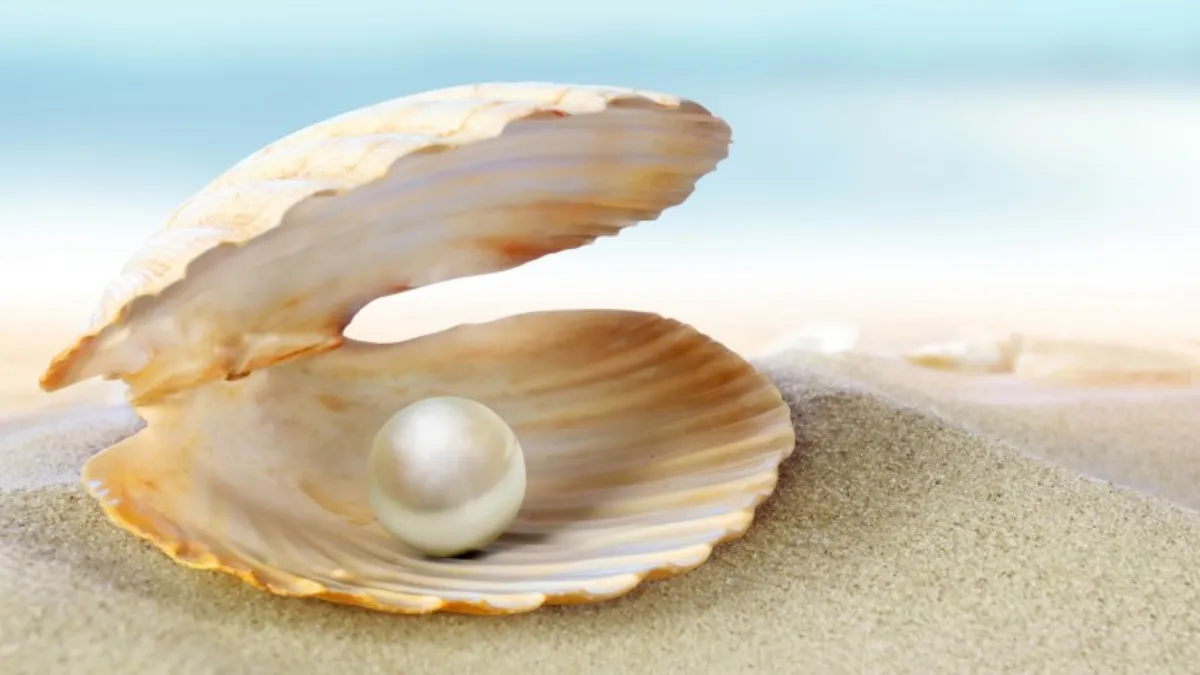
Pearls are the clever retaliation of oyster to invaders, where mantle tissue encases parasites or debris with iridescent nacre crystals of calcium carbonate in the conchiolin matrix to produce lustrous balls over years.
These oysters are rarer than cultured ones (1 in 10,000 oysters form naturals). These sea treasures, a demonstration of the alchemy of biology, protection and decoration in the bivalves such as Pinctada species.
What are Oysters and How Do They Make Pearls?
Oysters are bivalve mollusks that have two hinged valves joined together by an elastic ligament that enables them to feed and breathe as adductor muscle closes the shell.
The mantle, a thin layer of epithelial cell lining, or the inner shell, is a nacre factory that produces aragonite (CaCO3) and organic proteins.
Other prominent sections consist of gills to filter-feed at the sea, and the gondola to oriented pearl farms. Valve-open phases allow sample irritants to creep in between the mantle and shell to initiate defense.
What is the Process of Pearl Formation?
It is a biological invader, and a parasite or food particle irritates the mantle, causing the epithelial cells to encircle it in a pearl sac.
Sac cells multiply releasing nacre in concentric layers (0.25-3mm/year) and tablets of aragonite produce interference colors on luster.
It takes 6 months to 5+ years; pearls are rounder, and healthy oysters live in waters rich in nutrients. Result: Smooth orb, usually baroque, and completely wraps the menace.
What are Cultured Pearls?
Invented by Mikimoto (1893), nucleation involves surgical implantation of a shell-bead nucleus and mantle graft to the gonad of the oyster.
Pearl sac consists of graft cells; the oysters grow in suspended nets, 6-36 months, and are washed regularly.
The Akaya (P. fucata) of Japan produces small lustrous pearls in 10-18 months, South Sea (P. maxima) in 2+ years.
Beyond Oysters: Myths and Mollusks
Clams/mussels can hardly produce pearls through similar nacre; abalone produces blister pearls. They were valued by ancients: one in vinegar valued by Cleopatra in millions of dollars was dissolved.
The Oyster reefs can filter 50 gallons/oyster/day to fight eutrophication; pearl farming recreates habitats due to overharvesting threats. The world industry is more than 10B, which fosters sustainable aquaculture.
Recommended Reading
Which is the Coldest Planet in the Solar System? It’s Not What You Think
Enter your Blink text here...

Kirti Sharma is a journalist in the education domain with three and a half years of experience creating high-quality content for the education technology (EdTech) and digital media industries. She has an expertise in covering education news. Kirti has experience in writing data backed informational pieces on General knowledge.
Kirti holds a Bachelor of Arts degree, which helped build her strong foundation in writing and research. Over the course of her career, she has brought her skills to a variety of well-known companies, including ThoughtPartners Global, Infinite Group, and MIM-Essay. Through these roles, she has learned how to take complex information and turn it into engaging, easy-to-understand content for readers online.