
From Aryabhata’s concept of zero and Euclid’s geometryto the principles that later powered modern computer science, mathematics has been shaped by thinkers across eras.
This particular list focuses on the most influential mathematicians from ancient and pre-modern history, whose foundational ideas still guide scientific and educational systems worldwide. Yet it’s impossible to overlook later geniuses such as Srinivasa Ramanujan, whose early 20th-century breakthroughs in number theory echo the same timeless intellectual brilliance. Celebrated globally on World Mathematics Day, his legacy reminds us of how mathematical thought has evolved over the centuries.
For upcoming profiles on famous modern-era mathematicians, including pioneers of AI, quantum theory, and computational mathematics, stay tuned for our continuing series.
The nine most influential mathematicians in ancient history are widely recognised as Archimedes, Euclid, Pythagoras, Aryabhata, and others. Their groundbreaking work in geometry, algebra, calculus, trigonometry, and number theory continues to influence global education.

(Chalkboard-style infographic features trivia about famous mathematicians: Archimedes shouting ‘Eureka!’ after discovering buoyancy, Leonhard Euler writing 800 papers despite blindness & Carl Friedrich Gauss adding numbers 1 to 100 at age 10.)
List of the 9 Most Influential Mathematicians in Ancient History
From ancient history, these mathematicians transformed the way we think about numbers, patterns, and the universe itself. The table below shows the discoveries of mathematicians, from engineering and architecture to algorithms and artificial intelligence.
| S. No. | Mathematician | Era | Famous For |
| 1 | Archimedes | c. 287–212 BCE | Laws of levers, buoyancy (Archimedes’ principle), and foundations of geometry and calculus. |
| 2 | Pythagoras | c. 570–495 BCE | The Pythagorean theorem; founder of the Pythagorean school |
| 3 | Euclid | c. 300 BCE | Father of Geometry; author of Elements |
| 4 | Aryabhata | c. 476–550 CE | Concept of zero, the place-value system, and early trigonometric functions like sine. |
| 5 | Al-Khwarizmi | c. 780–850 CE | Father of Algebra; he developed algorithmic methods solve linear and quadratic equations. |
| 6 | René Descartes | 1596–1650 | Linked algebra and geometry through the Cartesian coordinate system (analytic geometry). |
| 7 | Isaac Newton | 1643–1727 | Co-invented calculus and formulated the laws of motion and universal gravitation. |
| 8 | Leonhard Euler | 1707–1783 | Introduced modern notation (e, i, π) and advanced number theory and topology. |
| 9 | Carl Friedrich Gauss | 1777–1855 | Prince of Mathematicians; major contributions to number theory, statistics, and electromagnetism. |
Source: Encyclopaedia Britannica, Stanford Encyclopedia of Philosophy, MacTutor History of Mathematics Archive (University of St Andrews).
1. Archimedes
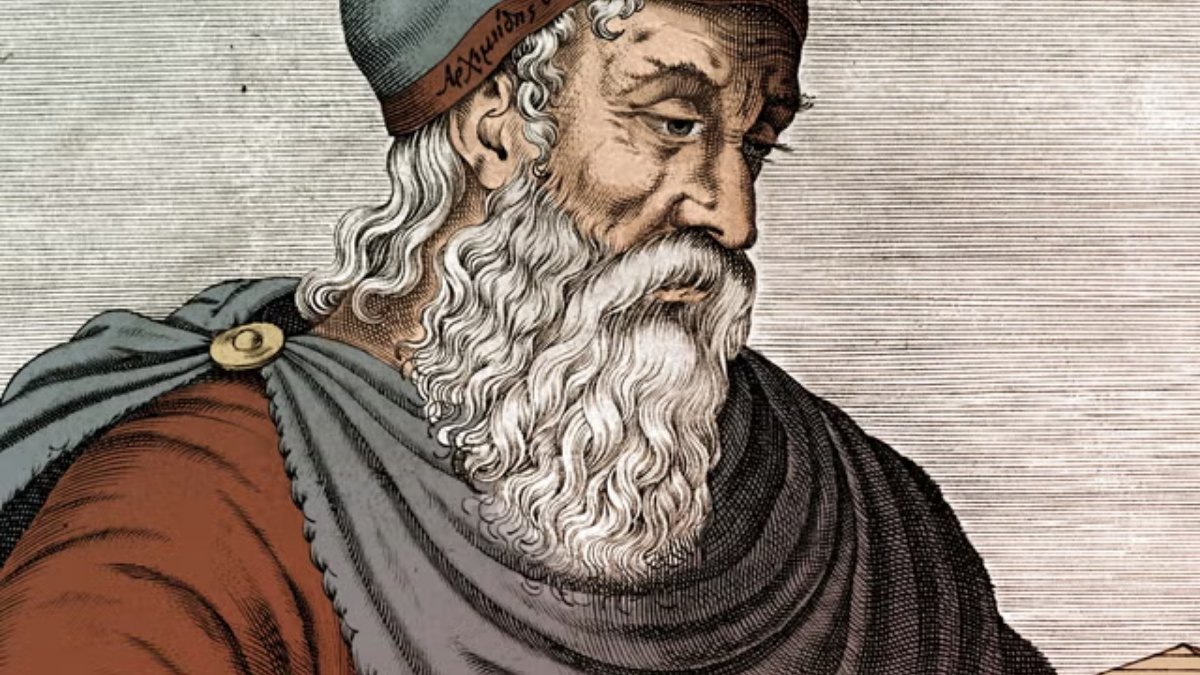
(Credits: Biography)
Often regarded as the greatest mathematician of antiquity, Archimedes made groundbreaking advances in geometry, physics, and engineering. He was the first to provide a precise value for π (pi) and developed principles that laid the groundwork for modern calculus. His work on levers, buoyancy, and spheres changed how scientists understood the physical world.
2. Pythagoras

(Credits: The Marginalian)
Best known for the Pythagorean theorem, Pythagoras connected mathematics to philosophy and nature. His belief that “numbers rule the universe” influenced later thinkers, and his study of harmony and proportions linked maths with art and music.
3. Euclid

(Credits: Britannica)
Do You know? He is known as the “Father of Geometry,” Euclid wrote Elements — one of the most influential textbooks in history. His systematic approach to proofs and postulates shaped mathematics education for over two millennia and remains the basis for geometry taught today.
4. Aryabhata

(Credits: Mint)
His work in the 5th and 6th centuries was critical to the development of the modern decimal number system with zero, which is the foundation for almost all global mathematics and commerce today.
5. Muhammad ibn Musa al-Khwarizmi
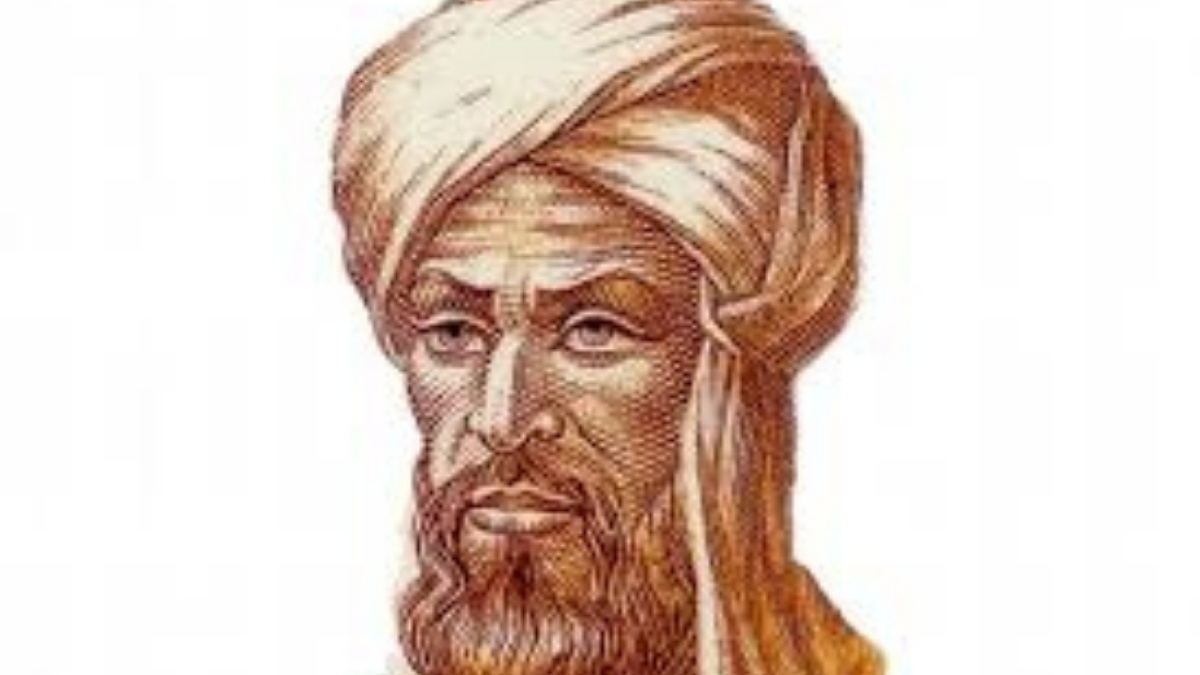
(Credits: Olympic UZ)
He formally established algebra as its own field of study, and both the words "algebra" (from al-jabr) and "algorithm" (a Latinization of his name) are derived from his foundational texts. His work helped transmit the Hindu-Arabic numeral system to Europe.
6. René Descartes

(Credits: World History Encyclopedia)
French philosopher and mathematician René Descartes revolutionised the field by inventing analytic geometry and the Cartesian coordinate system, linking algebra and geometry. His rationalist philosophy and mathematical precision paved the way for modern scientific thought.
Most Famous Mathematicians Trivia Facts
Here are a few most important and searched about trivia facts about the greatest mathematicians of all time:
|
You May Also Like To Read:
List of 9 Most Influential Dynasties of the World, Check Here!
Conclusion
Mathematics is one of the greastest discovories ever made and through the lens of these seven legends, it is more than just about alculation. It’s the language of reason and imagination that continues to shape humanity’s progress.
To see more of such stories, you can go ahead and add this site to your preferred sources by clicking here.





-1766509276000.jpg)
Comments
All Comments (0)
Join the conversation