Which is the Shortest Day of the Year ? Winter Solstice, Dates, and Science
The shortest day of the year happens during the winter solstice, when Earth’s tilt points a hemisphere away from the Sun. This results in the least daylight and longest night, with dates differing between hemispheres. Though often linked to winter, the coldest days usually arrive weeks later due to seasonal lag.
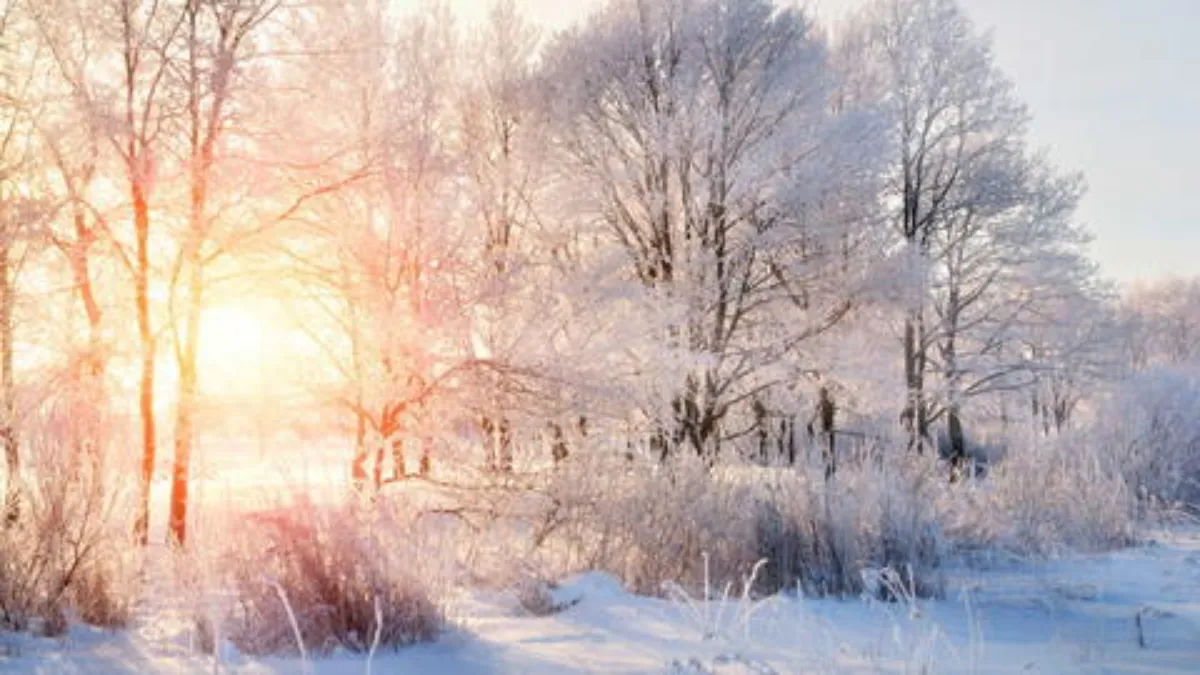
The shortest day of the year is the winter solstice for your hemisphere: around 21 December in the Northern Hemisphere and around 21 June in the Southern Hemisphere. On that day, you get the fewest hours of daylight and the longest night, because your half of Earth is tilted farthest away from the Sun.
What is the shortest day of the year?
-
On Earth, the “shortest day” means the calendar day with the least amount of daylight, not a shorter rotation (every day is still about 24 hours long).
-
This happens at the winter solstice, when your hemisphere is tilted maximally away from the Sun.
-
Northern Hemisphere winter solstice: around 20–23 December each year (commonly ~21 December).
-
Southern Hemisphere winter solstice: around 20–22 June each year (commonly ~21 June).
-
On that date, the Sun takes its lowest, shortest path across the sky, rising late, staying low, and setting early.
Why is there a shortest day? (The science)
The key reason is Earth’s axial tilt:
-
Earth’s axis is tilted by about 23.4–23.5 degrees relative to its orbit around the Sun.
-
As Earth travels around the Sun, this tilt causes:
-
Longer days and more direct sunlight in one hemisphere (its summer).
-
Shorter days and less direct sunlight in the other (its winter).
At the winter solstice for a hemisphere:
-
The pole in that hemisphere is tilted furthest away from the Sun.
-
The Sun’s midday position is lowest in the sky, and its apparent path is shortest.
-
That gives the fewest daylight hours of any day in the year.
Does everyone have the same shortest day?
No. The exact date and length of the shortest day depend on where you are:
-
In 2025, for example, the Northern Hemisphere winter solstice falls on Sunday, 21 December, giving only about 8–9 hours of daylight in many mid‑latitude locations.
-
In London, the 2025 solstice day lasts 7 hours 49 minutes 42 seconds of daylight, almost 9 hours shorter than at the summer solstice.
Closer to the poles, the effect is extreme:
-
Inside the Arctic Circle, parts of the north may see no sunrise at all (polar night).
-
Inside the Antarctic Circle, the December solstice brings 24‑hour daylight (for the Southern Hemisphere, it’s the longest day then).
So:
-
Northern Hemisphere shortest day: December solstice (~21 December).
-
Southern Hemisphere shortest day: June solstice (~21 June).
Is the shortest day also the coldest?
Usually not:
The coldest days typically come weeks after the solstice, due to seasonal lag—Earth, oceans and atmosphere take time to cool down or warm up.
So even though the shortest day is in late December (north) or late June (south), the coldest period often falls in January–February or July–August, respectively.

Kirti Sharma is a journalist in the education domain with three and a half years of experience creating high-quality content for the education technology (EdTech) and digital media industries. She has an expertise in covering education news. Kirti has experience in writing data backed informational pieces on General knowledge.
Kirti holds a Bachelor of Arts degree, which helped build her strong foundation in writing and research. Over the course of her career, she has brought her skills to a variety of well-known companies, including ThoughtPartners Global, Infinite Group, and MIM-Essay. Through these roles, she has learned how to take complex information and turn it into engaging, easy-to-understand content for readers online.


.jpg)


![[OUT] UPSSSC PET Admit Card 2026 LIVE: यूपी पीईटी एडमिट कार्ड जारी, upsssc.gov.in पर Direct Link](https://img.jagranjosh.com/images/2026/October/15102026/UPSSSC-PET-Admit-Card-2026.jpg)