Why Do Some Indian Lakes Change Colour Naturally?
Why do some Indian lakes change colour naturally? Learn how algae, microorganisms, salt, sunlight, temperature and minerals change lake water colour, with Lonar Lake as an example.
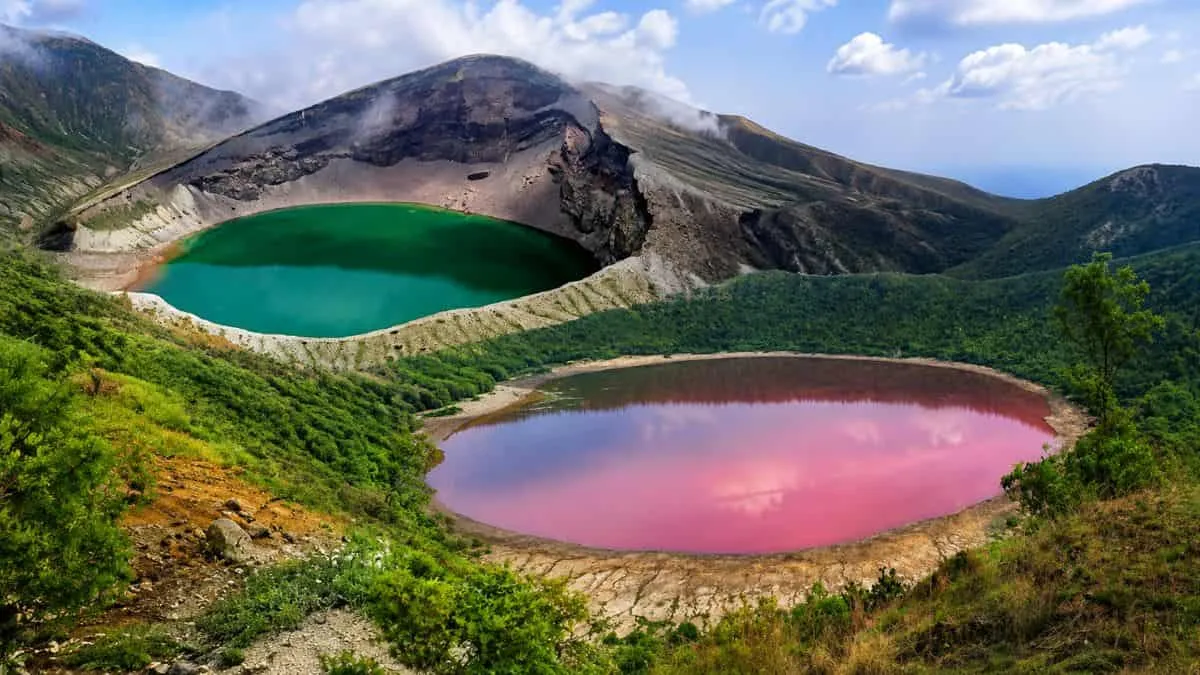
Have you ever spotted a lake that doesn't always have the same colour? Sometimes the water in some lakes can appear blue, green, pink, or even reddish in colour. This can be an unusual situation, but it can occur naturally.
Lakes can have different colours depending on what is in the water and what is happening around the lake. The colour of a lake can be changed by the sun, temperature, salt, algae and minute living things.
How a lake changes colour
The main one is that algae and other microorganisms grow.
Algae are very small organisms that live in water. Most people are familiar with them because they are green, but some varieties are coloured other than green. They will have an impact on the water colour if they increase in abundance.
For instance, an increase in green algae makes a lake look greener. Very small living things may also cause pink/red discolouration in the water.
The other is due to the salt concentration of the water. Evaporation from a lake causes the salt concentration to increase. This can produce a good environment for some microorganisms which live in salty water.
-
Growth of algae
-
Increase in salt in the water
-
Changes in temperature
-
Different amounts of sunlight
-
Mud and other particles in the water
-
Changes in water level
-
Growth of tiny microorganisms
Why Did Lonar Lake Turn Pink?
One of the most popular examples of a coloured lake is Lonar Lake in Maharashtra.
The Lonar Lake was formed due to the impact of a meteorite on Earth thousands of years ago. The water of the lake is both salty and alkaline.
During 2020, it was observed that the water of Lonar lake was pinkish in colour. The lake has a normal greenish colour, making it an interesting topic.
The lake was examined by scientists and the salt level and conditions found to be suitable for certain microorganisms growing. These microorganisms naturally contain the pigment which may give a pink or red colour.
After some time, the colour of the lake started moving back towards its normal appearance.
This illustrates that the colour of a lake can vary with the changes in the water.
Is the sun light too?
Yes, also sunlight can make a difference.
When the water of a lake is clear, and the light of the sun is reflected in the water in a certain way, the lake may look blue. The same lake can appear somewhat different depending on the time of day (morning, afternoon or evening).
The colour of the water may also be affected by the depth of the water and cloud or small particles floating in the water.
What About Mud and Minerals?!
Soil, mud and minerals can be transported into a lake with the rain. Water can be muddy or cloudy after heavy rainfall.
This can cause the lake to appear brown, yellowish or grey.
Colour may be influenced by the amount of water in the lake. Water levels during dry periods may drop and the salinity of the water and other chemicals may rise.
Is a Colour Change Pollution?
Not always.
Coloured lake is a natural phenomenon. It can be brought on by algae, microorganisms, the sun, salt and temperature.
But there are some variations in water color that are also associated with pollution. For instance, excessive nutrient inputs to a lake can result in rapid growth of some species of algae.
This is why scientists test the water before they make a determination of the specific cause of the colour change.
Main Reasons for Colour Change
| Reason | What can happen? |
| Algae | Water may look green or brown |
| Microorganisms | Water may become pink or reddish |
| Salt | Can help some microorganisms grow |
| Sunlight | Changes how we see the water |
| Mud and soil | Can make water brown or cloudy |
| Minerals | Can affect the colour |
| Temperature | Can affect algae and microorganisms |
| Water level | Can change the concentration of salt |
So, Indian lakes change colour due to the continuous change of conditions within the lake. Sometimes, it's due to little organisms. It can sometimes be due to the salt, sunlight, mud or temperature.
This is a natural process that can be seen in Lonar Lake.
Therefore, colour changes in a lake do not necessarily indicate that some sort of coloured material has been added to the water. The change is sometimes caused by nature itself.

Prabhat Mishra is a Subject Matter Expert and digital journalist with an extensive background in the competitive exam landscape and over 4 years of experience in education, national and international news, and current affairs. Over his tenure with top knowledge platforms like Mentorship India, IAS BABA, IAS SARTHI, and now Jagran Josh, he has a deep understanding of government exams like UPSC and State PCS, including UP and Bihar, as he has already qualified for the UPPCS 2022 Mains and Bihar 68th Mains. With his core expertise in history, polity, geography & current affairs, he specialises in creating well-researched, aspirant-centric content and simplifying complex topics for competitive examinations.