JNU PhD Reservation Row Deepens as Students' Body Announces Indefinite Sit-In Over SC, ST Seats
JNU's PhD admission row intensifies as BAPSA announces an indefinite sit-in over alleged SC, ST seat shortages. Check student demands and NCSC, NCST action.
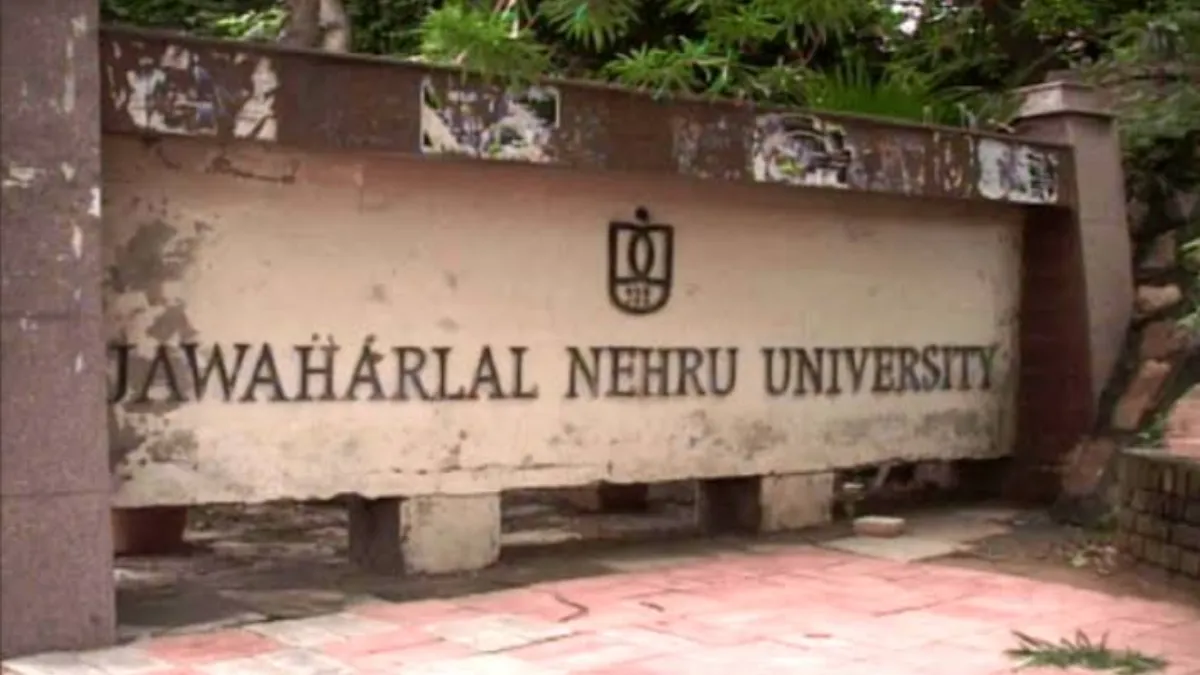
The reservation controversy over PhD admissions at Jawaharlal Nehru University (JNU) has intensified, with the Birsa Ambedkar Phule Students' Association (BAPSA) announcing an indefinite sit-in against the university administration. The student organisation has alleged that the university has not advertised the required number of reserved seats for Scheduled Caste (SC) and Scheduled Tribe (ST) candidates for the 2026–27 academic session.
BAPSA has demanded that JNU put the ongoing PhD interview process, also known as the viva voce, on hold until the alleged shortage of reserved seats is addressed. It has also called for the university to issue a revised admission notification and prospectus with the correct category-wise seat details.
The controversy has also attracted the attention of the National Commission for Scheduled Castes (NCSC) and the National Commission for Scheduled Tribes (NCST), which have sought action and clarification from the university.
Also read:
Why Are JNU Students Protesting Over PhD Reservations?
The immediate issue concerns the number of seats reserved for SC and ST candidates in JNU's PhD admission prospectus for the 2026–27 academic session.
According to student organisations, the university advertised 711 regular PhD seats but did not show the full number of seats required under the reservation policy. They have alleged that the prospectus listed fewer seats for SC and ST candidates than the numbers they believe should have been reserved.
The figures cited in the controversy are:
| Category | Seats expected as claimed by student groups | Seats advertised | Alleged shortfall |
| Scheduled Tribe (ST) | 53 | 38 | 15 |
| Scheduled Caste (SC) | 107 | 103 | 4 |
| Persons with Benchmark Disabilities (PwBD) | 36 | 17 | 19 |
Note: These figures reflect the calculations and allegations reported by student organisations. They should not be treated as a final finding of a reservation violation by the university.
What Is the Reservation Rule for SC and ST Students?
Under the Central Educational Institutions (Reservation in Admission) Act, 2006, central educational institutions provide reservation in admissions for eligible candidates belonging to certain categories.
The commonly applicable reservation percentages include:
| Category | Reservation percentage |
| Scheduled Castes (SC) | 15% |
| Scheduled Tribes (ST) | 7.5% |
| Other Backward Classes (OBC) | 27% |
In simple words, reservation means that a specified share of seats in eligible educational institutions is set aside for candidates belonging to these categories. This is intended to provide them with access to educational opportunities.
However, calculating the exact number of reserved seats can involve the applicable admission rules and the way seats are distributed across courses and academic units. Therefore, the student organisations' calculations and the university's official reservation roster need to be examined before reaching a conclusion about whether the rules have been violated.
What Are BAPSA's Demands?
BAPSA has called for corrective action before the ongoing PhD admission process moves further. Its major demands include:
| Demand | What it means |
| Stop the viva voce process | Pause PhD interviews until the reservation concerns are addressed |
| Re-notify SC and ST seats | Issue a revised notification showing the allegedly missing reserved seats |
| Release a revised prospectus | Publish updated admission information with proper reservation details |
| Implement reservation rules | Ensure that the applicable reservation policy is followed |
| Implement committee reports | Act on recommendations made by earlier committees on social justice and reservation |
| Address discrimination | Take steps to address alleged caste discrimination in hostel allotments |
| Faculty promotions | Speed up promotions for eligible SC, ST, OBC and PwD faculty members |
BAPSA has also referred to reports prepared by the Rajiv Bhatt Committee (2012), Sukhadeo Thorat Committee (2013) and Abdul Nafey Committee (2016), seeking their implementation.
What Have the National Commissions Said?
The issue has reached two statutory bodies responsible for safeguarding the interests of Scheduled Caste and Scheduled Tribe communities.
The National Commission for Scheduled Castes (NCSC) has directed JNU to re-notify the allegedly missing reserved seats before the viva voce examinations or explain why the seats have not been included. It has also asked the university administration to appear for an inquiry.
Separately, the National Commission for Scheduled Tribes (NCST) has directed the university's Equal Opportunity Cell (EOC) to examine the matter.
| Commission | Action reported |
| National Commission for Scheduled Castes (NCSC) | Asked JNU to re-notify the disputed seats before interviews or explain the shortfall |
| National Commission for Scheduled Tribes (NCST) | Asked the Equal Opportunity Cell to examine the reservation issue |
These interventions mean that the concerns have been taken up by the relevant national commissions. However, they do not by themselves establish that the university has violated reservation rules. The university's explanation and the findings of the inquiry will be important in determining the matter.
What Is the Difference Between a Sit-In and a Hunger Strike?
A sit-in is a form of protest in which people gather and remain at a particular place to demand action on an issue. Participants may hold demonstrations, raise slogans and communicate their demands to the authorities.
An indefinite sit-in means that the protesters have not announced a fixed date for ending the demonstration. They intend to continue until their demands are addressed or they decide to call it off.
A hunger strike, on the other hand, involves refusing food as a form of protest. The two forms of demonstration are different, and an indefinite sit-in does not automatically mean that participants are on a hunger strike.
What Happens Next in the JNU PhD Admission Row?
The next important development will be the university administration's response to the allegations and the directions issued by the national commissions.
BAPSA wants the disputed seats to be re-notified and the admission prospectus revised before the viva voce process continues. The commissions have also sought action and clarification from the university.
Students seeking PhD admission should keep checking the official JNU website for updates on the admission schedule, interview process and any revised seat notification.
Read more:
100 Years Later, Ramanujan's 2 Equations Help Researchers Discover Infinite New Formulas

Anjali is an education journalist with over a year of experience in digital and business journalism. She has previously worked with BW Businessworld and ANI, where she gained experience in news writing, editing, research, and fact-checking. At Jagran Josh, she writes education news and covers competitive exams and current affairs, with a keen interest in delivering accurate, informative, and reader-focused content. She holds a BA from Miranda House, University of Delhi, and a postgraduate diploma in English Journalism from the Indian Institute of Mass Communication (IIMC). Anjali enjoys reading and exploring new ideas and perspectives through books.