Kerala SSLC Biology Exam 2026: Download Question Paper and Answer Key PDF
Kerala SSLC Biology Question Paper 2026: The exam was conducted today, March 30th. Download the question paper PDF, check the detailed exam analysis, and review the answer key to evaluate your performance.

The Kerala Board of Public Examinations (KBPE) successfully conducted the Kerala SSLC Biology Exam 2026 on 30th March 2026 in the morning shift. After the exam, students are eagerly looking for the question paper, exam analysis, and answer key to evaluate their performance and estimate their expected scores. To support students, we have provided the Kerala SSLC Biology Question Paper 2026 along with important exam details. Students can check the Kerala SSLC Biology Question Paper 2026 to better understand the paper structure and improve their preparation strategy for future exams.
Kerala SSLC Biology Question Paper 2026
The Kerala SSLC Biology Exam 2026 question paper will be updated soon here. The Class 10 Biology examination was successfully conducted by the Kerala Board of Public Examinations (KBPE) on 30th March, 2026 at 9:30 AM to 12:15 PM. The pattern of this year's question paper has been kept similar to that of the previous year and was entirely based on the guidelines issued by the Kerala Board. You can download the PDF of the question paper from the link given below:
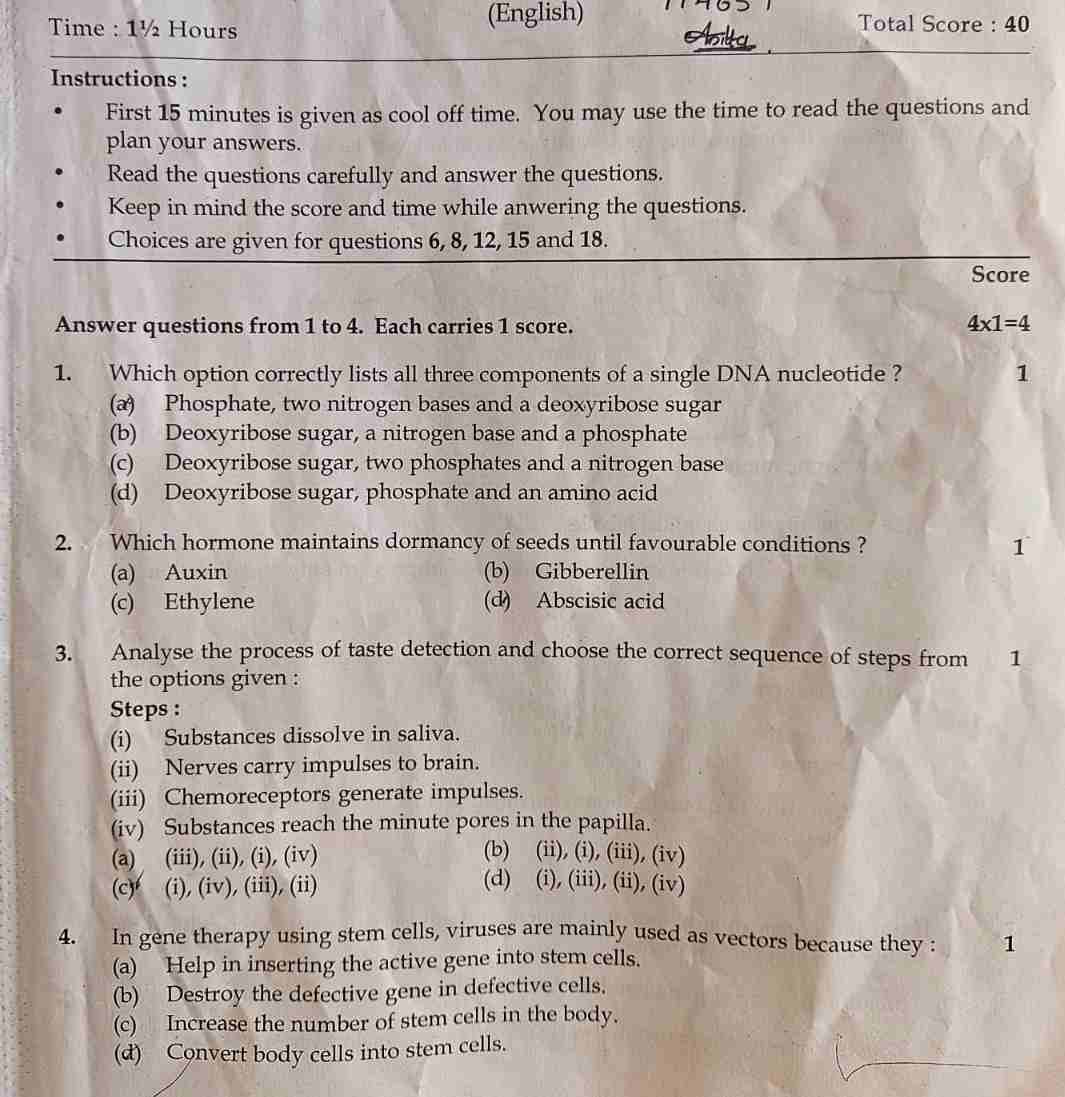
Kerala SSLC Biology Question Paper 2026 |
Kerala SSLC Biology Answer Key 2026
The Kerala Class 10 Biology question paper is provided here to help students in their exam preparation. The official answer keys will be uploaded soon. Students can solve these papers and later check the correct answers to know how well they are prepared. Stay connected with us for the latest updates and detailed solutions.
Biology Answers (These are just a hints to write the answers)
-
(b) Deoxyribose sugar, a nitrogen base and a phosphate
-
(d) Abscisic acid
-
(c) (i), (iv), (iii), (ii)
-
(a) Help in inserting the active gene into stem cells.
5. Advantages of technological possibilities in environmental conservation:
-
(a) Bioremediation: It uses microorganisms to naturally break down and remove environmental pollutants (like oil spills or heavy metals) from soil and water, making it a cost-effective and eco-friendly clean-up method.
-
(b) Cryopreservation: It allows for the long-term preservation of biological materials (like seeds, tissues, sperm, or eggs) at extremely low temperatures (using liquid nitrogen). This is crucial for conserving the biodiversity of endangered or rare species for future use.
6. (A) Synapse Structure:
-
(a) The chemical labelled as 'X' is a Neurotransmitter (such as Acetylcholine).
-
(b) Role in one-way transmission: Neurotransmitters are stored and released only from the synaptic vesicles of the presynaptic membrane (axon terminal), and the specific receptors that bind to them are located exclusively on the postsynaptic membrane (dendrite). This structural arrangement ensures that nerve impulses can only flow in one direction across the synapse.
OR
6. (B) Autonomic Nervous System:
-
(a) The Sympathetic Nervous System controls these actions (it triggers the "fight or flight" response).
-
(b) Two other actions controlled by this system: 1. Dilation of pupils (to let in more light).
2. Dilation of the bronchi (to increase oxygen intake).
(Other acceptable answers include decreased saliva production, stimulation of sweat glands, or release of glucose from the liver).
7. Antibiotics and Pathogens:
-
(a) Antibiotics are used to destroy Bacteria.
-
(b) Major concern of stopping early: Stopping an antibiotic course too early may leave some bacteria alive. These surviving bacteria can mutate and develop antibiotic resistance, meaning the same antibiotic will no longer be effective against them in the future, making subsequent infections much harder to treat.
Kerala SSLC Biology Answer Key 2026 (Link Active Soon) |
Kerala SSLC Biology Exam Analysis 2026
Here is the exam analysis for the Kerala Class 10 Biology exam, updated with the correct 2026 exam date and the official paper structure:
Kerala SSLC Biology Exam Analysis 2026 |

Apeksha Agarwal is an Education Journalist with over 3.5 years of experience. She covers a wide range of topics, including school board examinations, entrance tests, admissions, results, scholarships, and higher education updates. Over the years, she has closely tracked major examinations such as JEE Main, NEET UG, CUET, and various state-level entrance exams, helping students stay informed throughout their academic journey. Apeksha has a Master's degree in Journalism and Mass Communication and a certificate in Digital Journalism. She is passionate about transforming complex educational developments into clear, accessible, and useful information. Her reporting focuses on providing students, parents, and educators with accurate updates and practical insights on examinations, results, and policy changes. She believes that quality education journalism can make a meaningful difference by helping students make informed decisions about their future.