Jawaharlal Nehru Biography: Early Life, Education, Role in Gandhi-Irwin Pact & Political Journey
Jawaharlal Nehru was a key leader of India’s freedom movement and its first Prime Minister. His vision, policies, and writings played a major role in shaping modern India’s democratic and economic foundations.
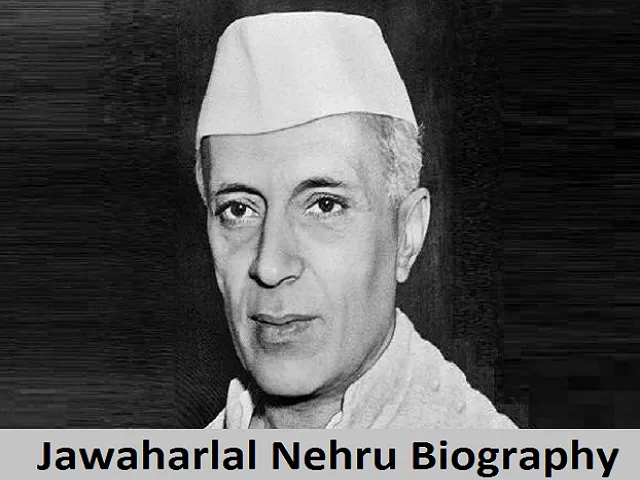
Pandit Jawaharlal Nehru was one of the most eminent leaders of India's freedom movement and was the first Prime Minister of independent India in 1947. He was instrumental in building a new nation and was keen on establishing a powerful, a modern country. Nehru was a believer in the ideology of socialism and implemented policies for the betterment of industry, education, and economy.
He was also a writer and authored The Discovery of India and Glimpses of World History, which offered a layman-friendly explanation of India's past and world events.
Nehru was the father of Indira Gandhi, who later became India's first woman Prime Minister. He was a democracy-inclined prime minister and established a parliamentary government. He adhered to a non-aligned foreign-policy, making India neutral and did not distance itself from the world conflicts.
Jawaharlal Nehru: Quick Facts
Born on: 14 November, 1889
Place of Birth: Allahabad, Uttar Pradesh, India
Father's Name: Motilal Nehru
Mother's Name: Swarup Rani Nehru
Spouse: Kamala Nehru
Children: Indira Gandhi
Education: Harrow School, London; Trinity College, Cambridge; Inns of Court School of Law, London
Occupation: Barrister, Writer, and Politician
Political party: Indian National Congress
Political Ideology: Nationalism, Socialism, Democracy
Award: Bharat Ratna
Publications/Works: The Discovery of India, Glimpses of World History, Jawaharlal Nehru's Autobiography, Letters from a Father to his Daughter, etc.
Died: 27 May 1964
Place of Death: New Delhi
Cause of Death: Heart attack
Memorial: Shantivan, New Delhi
Jawaharlal Nehru: Early Life, Family, and Education
Jawaharlal Nehru was born in a Kashmiri Brahman family. His father Motilal Nehru was a renowned lawyer and leader of the Indian independence movement. He was also one of the prominent associates of Mahatma Gandhi. Jawaharlal Nehru was the eldest son of Motilal Nehru out of four children and two of whom were girls. He completed his early education until the age of 14 at home under private tutors. At the age of fifteen, he went to England at Harrow school. After two years, he went to Trinity College, Cambridge, and earned an honours degree in natural sciences. At the Inner Temple, London, he had completed his studies for a barrister.
He spent seven years in England but was very confused and always felt that he is in a half home neither in England nor in India. And so, he had written, "I have become a queer mixture of East and West, out of place everywhere, at home now where". He came back to India in around 1912. He had an interest in the struggle of all nations who suffered under foreign domination. In 1916, he married Kamala Kaul and settled in Delhi. In 1917, Indira Priyadarshini (Indira Gandhi) was born.
20 Interesting and Unknown Facts about Mahatma Gandhi
Jawaharlal Nehru: Political Journey
- He attended the Bankipore Congress as a delegate in 1912.
- In 1919, he became the Secretary of the Home Rule League, Allahabad.
- In 1916, the first time he met with Mahatma Gandhi, and was immensely inspired by him.
- In 1920, he organised the first Kisan March in the Pratapgarh district of Uttar Pradesh.
- Due to the Non-Cooperation Movement (1920-22), he was imprisoned twice.
- In September 1923, he became the General Secretary of the All India Congress Committee.
- In 1926, he toured Italy, Switzerland, England, Belgium, Germany, and Russia.
- As an official delegate of the Indian National Congress, he had attended the Congress of oppressed Nationalities in Brussels in Belgium.
- In 1927, he attended the tenth-anniversary celebrations of the October Socialist Revolution in Moscow.
- During the Simon Commission in 1928, he was lathi-charged in Lucknow.
- He attended the All-Party Congress on 29 August 1928 and was one of the signatories to the Nehru Report on Indian Constitutional Reform that was named after his father Shri Motilal Nehru.
- In 1928, he founded the 'Independence for India League' and became its General Secretary.
- He was elected the President of the Lahore Session of the Indian National Congress in 1929. In this session only, the complete goal for the independence of the country was adopted.
- During 1930-35, he was imprisoned several times, due to the connection with Salt Satyagraha and other movements launched by the Congress.
- On 14 February 1935, he had completed his 'Autobiography' in Almora Jail.
- After releasing from jail, he went to Switzerland to see his ailing wife.
- He was again arrested for offering an individual Satyagraha on 31 October, 1940 to protest against India's forced participation in the war.
- In December 1941, he was released from jail.
- At the 'All India Congress Committee' session in Bombay on 7 August, 1942, Pt. Jawaharlal Nehru moved the 'Quit India' resolution.
- He was arrested with other leaders on 8 August, 1942 and taken to Ahmednagar Fort. This was the longest and his last detention.
- He was released from Jail in January 1945 and organised a legal defence for officers and men of the INA charged with treason.
- In July, 1946, for the fourth time, he was elected as the President of the Congress and again for three more terms from 1951 to 1954.
In this way, he became the first Prime Minister of independent India. He was the first Prime Minister to hoist the national flag and make his iconic speech "Tryst with Destiny" from the ramparts of the Lal Quilla (Red Fort).
10 Interesting facts about Rajiv Gandhi
The Role of Jawaharlal Nehru in the Gandhi-Irwin Pact (1931)
- Initially, he was disappointed with the agreement as it did not fulfil India's expectations.
- He was also concerned about Purna Swaraj, which had already been declared as a primary demand but was not included.
- He did not like the pact as it did not prevent the execution of Bhagat Singh and his companions, which deeply upset him and the Indian people.
- He also felt disappointed to see the strong Civil Disobedience Movement come to an abrupt end after the pact.
- Nevertheless, he supported Mahatma Gandhi, as unity in the freedom struggle was of paramount importance.
- He ensured that the pact was formally accepted at the Congress meeting in Karachi by moving a resolution, despite facing internal doubts.
- Nehru was keen to make sure that discussions on Fundamental Rights, conciliation, and economic boards were included for India's future.
- Overall, he formed a bridge between the two factions and maintained a balance between unity and disagreement.
Major works of Jawaharlal Nehru after becoming the Prime Minister of India
- He imparted modern values and thought.
- He insisted on the secular and liberalist approach.
- He focused on the basic unity of India.
- He advocated democratic socialism and encouraged India's industrialisation by implementing the first five-year plans in 1951.
- Promoted scientific and technological advancements by establishing higher learning.
- Also, instituted various social reforms like free public education, free meals for Indian children, legal rights for women including the ability to inherit property, divorce their husbands, laws to prohibit discrimination based on caste, etc.
Summary on Indian National Movement
Jawaharlal Nehru: Legacy
He believed in pluralism, socialism, liberalism, and democracy. He had an immense love for children and so, his birthday is celebrated as Children's Day in India. He supported and generated a way for India's education by envisioning the top tier institutions of India including the Indian Institute of Technology, All India Institute of Medical Sciences and India's first Space Program, etc.
In fact, Shyam Benegal created a TV series "Bharat Ek Khoj" that was based on Jawaharlal Nehru's famous book, Discovery of India. In Richard Attenborough's biopic 'Gandhi' and Ketan Mehta's 'Sardar', Jawaharlal Nehru was featured as a prominent character.
Jawaharlal Nehru: Death
On 27 May 1964, he died due to a heart attack. He was cremated at the Shantivan on the banks of the Yamuna River in Delhi.
Also, Read
| Children’s Day 2021: Why is Children's Day celebrated on November 14 in India? | Important Days and Dates in November 2021 |

Aishwarya Samant is a journalist with over 4 years of experience navigating the fast-paced corporate media landscape. She specializes in decoding business news, world economy, personal finance, and stock market trends, often adding a subtle touch of political perspective to keep things interesting.
Having worked with reputed organizations like ZEE, TV9, News24, and NewsX, she is no stranger to the newsroom hustle and the demands of real-time storytelling. Her writing style is fast-paced, engaging, and crafted to connect seamlessly with diverse audiences across platforms. She approaches every story from the reader’s point of view, breaking down complex topics into clear, relatable narratives backed by solid facts and credible sources. While she’s confident in expressing strong viewpoints, she ensures balance with insights. Sharp, fact-driven content that informs, engages, and keeps readers coming back for more.


-1791340043920_t.webp)

-1791294701285_t.webp)