Which is the Largest Emirate of the UAE?
Abu Dhabi is the largest of the seven UAE emirates and its capital, covering 87% of the land. It is the world's safest city, featuring ancient oasis, CO2-absorbing mangroves, and eco-friendly Masdar City.

The United Arab Emirates (UAE), also known simply as the Emirates, at the eastern end of the Arabian Peninsula, is made up of seven emirates.
The UAE is named after the seven emirates that formed a federation: the Emirate of Abu Dhabi, the Emirate of Dubai, the Emirate of Ajman, the Emirate of Sharjah, the Emirate of Ras Al Khaimah, the Emirate of Umm Al Quwain, and the Emirate of Fujairah.
Emirates, formerly known as the Trucial States (also called Trucial Oman) under the British, gained autonomy following World War II (1939-45), when the Trucial States of Bahrain and Qatar declared independent statehood.
In this article, we will try to find out which is the Largest Emirate of the UAE. Its older name and how it is the largest emirate of the UAE.
Check Out: What is the Old Name of Indonesia?
Which is the Largest Emirate of the UAE?
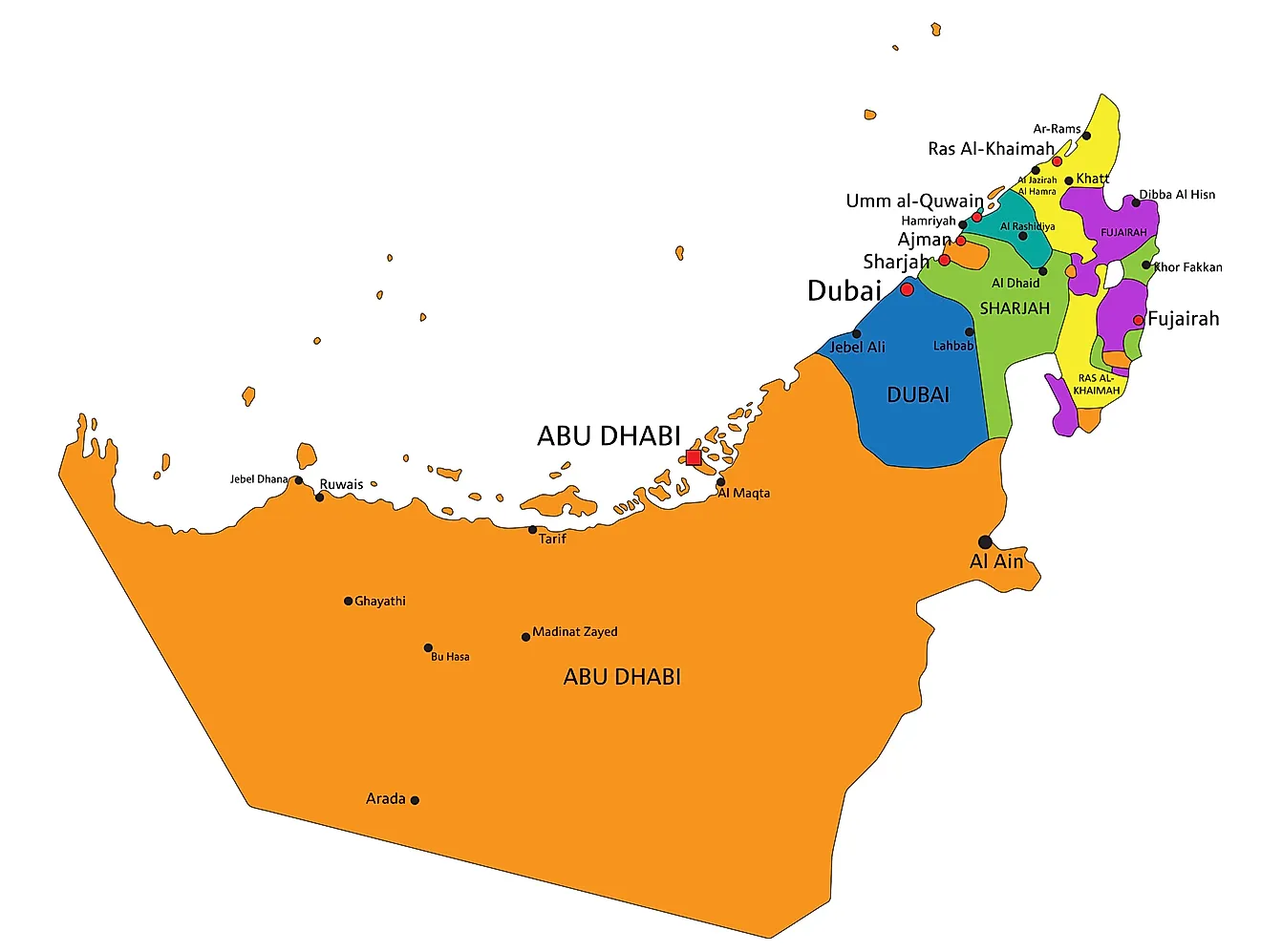
The Emirate of Abu Dhabi, accounting for about 87% of the nation's total land area, is the largest emirate of the UAE. The city of Abu Dhabi, after which the emirate is named, is the capital of both the emirate and the federation.
Abu Dhabi means "father of the gazelle". Before the area got the name Abu Dhabi, it was known as Milh, which means salt in Arabic, probably because of the salt water in the area.
Abu Dhabi is in the far west and southwest part of the United Arab Emirates, along the southern coast of the Persian Gulf.
Interesting Facts About Abu Dhabi
With the founding of the United Arab Emirates in December 1971, Abu Dhabi was chosen as the provisional political and administrative capital. Here are some intriguing facts about Abu Dhabi:
World’s most secure city: In 2025, Abu Dhabi earned the top spot on the global safest cities list for the ninth consecutive year, according to the online database Numbeo.
This achievement reflects the emirate’s dedication to creating innovative security plans, strategies, and initiatives aimed at improving the quality of life for its citizens, residents, and visitors.
Ancient irrigation system of Al Ain Oasis: The Al Ain Oasis, which has supported the region’s agriculture for over 3,000 years, features a remarkable network of underground tunnels that transport water from the mountains to the area.T
oday, visitors have the opportunity to stroll through the verdant landscape, observing the age-old technology that sustains life in the arid desert.
Cooling Architecture: In the era before air conditioning, the traditional architecture of Abu Dhabi featured clever designs such as wind towers (barjeel), which directed breezes into homes to ensure natural airflow and maintain cool interiors.
Additionally, robust walls constructed from coral and stone provided insulation against the intense heat.
Mangroves and their Role in CO2 Absorption: The sprawling mangrove forests lining Abu Dhabi's coast do more than just serve as a habitat for wildlife, they are crucial in the fight against climate change.
These mangroves excel at capturing carbon dioxide from the air, contributing to the reduction of the city’s carbon emissions.
Discovering Mushrooms in the Desert: Interestingly, some varieties of edible mushrooms can be found thriving in the deserts of Abu Dhabi.
Following infrequent winter rainfalls, the increased moisture stimulates the growth of desert fungi, which are highly valued by local Bedouins.
Known as desert truffles or fagga, these mushrooms represent a hidden culinary treasure that flourishes in the extreme conditions of the Emirati desert, showcasing nature's resilience in such a challenging environment.
Oldest pearl ever found was unearthed in Abu Dhabi: Abu Dhabi has a deep heritage of pearl diving, and the oldest known pearl was excavated by archaeologists on Marawah Island in 2019. The Abu Dhabi Pearl is believed to date back to 5,800-5,600 BCE.
Eco-friendly urban community in Masdar City: Fueled by renewable energy, which includes one of the largest solar panel arrays in the Middle East, Masdar City is a zone without cars where electric vehicles and walkable streets prevail, aimed at being one of the most environmentally sustainable cities worldwide.
The city utilises advanced technologies to lower energy and water usage, and its structures are designed to optimise natural ventilation while minimising carbon emissions.
Ayukta Zisha is an education journalist with over three years of experience in digital media. A graduate of St. Xavier’s College, she holds a Master’s degree in English along with a certification in Digital Marketing from IIT Delhi. Backed by a strong academic foundation in the humanities, she specializes in creating educational and general knowledge content across history, geography, literature, and current affairs. During her tenure at Jagran Josh, she worked extensively on U.S. news and global developments, curating informative and engaging content for a diverse readership. Her subject expertise and ability to simplify complex topics enable her to make complex information accessible to a wide audience. Beyond journalism, Ayukta is an avid reader and a published author.