Which are the top 10 Largest Glaciers in the world?
Glaciers store vast amounts of Earth's freshwater and shape landscapes. This article ranks the top 10 largest glaciers worldwide, detailing their size, location, and significance. From Antarctica to Alaska, these ice giants regulate sea levels and influence global climate. Learn about their importance and the threats they face due to climate change. Take a look at the list of glaciers below
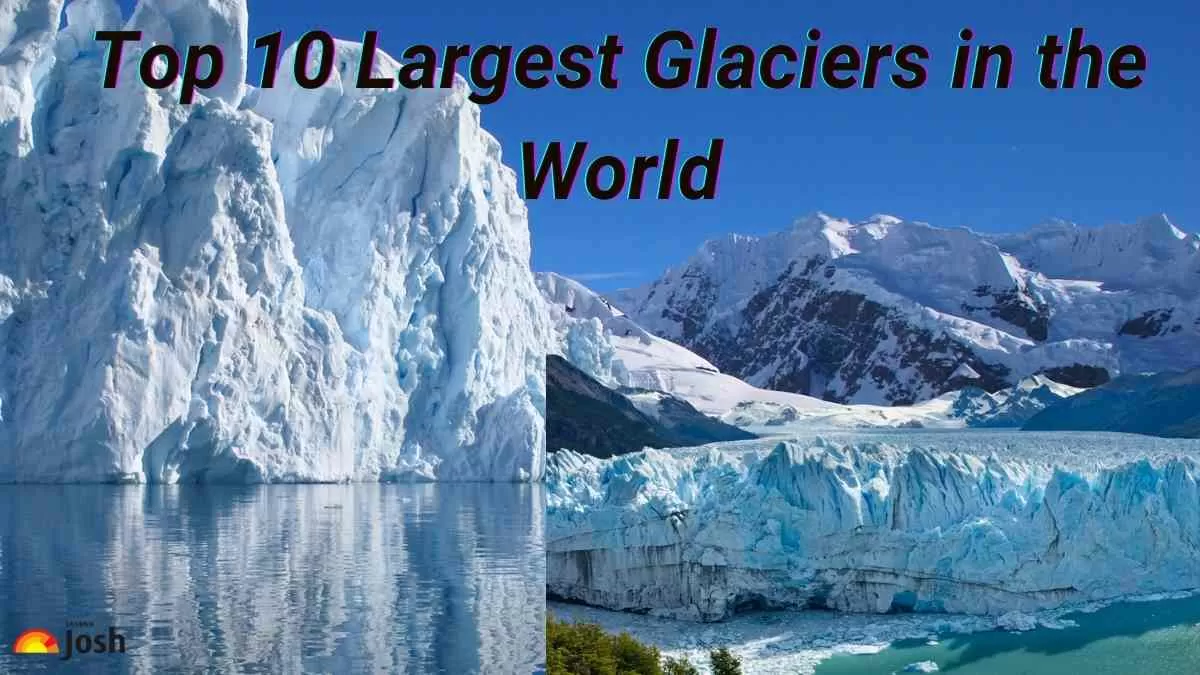
Glaciers serve as the largest reservoirs of frozen freshwater on Earth. They primarily form when massive ice sheets from the Arctic and Antarctic break into smaller sections. Additionally, glaciers are found in high-altitude alpine regions, where they play a crucial role in sustaining perennial rivers by providing a continuous source of fresh water.
Glaciers play a crucial role in shaping Earth's landscapes and serve as massive freshwater reserves. Below is a list of the top 10 largest glaciers in the world, ranked by their total area and with their region name.
Top 10 Largest Glaciers in the world
| Ranking | Name | Region Name | Area (km²) | Year |
| 1 | Seller Glacier | Antarctic Mainland | 7018 | 2002 |
| 2 | Thurston Island Glacier No. 1 | Antarctic and Subantarctic Islands | 5261 | 1972 |
| 3 | Alexander Island Glacier No. 1 | Antarctic and Subantarctic Islands | 4766 | 1997 |
| 4 | Alexander Island Glacier No. 2 | Antarctic and Subantarctic Islands | 3980 | 1997 |
| 5 | Mercator Ice Piedmont | Antarctic Mainland | 3499 | 2002 |
| 6 | Malaspina-Seward Glacier | Alaska | 3363 | 2010 |
| 7 | Wykeham Glacier South | Arctic Canada North | 3176 | 1999 |
| 8 | Bering Glacier | Alaska | 3025 | 2010 |
| 9 | Hubbard Glacier | Alaska | 2834 | 2010 |
| 10 | South Dome Glacier on the Northern Slope of Barnes Ice Cap | Arctic Canada South | 2771 | 2002 |
1. Seller Glacier
- Location: Thurston Island, Antarctica
- Size: 7,018 sq km
- Named After: John Seller was an English hydrographer and compass maker.
- Importance:
- This is one of the numerous glaciers that make up Antarctica's ice mass.
- Part of the Antarctic Peninsula Ice Body.
- A key location for the study of ice flow and climate change.
2. Thurston Glacier
- Location: Thurston Island, Ellsworth Mountains, Antarctica
- Named After: W. Harris Thurston, a textile manufacturer.
- Features:
- Third-largest glacier in Antarctica.
- Part of the broader Antarctic ice sheet.
- Plays a key role in regulating sea level changes.
3. Alexander Island Glacier No. 1
- Location: Alexander Island, Antarctica
- Size: 4,766 sq km
- Features:
- Among the largest glaciers on Earth.
- Discovered during a Russian expedition.
- Feeds into Bach and Wilkins Ice Shelves.
- Contributes to the Bellingshausen Sea ice mass.
4. Alexander Island Glacier No. 2
- Location: Alexander Island, Antarctica
- Size: 3,980 sq km
- Significance:
- Part of a major Antarctic ice network.
- Affected by oceanic and atmospheric changes.
- Used for climate research and ice-sheet monitoring.
5. Mercator Ice Piedmont
- Location: Alexander Island, Antarctica
- Named After: Flemish mathematician and geographer Gerardus Mercator
- Type: Ice Piedmont Glacier
- Characteristics:
- Spreads out into a wide area at the base of the mountains.
- Affected by regional climate conditions.
- This is one of the biggest glaciers found in mainland Antarctica.
6. Malaspina-Seward Glacier
- Location: Alaska, USA
- Type: Tidewater Glacier
- Characteristics:
- Contains multiple ice streams and tributaries.
- Contributes to iceberg formation through calving.
- Important for understanding glacial movements and sea level rise.
7. Wykeham Glacier South
- Location: Alexander Island, Antarctica
- Features:
- Steep ice slope flowing toward the coast.
- Contributes to sea ice formation.
- This is important for learning about the Antarctic climate and how the ice moves!
8. Bering Glacier
- Location: Alaska, USA & British Columbia, Canada
- Length: 190 km
- Termination: Vitus Lake
- Importance:
- This is one of the longest and largest glaciers in North America.
- Highly sensitive to climate change.
- Acts as a valuable site for glaciological studies.
9. Hubbard Glacier
- Location: Yukon, Canada & Alaska, USA
- Named After: The first president of the National Geographic Society was Gardiner Hubbard.
- Features:
- Tidewater glacier, calving into the ocean.
- Extends over 122 km.
- Creates Russell Lake by blocking the Russell Fjord.
- The major contributor to a freshwater influx in the region.
10. South Dome Glacier on the Northern Slope of Barnes Ice Cap
- Location: Baffin Island, Nunavut, Canada
- The Barnes Ice Cap, which contains this glacier, is significant because it helps scientists understand past climate conditions.
- Features:
- Dome-shaped ice structure.
- Composed of multiple glaciers.
- Monitoring Arctic ice dynamics and climate change impacts is important.
Conclusion
Glaciers are vital for Earth's ecosystem as they store vast amounts of freshwater. However, due to global warming, many of these glaciers are retreating at alarming rates. Glacier melt can result in: Rising sea levels, Changes in river flows, Disruptions in marine and terrestrial ecosystems
Understanding and monitoring these massive ice bodies is essential to predict future climate patterns and mitigate risks associated with glacial melt. Conservation efforts and climate action are crucial to preserving these glaciers and their invaluable role in maintaining Earth’s climate stability.

Prabhat Mishra is a Subject Matter Expert and digital journalist with an extensive background in the competitive exam landscape and over 4 years of experience in education, national and international news, and current affairs. Over his tenure with top knowledge platforms like Mentorship India, IAS BABA, IAS SARTHI, and now Jagran Josh, he has a deep understanding of government exams like UPSC and State PCS, including UP and Bihar, as he has already qualified for the UPPCS 2022 Mains and Bihar 68th Mains. With his core expertise in history, polity, geography & current affairs, he specialises in creating well-researched, aspirant-centric content and simplifying complex topics for competitive examinations.


-1790689630609_t.webp)