PM Surya Ghar Yojna: Objectives, Eligibility, Apply Online, Benefits and Latest Update
PM Surya Ghar Bijli Yojna is a flagship rooftop solar scheme aimed at providing up to 300 units of free electricity per month with subsidies up to ₹78,000 through simplified online processes across the country to benefit millions of households and also promoting clean energy transition in India.
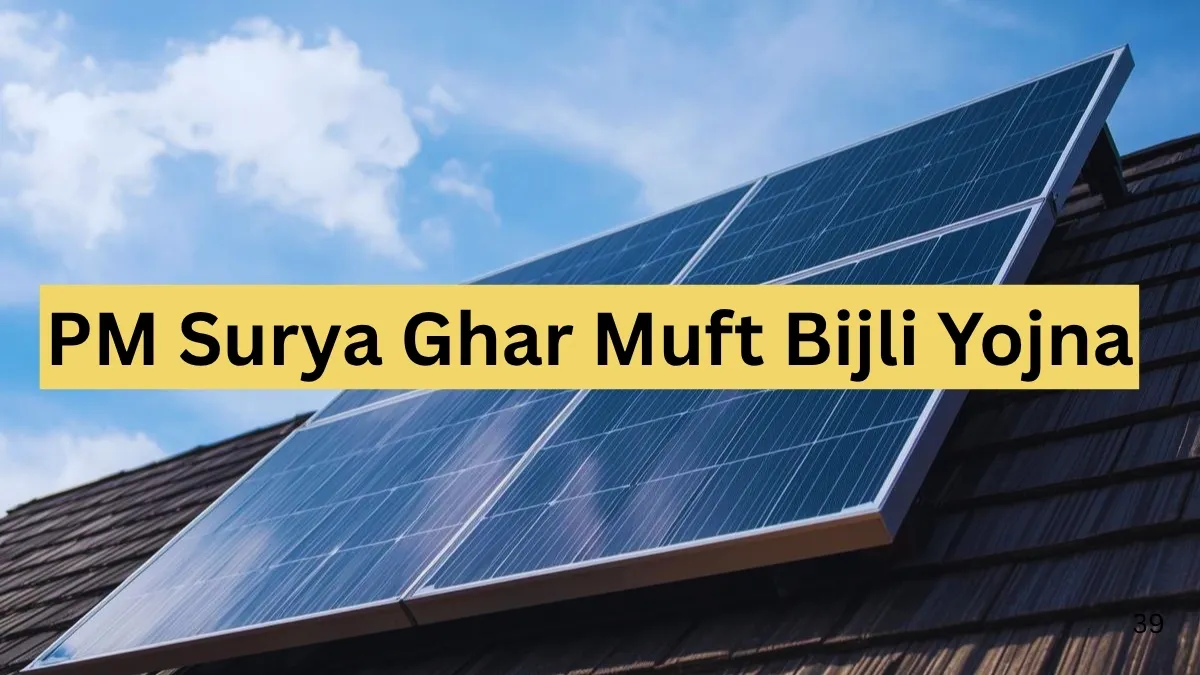
The PM Surya Ghar Muft Bijli Yojna launched in 2024. It is aimed at India’s largest residential rooftop solar initiative to install solar panels in 1 crore households by 2027 across the country and enabling citizens to generate their own electricity and reduce dependency on conventional energy sources. The scheme provides financial assistance, digital accessibility, and policy support to accelerate India’s transition toward sustainable energy.
PM Surya Ghar Bijli Yojna Latest Update (2026)
PM Surya Ghar Muft Bijli Yojna scheme has witnessed significant expansion and policy push in 2026, making it one of the fastest-growing renewable energy initiatives in India. Here are the key latest updates:
As of March 2026, more than 31.12 lakh households have benefited from rooftop solar installations under the scheme. The government has already disbursed over ₹13,900 crore in subsidies, boosting adoption among middle and lower-income groups and making it the world’s largest residential solar programme.
The scheme is providing subsidy up to ₹78,000, households can avail financial assistance based on system capacity, significantly reducing installation costs. Rooftop solar installations have increased sharply, with adoption rising by over 200% in recent years due to improved financing and transparency.
What is PM Surya Ghar Muft Bijli Yojna?
PM Surya Ghar Muft Bijli Yojna was launched in 2024 with an investment of over ₹75,000 Crore, aims to light up 1 crore (10 million) households by providing free electricity via rooftop solar installations.
To increase the renewable energy by moving solar energy from large-scale farms directly to the urban and rural residential rooftops. Contributing to India's goal of reaching 500 GW of non-fossil fuel capacity by 2030 to promote sustainable energy by reducing the carbon footprint.
Provided financial assistance and lowered the subsidy burden on State DISCOMs (Distribution Companies) by reducing the need for heavily subsidized grid power. Creating a guaranteed demand for "Made in India" solar cells and modules, bolstering the domestic supply chain.
How to Apply Online PM Surya Ghar Yojna?
The PM Surya Ghar Muft Bijli Yojna operates through a seamless end-to-end digital process, ensuring transparency, efficiency, and elimination of intermediaries. Step-by-Step Online Application Process:
-
Step 1: Registration (Portal Signup)
-
Visit the official portal and complete registration
-
Link your mobile number, email ID, and electricity consumer number (CA/AC Number)
-
Step 2: Feasibility Approval (DISCOM Verification)
-
The local DISCOM (electricity distribution company) assesses technical feasibility
-
Verifies whether the existing transformer and grid can support rooftop solar installation
-
Step 3: Vendor Selection (Execution Stage)
-
Select a vendor from the list of government-empanelled solar providers
-
Ensures quality installation, standard pricing, and warranty support
-
Step 4: Installation (Physical Setup)
-
Installation of solar panels, inverter, wiring, and mounting structures
-
Work is completed as per approved technical specifications
-
Step 5: Net Metering (Meter Replacement)
-
Installation of a bi-directional (net) meter
-
Tracks both electricity consumption from grid and surplus energy exported
-
Step 6: Subsidy Benefit (Financial Assistance)
-
After successful commissioning and inspection
-
Subsidy amount is directly credited to the applicant’s bank account
-
Typically processed within 30 days
PM Surya Ghar Bijli Yojna Required Documents
To ensure a smooth and hassle-free application process under the PM Surya Ghar Muft Bijli Yojna, applicants must keep the following essential documents ready. These documents are required for verification, subsidy approval, and installation processes:
Here is the List of Required Documents:
-
Aadhaar Card: Mandatory for identity verification and linking with government databases
-
Proof of Residence: Voter ID / Passport / Driving License / Utility Bill
-
Electricity Bill (Recent): Required to verify the consumer number and connection details
-
Bank Account Details: Bank passbook or cancelled cheque for Direct Benefit Transfer (DBT) of subsidy
-
Income Certificate (if applicable): May be required for availing priority benefits under certain categories
-
Rooftop Ownership Proof: Property documents or declaration confirming ownership of the residential premises
-
Passport Size Photograph: For application and registration purposes
PM Surya Ghar Bijli Yojna 2026: Eligibility
While the scheme is open to all Indian citizens, it is strategically tiered to favor those who need it most:
-
Residential Focus: Only residential houses are eligible; commercial or industrial buildings fall under different schemes.
-
Technical Readiness: Applicants must have a roof with adequate load-bearing capacity and a clear, shadow-free area.
-
Income Alignment: While there is no strict income cap, the subsidy structure is designed to make the transition nearly cost-free for Low and Middle-Income (LMI) groups.
-
Clean Slate Requirement: Applicants must not have received a Central Government subsidy for solar in the past for the same premises.
PM Surya Ghar Bijli Yojna 2026 Subsidy Details
Under the PM Surya Ghar Muft Bijli Yojna, the government provides Central Financial Assistance (CFA) to reduce the cost of rooftop solar installation.
Subsidy Structure:
-
1 kW: ₹30,000
-
2 kW: ₹60,000
-
3 kW: ₹78,000 (maximum subsidy)
-
Above 3 kW: Subsidy capped at ₹78,000
Key Points:
-
₹30,000 per kW for first 2 kW, ₹18,000 for next 1 kW
-
Covers 40–60% of installation cost
-
Subsidy is transferred via Direct Benefit Transfer (DBT)
-
Applicable only for residential households
The PM Surya Ghar Muft Bijli Yojna is emerging as a transformative policy initiative in India’s energy landscape. With strong government backing, increasing public participation, and continuous policy refinements in 2026, the scheme is poised to revolutionize household energy consumption.
Also Read: What is a Frog Inspired Brain Sensor? Cut Energy Use in Electronics

Manisha Waldia is a distinguished content strategist with 5 years of experience crafting premium educational content for UPSC and State PCS, with a focus on deep conceptual analysis across Polity, Geography, History, and Environment. She currently brings this expertise to Jagran Josh, where she covers major national and international events, current affairs, and static general knowledge. Over her career, Manisha's specialized insights have led her to curate high-impact materials and serve as a UPSC Mains answer-evaluator for India’s top institutes—including Drishti IAS, Shubhra Ranjan IAS, Study IQ, GS Score, and PWonlyIAS. She has also worked alongside leading NGOs like Oxfam India and Avani Kumaon.
Contact: manisha.waldia@jagrannewmedia.com

-1791187518189_t.webp)
-1791196458754_t.webp)