SSC CGL Normalization 2025: Know What is Normalization Process and How Score Calculation Formula
SSC CGL Normalization 2025: The Staff Selection Commission (SSC) conducts the Combined Graduate Level (CGL) exam in multiple shifts due to the large number of candidates appearing for it across the country. To ensure fairness in the evaluation process, SSC CGL normalization is applied to equalize scores obtained by candidates in different shifts. In this article, we will understand what is SSC CGL normalization, why it is important, and how the SSC CGL marks calculation formula works.

Key Points
- SSC CGL normalization equalizes scores across multiple exam shifts.
- Normalized marks, not raw marks, determine final selection.
- Minimum qualifying marks vary by category (UR: 30%, OBC/EWS: 25%, Others: 20%).
SSC CGL Normalization 2025: Before moving on to the normalization formula, it is important for candidates to understand what SSC CGL normalization actually is. Every year, lakhs of students fill out the SSC CGL form, making it logistically impossible to conduct the exam in a single shift on one day nationwide. Hence, the SSC conducts the exam in multiple sessions or shifts, each possibly varying in difficulty.
This is where normalization comes into play. The process of normalization is used to equalize the scores of candidates who appear in different shifts by adjusting their marks based on the difficulty level of each session. Through this, SSC ensures that no candidate is unfairly advantaged or disadvantaged due to the session they were allotted.
The SSC CGL marks calculation via normalization is especially crucial for calculating the final cutoff and preparing the final merit list. Therefore, the normalized marks are what eventually matter in the selection process.
Why is Normalization Required in SSC CGL?
The SSC CGL Normalization Scheme is essential for ensuring fairness and accuracy in the result. Despite SSC’s efforts to create question papers of equal difficulty, minor variations are inevitable across shifts. Several factors necessitate the normalization process, including:
- Number of candidates appearing in a particular shift
- Difficulty level of each shift
- Total number of shifts conducted
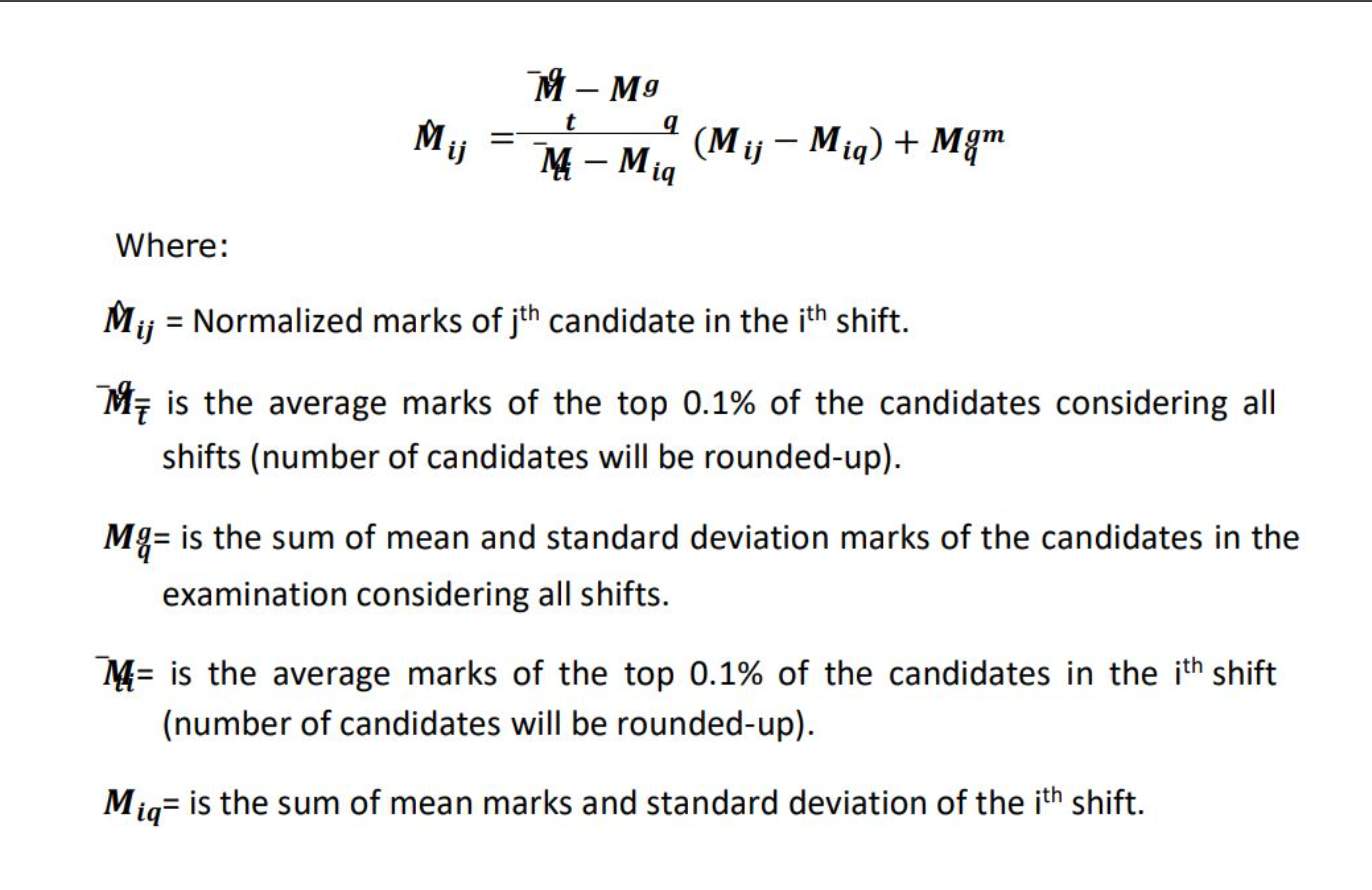
The assumption behind the normalization process is that the ability level of candidates across different shifts is the same. Hence, the raw marks of candidates may either increase or decrease after applying the normalization formula.
SSC CGL Normalization Formula
To compute the normalized marks, SSC uses a predefined mathematical formula which considers the candidate’s actual marks, average marks, and standard deviation across all shifts. The official SSC CGL normalization formula is:
SSC CGL Marks Calculator: Raw vs Normalized Marks
Candidates must note that raw marks refer to the actual marks scored by the candidate in the shift they appeared in. These are calculated based on the number of correct and incorrect answers. After the application of the normalization formula, these raw marks are converted into normalized marks, which are then used for:
- Declaring results
- Preparing the merit list
- Shortlisting candidates for the next stages
So, if you're wondering SSC CGL how to calculate marks, remember that raw marks are just the first step; it's the normalized score that counts.
Minimum Qualifying Marks for SSC CGL 2025
To qualify in various tiers and sections of the exam, candidates must secure minimum qualifying marks. These have been predefined by the SSC and vary by category. The following table outlines the minimum qualifying marks for SSC CGL 2025:
| Category | Minimum Qualifying Marks |
| UR (Unreserved) | 30% |
| OBC / EWS | 25% |
| All Other Categories | 20% |
These marks are applicable for Tier-I, Section-I, Section-II & Module-I of Section-III of Paper-I of Tier-II, Paper-II & Paper-III of Tier-II Examination.
The SSC CGL normalization process plays a crucial role in ensuring fairness and accuracy in results when exams are conducted in multiple shifts. Candidates must understand the importance of normalized marks over raw marks, especially since these are considered for final selection. With the help of the SSC CGL marks calculation formula, SSC maintains transparency and impartiality in its evaluation process.

Upasna is an education journalist and subject matter expert with an extensive background in the competitive exam landscape. Currently contributing to the Exam Prep Section of Jagran Josh, Upasna specializes in creating well-researched, aspirant-centric content and simplifying complex topics for competitive examinations. Her academic expertise, coupled with her own firsthand experience preparing for the UPSC Civil Services Examination, helps her provide strategic preparation insights and a comprehensive perspective to aspirants. She holds a Master's degree in Forensic Chemical Sciences. Apart from delivering valuable exam resources, Upasna is a passionate communications professional who also enjoys reading and writing.