Central Pollution Control Board: Check Its Role, Significance, Functions & Key Responsibilities
Central Pollution Control Board: The Central Pollution Control Board (CPCB) is the main government agency in India, established under the Water (1974) and Air (1981) Acts, to monitor and control pollution nationwide. On National Pollution Control Day, let’s look at the Central Pollution Control Board’s role, significance, functions and more.
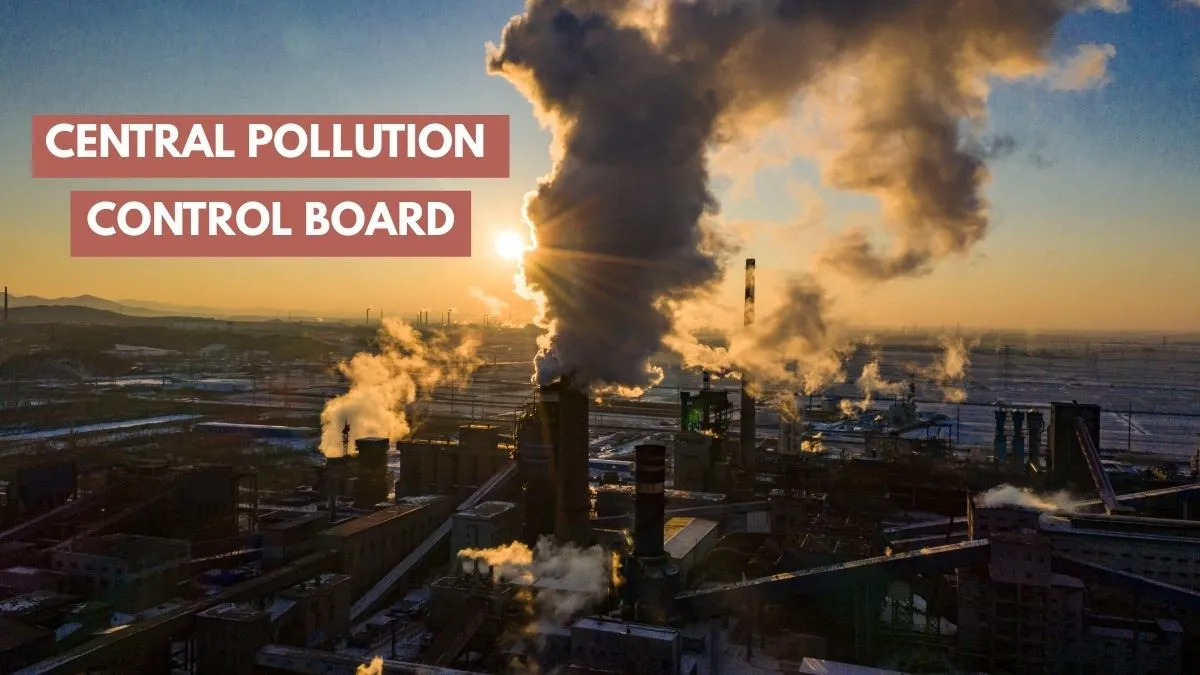
Central Pollution Control Board: National Pollution Control Day is observed on December 2 each year to remind us why protecting our environment is not only important but also necessary for our own survival. This day also encourages people to understand how pollution affects daily life and what steps can be taken to reduce it. Air, water, and soil pollution have become major concerns today, and the need for strong regulations has never been greater.
To ensure that the country follows proper environmental standards, India has a central authority that works throughout the year to monitor and control pollution. This authority is known as the Central Pollution Control Board (CPCB).
It plays a crucial role in ensuring that industries, cities, and states comply with environmental regulations. On National Pollution Control Day, it becomes even more important to understand how the CPCB works, why it exists, and how it helps keep our surroundings safe and healthy.
READ| GK Quiz on Air Pollution: Test your knowledge here
What is the Central Pollution Control Board (CPCB)?
The Central Pollution Control Board is a government agency under the Ministry of Environment, Forest and Climate Change. It was established in 1974 under the Water (Prevention and Control of Pollution) Act and later received more responsibilities under the Air (Prevention and Control of Pollution) Act, 1981. CPCB acts as the main organisation responsible for keeping an eye on pollution levels across India.
Role of the CPCB
-
To check pollution levels in the air and water across the country.
-
To guide state pollution control boards and help them follow national standards.
-
To set rules and standards for industries so they do not harm the environment.
-
To collect scientific data and advise the government on pollution-related issues.
Significance of the Central Pollution Control Board
-
CPCB ensures that industries follow environmental laws.
-
It protects public health by monitoring pollution levels.
-
The Central Pollution Control Board helps the government create strong environmental policies.
-
It provides reliable data that helps in planning cleaner and safer cities.
-
CBCB also plays a major role in preventing disasters caused by toxic emissions or industrial waste.
Functions of the Central Pollution Control Board
Here is the list of all the functions carried out by CPCB:
1. Monitoring Air Quality:
CPCB runs the National Air Quality Monitoring Programme, which tracks pollution levels in major cities.
2. Monitoring Water Quality:
It checks the quality of rivers, lakes, and groundwater to ensure water sources are safe.
3. Setting Environmental Standards:
It decides how much pollution industries are allowed to release and ensures they follow these limits.
4. Conducting Research:
The Board studies how pollution affects health and the environment and suggests solutions.
5. Coordinating with States:
It supports and guides state pollution control boards to improve environmental management.
6. Public Awareness:
CPCB spreads awareness about pollution and encourages people to follow eco-friendly practices.
Key Responsibilities of the CPCB
-
Preparing national environmental reports.
-
Managing waste, including industrial, biomedical, and e-waste.
-
Controlling noise pollution by setting clear rules and limits.
-
Investigating complaints related to pollution and taking timely action.
-
Helping implement national programmes like the Clean Air Mission.
Conclusion
The Central Pollution Control Board plays a crucial role in keeping India’s environment safe. On National Pollution Control Day, understanding its work helps us realise how important strict environmental rules are for our health and future.
With rising pollution levels, the CPCB’s efforts are essential in building a cleaner, safer, and more sustainable country for everyone.
Recommended Reading|


-1792838780900_t.webp)

-1792643685090_t.webp)


.jpg)
![[OUT] UPSSSC PET Admit Card 2026 LIVE: यूपी पीईटी एडमिट कार्ड जारी, upsssc.gov.in पर Direct Link](https://img.jagranjosh.com/images/2026/October/15102026/UPSSSC-PET-Admit-Card-2026.jpg)