CNG vs LPG: Check All the Differences Here!
CNG vs LPG: CNG stands for Compressed Natural Gas, and LPG stands for Liquefied Petroleum Gas. They differ in their composition, storage, and applications. In this article, we will explore the key differences between CNG and LPG. Read now!
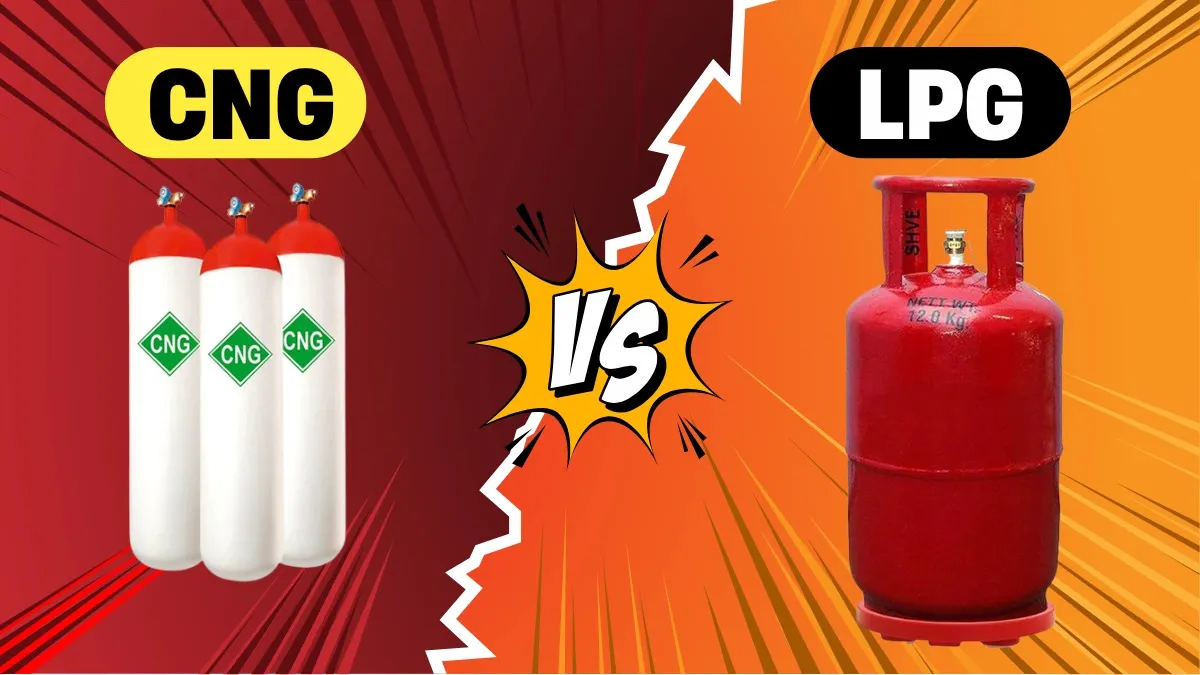
CNG vs LPG: The selection of a cleaner and economical fuel has become paramount, given the increased demand for energy worldwide.
In such a scenario, Compressed Natural Gas (CNG) and Liquefied Petroleum Gas (LPG) both have emerged as economically viable and cleaner alternatives to popular fuels like petrol and diesel.
Both these fuels offer significant benefits in terms of cost and environmental impact. Although they are regarded as clean fuels, they differ in terms of their chemical composition, applications, and storage.
In this article, we will examine the differences between CNG and LPG so that you can make an informed decision based on your requirements.
Also Read:
Lime vs Lemon: Check All the Differences Here!
What is the Full Form of CNG?
The full form of CNG is Compressed Natural Gas; it is primarily composed of Methane and is mainly used as an automotive fuel.
What is the Full Form of LPG?
The full form of LPG is Liquefied Petroleum Gas. It is a mixture of propane and butane and is primarily used in household applications like cooking and heating.
Differences Between CNG and LPG
Some of the major differences between CNG and LPG are highlighted below:
1. Physical Property
CNG is in gaseous form, while LPG is in liquid form when stored in a pressurised container.
2. Chemical Composition
CNG is methane, whose chemical formula is CH4, while LPG is a mixture of propane (C3H8) and butane (C4H10)
3. Auto Ignition Temperature
The auto-ignition temperature of CNG is around 540 °C, while that of LPG is 410-580°C.
4. Environmental Friendliness
CNG is a greener fuel because it produces fewer residues, whereas LPG, although greener than petrol and diesel, produces more residues.
5. Calorific Value
CNG has a calorific value of 50000 kJ/kg, while LPG has a slightly higher value of 55000 kJ/kg.
6. Safety
CNG is lighter than air; therefore, in the event of a leak, it will disperse into the atmosphere, whereas LPG is heavier and poses a greater fire risk.
7. Application
CNG is primarily used as a fuel for automobiles, such as buses, autos, and taxis, while LPG can be used in homes for cooking and heating. It also finds applications in the agricultural sector.
8. Source
CNG is obtained primarily from oil wells, natural gas wells, and coal wells. LPG is sourced during the extraction of natural gas from reservoirs.
9. Cost effectiveness
CNG is more cost-effective than LPG.
Final Thoughts
While CNG and LPG are both green fuels and are widely used as alternatives to petrol and diesel, CNG offers a better option due to its higher ignition temperature and cost-effectiveness.
Recommended Reading

Mriganka Chakraborty is a seasoned digital journalist and communications professional who is currently working as Deputy Manager at Jagran Josh, where he leads the General Knowledge Section. As a subject matter expert with 8+ years of editorial experience, he has created authoritative content that is trusted by millions of readers around the world in Science, History, Geography, Polity, Economy, Sports, and Technology. His extensive expertise in these subjects enables him to present complex topics in an engaging, accurate, and reader-friendly manner to a global audience, making learning addictive and fun.
His background in a wide range of content areas and his ability to move between them make him a trusted voice to readers who want reliable, well-researched content across a variety of disciplines.
In his leisure time, Mriganka enjoys reading fiction novels and watching action and thriller movies, and cricket, which not only hone his storytelling skills but also keep his editorial vision fresh and dynamic.


-1792761794673_t.webp)




.jpg)

![[OUT] UPSSSC PET Admit Card 2026 LIVE: यूपी पीईटी एडमिट कार्ड जारी, upsssc.gov.in पर Direct Link](https://img.jagranjosh.com/images/2026/October/15102026/UPSSSC-PET-Admit-Card-2026.jpg)