How To Identify Superfast Express Trains Without Ticket Confusion? Explainer
Many of you have travelled by train, but do you really know how to identify Superfast Express trains without ticket confusion? Explore this article and learn about what makes a train a “Superfast Express", why Superfast Train tickets cost more, with Superfast charges and a quick comparison between Superfast Express & normal Express trains.
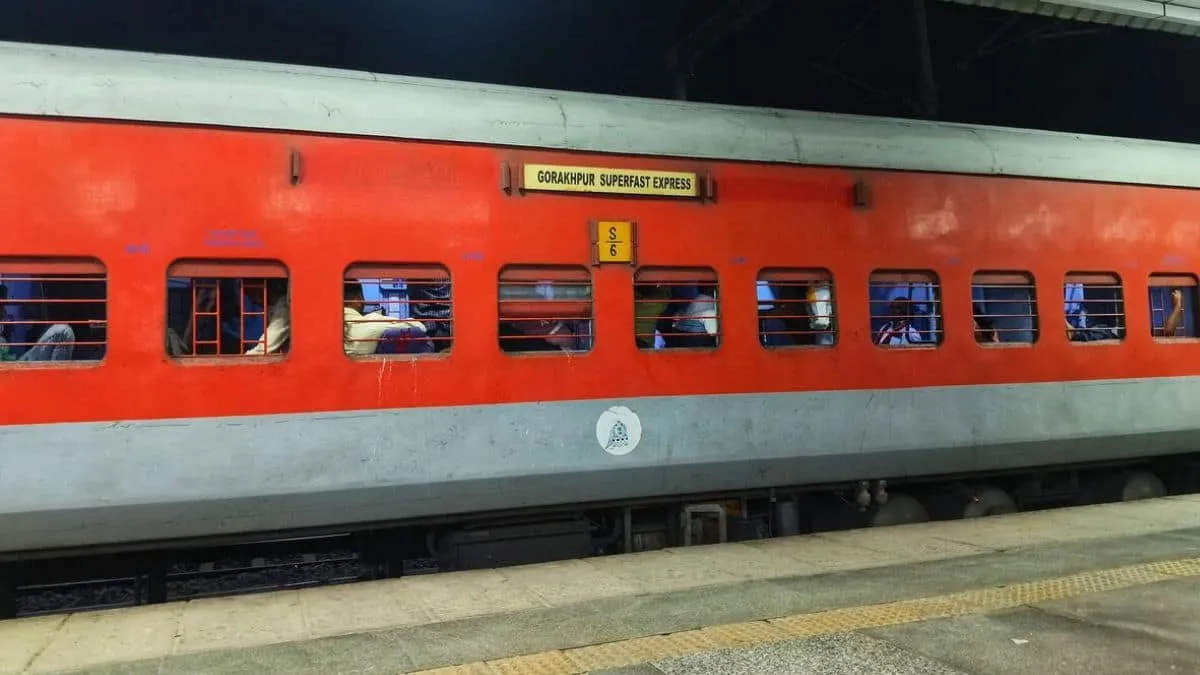
Have you ever visited a train station and wondered why some trains reached the destination earlier, and they are even faster than other trains?
As we know, Indian Railways has the largest rail network in the world, and millions of people travel by train on a daily basis.
But many people are often confused between Superfast Express and normal Express/Mail trains. So, in this article, explore which trains are Superfast Express and how to identify Superfast Express trains without ticket confusion, and learn why Superfast Train tickets cost more, with Superfast charges and a quick comparison between Superfast Express & normal Express trains
What makes a train “Superfast Express”?
According to the Indian Railways, a train is called a 'Superfast Express' if the train meets the following conditions, which are given below:
-
On Broad Gauge track: The speed of the train must be maintained at an average speed of at least 55 km/h on both up and down journeys
-
On Metre Gauge Track: The train must maintain its average speed of at least 45 km/h.
How To Identify Superfast Express Trains Without Ticket Confusion?
Millions of people travel by train, and while booking the ticket, they often get confused: Is the train a superfast express or normal express/mail?
So, how to identify superfast express trains without ticket confusion? You can just tell by looking at its 5-digit train number.
Below, a table is given to make it clearer how to identify a train that the particular train is Superfast Express or a normal express/mail train
| Train Type | Train Number Starts With | Example |
| Superfast Express | 12 or 22 | 12418 (Prayagraj Express) 12166 (Mumbai LTT SF Express) |
| Regular Express / Mail | 13, 14, 15, or 18 | 13307 (Ganga Sutlej Express) |
So, if the starting first two-digit number of a train is 12 or 22, then officially, the train is a Superfast Express, and if the train number starts with 13, 14, 15, or 18, then these trains come under the normal express or mail express.
Why Do Superfast Train Tickets Cost More?
Superfast train tickets cost more because these trains save your travel time and offer better schedule priority. The fare of the suoperfast express train is more expensive due to the following reasons, given below:
-
Base Fare: The cost of travelling the distance.
-
Reservation Fee: The fee to lock in your seat.
-
Superfast Surcharge: An extra fee added only to Superfast train tickets.
-
GST: Government tax (mostly on AC tickets).
Superfast Charges
-
AC Ist = ₹ 75/-
-
AC 2 Tier = ₹ 45/-
-
First Class (Mail/Express) = ₹ 45/-
-
AC 3 Tier = ₹ 45/-
-
AC Chair Car = ₹ 45/-
-
Sleeper (Mail/Express) = ₹30/-
-
Second Sitting (Mail/Express) = ₹15/-
Express vs. Superfast: A Quick Comparison
| Feature | Express Train | Superfast Train |
| Speed | Moderate | Faster |
| Number of Stops | More frequent | Fewer stops |
| Ticket Fare | Cheaper | Slightly more expensive |
| Time Efficiency | Less time-efficient | More time-efficient |
| Priority on Track | Lower | Higher |
So, next time, keep these information while you all book train tickets, which are:
-
Check the speed: Always be aware of the speed of the train; the average speed of the Superfast train is at least 55 km/h.
-
Check the Train Number: If the first two digits of the train number are '12' or '22', then the particular train is an office Superfast Express.

Prabhat Mishra is a Subject Matter Expert and digital journalist with an extensive background in the competitive exam landscape and over 4 years of experience in education, national and international news, and current affairs. Over his tenure with top knowledge platforms like Mentorship India, IAS BABA, IAS SARTHI, and now Jagran Josh, he has a deep understanding of government exams like UPSC and State PCS, including UP and Bihar, as he has already qualified for the UPPCS 2022 Mains and Bihar 68th Mains. With his core expertise in history, polity, geography & current affairs, he specialises in creating well-researched, aspirant-centric content and simplifying complex topics for competitive examinations.