AI Deepfakes Got Him 29 Lakh Fake ‘Resignation’ Views — What Are Personality Rights In India?
Personality rights give you total ownership over your unique identity. They legally stop anyone else from using your name, face, voice, or signature to make a profit or promote a product without your explicit permission.

Key Points
- Abhishek Sharma's AI misuse case was reserved by Delhi High Court until July 9.
- Ravi Kishan received interim relief for deepfakes; Sharma's case delayed due to missing evidence.
- India currently lacks a specific law for personality rights, relying on existing legal provisions.
Young, talented cricketer Abhishek Sharma filed a case against the misuse of his name, image, and identity by AI tools. Justice Jyoti Sharma on Tuesday scrutinised web links mentioned by Abhishek in this connection for misuse of personality rights. Indian team coach Gautam Gambhir, Preity Zinta, Rajinikanth and many more celebrities have complained about these violations.
What Are Personality Rights?
Personality rights or, simply put, publicity rights, are concerned with the name, image, voice, signature, mannerisms, and all other characteristics of an individual that have some kind of monetary value.
In order to put it into simpler terms, think of Personality Rights as the most effective "Do Not Trespass" warning sign for yourself. The way you own your home and car is the same way you own your identity, your name, image, voice, signature, and even your mannerisms. Together, you own yourself.
Personality rights mean any right by which nobody is allowed to make a profit from any of your information/identity or endorse any object/product without your written consent. E.g., if you put the photograph of any famous person on a billboard and he did not give his consent for it or get any money from it, then it would be called a violation of the personality rights.
In India, there is no special law governing Personality rights as of now. However, the Indian courts, for the purpose of the Protection of personality rights, can depend upon certain laws, which are:
- Privacy as a Fundamental Right: The Indian apex court (Supreme Court) in the landmark judgement Justice K.S. Puttaswamy v. Union of India (2017) stated that the right to privacy is a fundamental right under Article 21 of the Indian Constitution, meaning nobody is allowed to make you a trademark without your consent.
- The Trade Marks Act, 1957: Usually, celebrities take the Trademark for their Names, autographs, slogans, and likeness to avoid unauthorised products made using their Name, autograph, etc.
- Common Law Doctrine of "Passing off": If any business house uses the likeness of any person for marketing purposes, for example. They are implying the likeness of the celebrity as their advertisement, which would be called 'Passing off'.
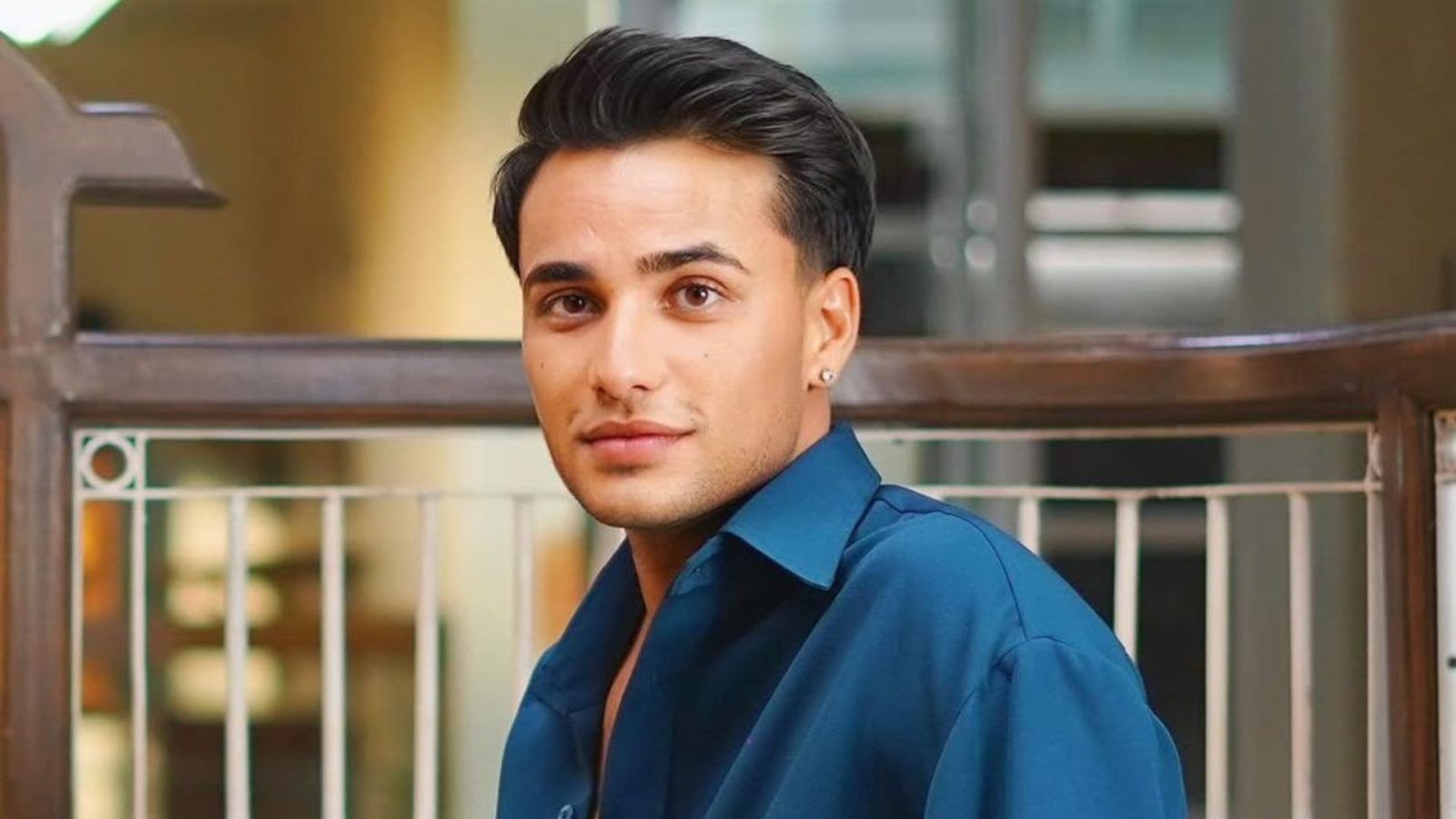
A "Thin Line" Between Personality Rights and Defamation: A Look Into Indian Cricketer Abhishek Sharma AI Image Case
Source: ANI
The Delhi High Court delivered its statement regarding the case of the AI image of Abhishek Sharma on Tuesday, stating, “We also find this every day where there is a thin line between defamation and personality rights. It is in a flux. There is a little overlap. Defamatory matter may have personality rights element."
The above-mentioned observations were made by the court when it was deciding the case on the issue of whether the challenged online content was offensive or an unauthorised use of the plaintiff's identity using artificial intelligence.
Abhishek Sharma is a professional Indian cricket player who filed a case at the Delhi High Court for his protection from any illegal use of his identity via online platforms.
As per his lawyer, one picture of Sharma had been tampered with the help of AI technology. In this case, it was not that the accused used some other paparazzi photo of Mr Sharma. His photo, along with that of his manager, was altered using AI technology.
What's Next?
After hearing the contentions from both sides, the High Court of Delhi decided to reserve the matter until July 9 due to some questions which required clarification in relation to the suit.
This is one such case that comes under the fast-growing list of cases dealing with personality rights pending before the High Court of Delhi. Famous people have tried to safeguard themselves against any form of unauthorised commercial exploitation of their personalities through artificial intelligence.
Abhishek Sharma vs Ravi Kishan Personality Rights: Why Was Ravi Kishan's Case Passed But Not Abhishek Sharma's?
Actor/MP Ravi Kishan was recently awarded interim relief by the Delhi High Court because he was clearly an identity theft victim who had suffered through obscene and artificial intelligence-generated content.
However, the case against cricketer Abhishek Sharma was postponed because of the failure of his legal team to produce screenshots of the problematic web links.
| Feature | Ravi Kishan Case | Abhishek Sharma Case |
| Current Status | Passed (Interim injunction granted) | Pending (Delayed until July 9 for more proof) |
| The Violation | Obscene deepfakes and fake product ads using his voice/identity. | An AI-altered image changes the context of a real photo. |
| The Defence Argument | Clear case of severe identity theft and damage to reputation. | Meta argued it resembled a regular paparazzi picture. |
| Missing Evidence? | No. Comprehensive evidence and clear links were provided. | Yes. The lawyers forgot to include screenshots of the links. |
| Court's Key Observation | Clear commercial exploitation and severe harm to public dignity. | Noted a "thin line" between defamation and personality rights. |
How Can Indian Celebrities Protect Their Personality Rights?
Because there's no straightforward registry where celebrities can just tick a box to activate "personality rights", they need to take specific legal actions instead.
- Filing a Civil/Commercial Suit: The celebrity (the plaintiff) must file a case in a High Court (more often the Delhi High Court as it deals with a lot of such IP disputes).
- Two Important Points to Prove: The celebrity has to establish themselves as a famous personality and that the use of their identity without permission results in confusion among the general public or damage.
- "John Doe" Order Against Ashok Kumar: This is the most powerful weapon. As the internet is home to many anonymous accounts, scammers, and meme pages, a celebrity cannot identify each and every offender. Therefore, the celebrity files a suit against unnamed defendants.
- A "John Doe" order is issued by the court, ordering internet service providers, social media sites (Meta, Google, and X) and domain names to take down any links relating to misuse of the traits of the celebrity.
Some well-known celebrities who have successfully obtained these broad "John Doe" protections include Amitabh Bachchan. Anil Kapoor, who protected his famous dialogue "Jhakaas". Jackie Shroff, who secured rights to his catchphrase "Bhidu". And Aishwarya Rai Bachchan, celebrated worldwide.
How Are Scammers Exploiting The Personality Rights Of Indian Celebrities?
Scammers are using new techniques to fake someone's identity. Rather than stealing pictures of the victims, they steal 10 seconds of an audio recording from YouTube or Instagram videos to mimic one's voice.
Afterwards, fraudsters call victims and claim to be celebrities or even family members and invent emergencies or imprisonment scenarios just to force victims to send immediate cash wire transfers.
Regarding video fraud, scammers employ deepfake technology to insert the face and voice of a reputable personality onto another actor. Thus, they create false videos in which celebrities allegedly endorse cryptocurrency or investment pyramid schemes or miracle drugs.
Fans trust such persons so much that they immediately buy products from scammers, losing money on them.
In addition, fraudsters are now employing live video filters with face-swapping to conduct romance scams on a person's face-to-face interaction through webcams.
Scammers disguise themselves as famous persons and spend several months developing a deep emotional relationship with victims. At the end of the interaction, fraudsters manipulate victims into sending large sums of money due to invented emergencies.

Kriti Barua is a skilled digital journalist and communications professional with 4+ years of experience, currently writing for the General Knowledge section at Jagran New Media. She has established herself as a subject matter expert in History, Geography, Trending National and International News, Sports, Science, and Defence, producing clear, reliable, and search-optimised content that connects with readers worldwide.
Kriti holds a BA degree from Delhi University and a one-year diploma in TV Production and Journalism, an academic background that adds research depth and strong storytelling instincts to her writing. Her experience spans brand writing, content marketing, and digital media, giving her a sharp understanding of what makes content both helpful to readers and visible in search.
At Jagran New Media, she applies this expertise to national and international news coverage, query-based articles, and in-depth pieces across her specialist subject areas. Her content is defined by easy language, factual accuracy, strong keyword strategy, and reader-friendly storytelling.