What Is GPS Spoofing? Check Meaning, How to Detect and Prevention Tips
GPS spoofing manipulates satellite signals to deceive navigation systems, posing risks to safety, security, and digital infrastructure. Understanding how it works, recognizing warning signs, and using reliable detection and prevention measures are essential to protect individuals, organizations, and critical operations from such attacks.
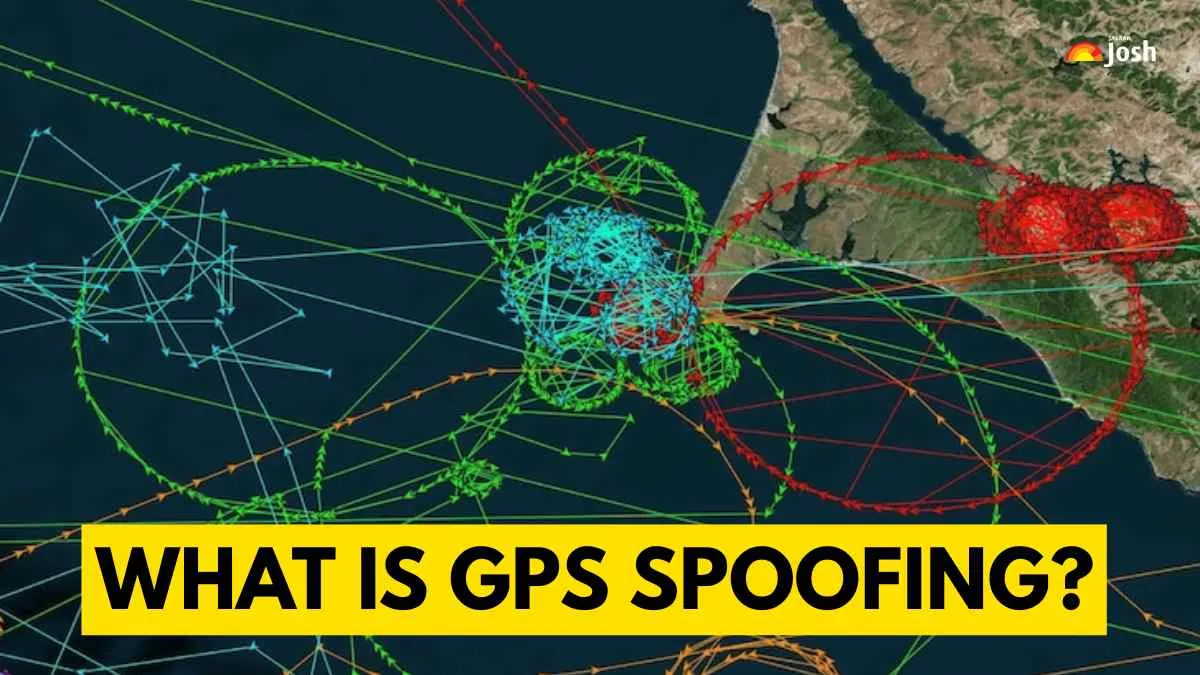
Spoofing, GPS is an awareness and concern with regards to the increasing cybersecurity threats of spoofing being used for malicious activities. The main type of GPS spoofing involves broadcasting false GPS signals, resulting in the receiver believing it is located at a different point in time and space. This manipulation can disrupt navigation systems, tracking devices, drones, ships, autonomous vehicles, and everyday apps that depend on accurate GPS position information.
Most users are not aware that instead of simply blocking GPS signals (the normal method of GPS jamming), GPS spoofing actually replaces authentic GPS coordinate data with fake coordinate information, making detection of an attack more difficult. The increasing dependency of many sectors on GPS for timing, navigation, logistics, and other safety-critical operations has resulted in GPS spoofing becoming a global issue of concern. Therefore, to fully understand this threat, it is imperative that individuals, businesses, and governments fully understand how GPS spoofing works, why it is a potential threat, and how to mitigate against it.
Check Out: New Labour Law on Working Hours: Know About Workdays, Work Week Rules and Benefits
What is GPS Spoofing?
GPS spoofing is an activity where a false signal is transmitted to a GPS receiver that will lead the user to an inaccurate location. The difference between GPS spoofing and GPS jamming is as follows. GPS jamming prevents any real satellite data from being received by the PC, while GPS spoofing sends out bogus coordinate data to trick the device into thinking it is at a different location. The device then uses the bogus coordinates instead of the actual location for purposes of displaying maps, navigation or providing any location information. GPS spoofing can affect smartphones, ships, drones, automobiles, aircraft and any system that requires accurate timing to function properly.
Cyber criminals are using GPS spoofing to commit theft, evade privacy concerns, confuse authorities and disrupt navigation systems. If a business relies heavily on GPS for safety, logistics or real-time tracking of goods or services, GPS spoofing poses a significant risk and a continuously increasing threat to cyber security. Detecting GPS spoofing is difficult, thus it is becoming increasingly important for businesses to have stronger security measures in place and raise their awareness.
How Does GPS Spoofing Work?
Specialized equipment is used to generate misleading GPS signals that an attacker transmits.
- The counterfeit signals are emitted at a greater strength than the authentic satellite signals (which are naturally very weak).
- As a result, the device will latch onto the spurious signals (as opposed to authentic satellite signals) and give you inaccurate position information, erroneous motion(s), and invalid present time data.
- Since GPS signals transmit from space with very low power, even a modest strength device on the ground can easily jam GPS signals from space.
How to Detect GPS Spoofing?
The following information can be used to identify GPS Spoofing:
- When Your Device Jumps To An Unaccounted For Location
- When Multiple Devices in the Same Area Show The Same Incorrect/Spoofed Coordinate
- If The Received GPS Signal Strength is Shown to be Concerningly Strong (This Is An Indicator Of An Artificially Transmitted Signal)
- If You Have Comparisons Made To Other Systems Using Wi-Fi, Towers Or Sensor Systems – Any Discrepancies Will Indicate A Problem With The GPS Data
- Some Of The More Advanced GPS Receivers Use “Anti-Spoofing Algorithms” That Help To Identify The Authenticity Of Received GPS Signals
Ways To Protect Against GPS Spoofing
- Use Multi-Frequency GPS Devices on the L1 and L5 frequency bands
- Enable A Cross Verification Using A Combination Of GPS, Network And Sensor Fusion
- Keep Your Navigation Firmware Up-To-Date
- If You Are An Organisation, Use Encrypted Military Grade GPS Products or Anti-Spoofing Antennas
- Keep Track Of Abnormal Value Patterns Of Signals In Areas Of Critical Infrastructure.
Conclusion
The increased prevalence of GPS spoofing poses risks to navigation, safety, and the operation of everyday life. It is therefore important for individuals and organisations alike to know what GPS spoofing means, how to detect potentially harmful signals, and what preventive measures to take to reduce the chances of being affected by GPS spoofing.

Ayukta Zisha is an education journalist with over three years of experience in digital media. A graduate of St. Xavier’s College, she holds a Master’s degree in English along with a certification in Digital Marketing from IIT Delhi. Backed by a strong academic foundation in the humanities, she specializes in creating educational and general knowledge content across history, geography, literature, and current affairs. During her tenure at Jagran Josh, she worked extensively on U.S. news and global developments, curating informative and engaging content for a diverse readership. Her subject expertise and ability to simplify complex topics enable her to make complex information accessible to a wide audience. Beyond journalism, Ayukta is an avid reader and a published author.


-1792838780900_t.webp)

-1792643685090_t.webp)



.jpg)
![[OUT] UPSSSC PET Admit Card 2026 LIVE: यूपी पीईटी एडमिट कार्ड जारी, upsssc.gov.in पर Direct Link](https://img.jagranjosh.com/images/2026/October/15102026/UPSSSC-PET-Admit-Card-2026.jpg)