Who was Clara Zetkin? The Socialist Powerhouse Behind International Women’s Day
Clara Zetkin was a formidable German socialist and feminist who transformed the women’s rights movement by linking it to class struggle. As the founder of International Women’s Day and editor of Die Gleichheit, she organized working-class women globally. A key figure in the KPD and the Reichstag, her legacy remains a cornerstone of socialist feminism.
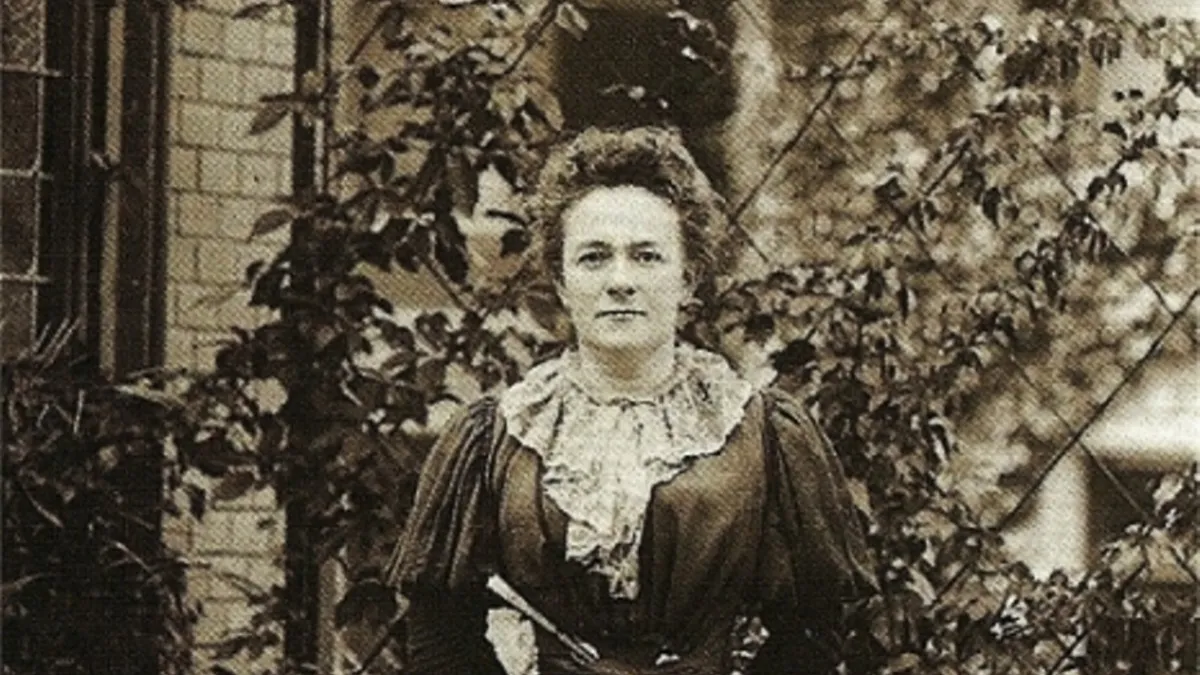
As a German Marxist theorist, a socialist politician and a feminist, Clara Zetkin (1857-1933) associated proletarian emancipation with a concept of class struggle.
She suggested International Women Day and published the powerful newspaper Die Gleichheit that helped to form socialist feminism in Europe.
Who was Clara Zetkin?
Clara Zetkin, whose birth name was Clara Eissner was born on July 5, 1857, in Wiederau, Saxony in Germany was a major individual in the integration of socialism and women liberation.
In 1910, at the International Socialist Women Conference in Copenhagen, she came up with an annual Women day to bring together the needs of women across the world in the fight of suffrage, peace, and equality.
On June 20, 1933, she passed away in Arkhangelskoye, Russia leaving a legacy that was honored by such sites as the Clara Zetkin Park in Berlin and the Clara Zetkin Hall of the Bundestag.
Clara Zetkin’s Education
Having been born first in a family of three children of a schoolteacher Gottfried Eissner and Josephine, who was a participant of a bourgeois women's movement, Zetkin was brought up in an intellectual family.
She became a teacher after training in the Leipzig Teachers College where headmistress Auguste Schmidt exposed her to feminist ideologies and socialist literature.
In 1881, she got married to Ossip Zetkin, a Russian-Jewish socialist revolutionary, anti-socialist laws made them move to Switzerland and then to Paris where she practiced her activism as she raised 3 sons.
How Did Clara Zetkin Enter into Socialism?
Zetkin became a formal member of the Sozialistische Arbeiterpartei (SAP, later SPD) at around 1881, smuggling illegal socialist pamphlets even though Bismarck had put laws in place to stop such activities.
In 1890, she went back to Germany when anti-socialist laws were repealed, she replaced the editorship of Die Gleichheit in 1892 and turned it into an organ of great importance to working-class women until 1917.
She advocated women to join trade union, socialist education instead of liberal reform to establish the consciousness of the classes.
What were the Fundamental Advances in Female Rights?
Zetkin also co-organized the International Socialist Women’s Congress in Stuttgart in 1907, which prepared ground work on the unity of action.
The proposal of International Women Day by her in 1910 in Copenhagen energized the socialist women around the globe as the first one was held in 1911.
In 1915, she organised an anti-World War I women's congress (in Bern), denouncing the stance of SPD on the war, and published the principles of communist women work, leading to the creation of the Roter Frauen- und Madchenbund in 1920.
Clara Zetkin’s Political Career
During World War I, Zetkin left SPD to co-found, together with Rosa Luxemburg and Karl Liebknecht, the Spartacus League in 1916 (which was renamed USPD in 1917), and later joined KPD in 1919.
She was elected to the Reichstag with the KPD between 1920 and 1933 and became its oldest member and honorary president in charge of the first session of the Weimar Reichstag in 1932. One of her roles as well was serving on the Comintern presidium between 1921, and as the leader of International Workers Aid until her death.
When Nazis came to power in 1933, Zetkin, who was 75 years old and weak, fled to the Soviet Union upon encouragement by the KPD.
READ| Quiz on Rohit Sharma
She was kept isolated during the reign of Stalin, which led to a decrease in her health: she experienced a cerebral seizure and died on June 20, 1933. She was personally buried by Stalin in the Necropolis of the Kremlin wall, and attracted 400,000 mourners.
Her works on feminism and revolution were maintained in her posthumous collection Ausgewahlte Reden und Schriften (1957-1960).
Zetkin insisting that to liberate women they had to oust capitalism lives on in Marxist feminism. Germany commemorates her by the Clara Zetki Saal of the Bundestag as well as many streets and schools. Her work still influences socialist movements, which are marked annually on the International Women Day and during her death anniversary day.
READ| Quiz on Virat Kohli

Kirti Sharma is a journalist in the education domain with three and a half years of experience creating high-quality content for the education technology (EdTech) and digital media industries. She has an expertise in covering education news. Kirti has experience in writing data backed informational pieces on General knowledge.
Kirti holds a Bachelor of Arts degree, which helped build her strong foundation in writing and research. Over the course of her career, she has brought her skills to a variety of well-known companies, including ThoughtPartners Global, Infinite Group, and MIM-Essay. Through these roles, she has learned how to take complex information and turn it into engaging, easy-to-understand content for readers online.