Supreme Court Reserves Verdict on Delhi HC Ruling Over Mandatory Attendance Rules for Law Students
Supreme Court Attendance Verdict: A Supreme Court bench comprising Justices Vikram Nath, Augustine George Masih, and Sandeep Mehta reserved its judgment on a batch of petitions challenging the Delhi High Court’s ruling that held law students cannot be barred from taking examinations or progressing academically solely due to attendance shortages. The Bar Council of India (BCI) and premier legal institutions argued before the apex court that diluting mandatory attendance norms severely degrades academic discipline, institutional autonomy, and professional standards in legal education.
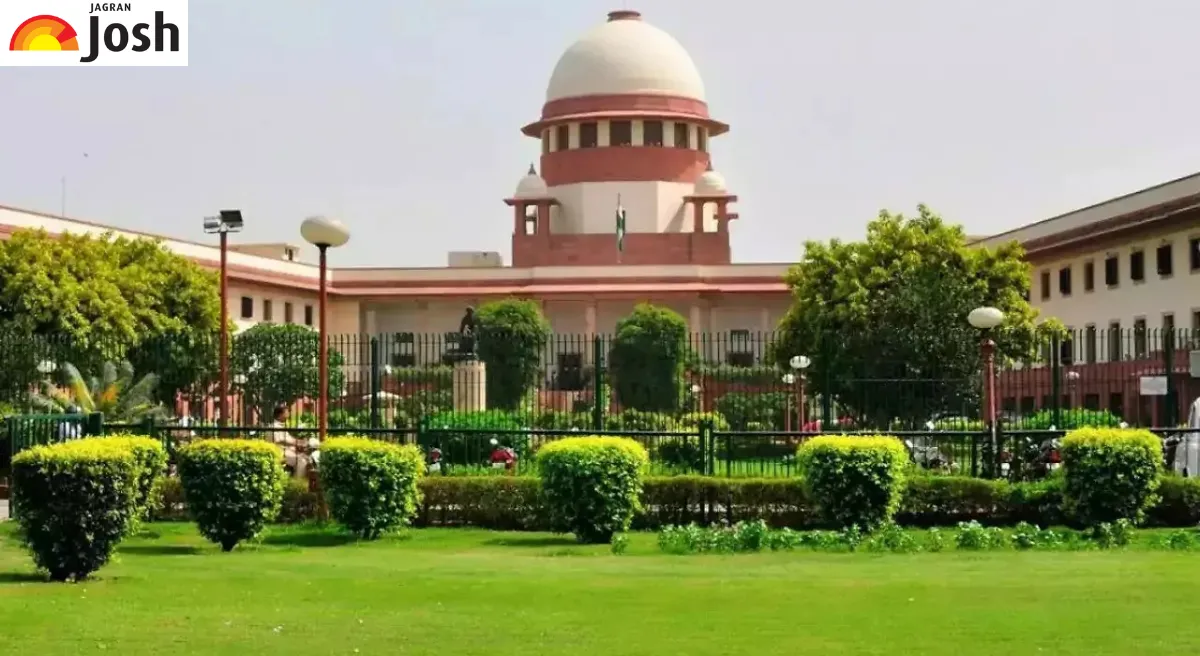
Supreme Court Attendance Verdict: A three-member bench headed by Justices Vikram Nath, Augustine George Masih, and Sandeep Mehta had reserved their verdict in a series of petitions questioning the decision of the Delhi High Court which ruled that law students shall not be stopped from taking exams or advancing academically just because of their poor attendance record. The BCI and prominent law schools had raised their concerns in the apex court about how the erosion of compulsory attendance regulations would adversely impact the academic discipline, independence of institutions, and professional conduct in legal education.
This controversy stems from a public interest case filed suo motu by the Delhi High Court based on the 2016 suicide of a student of Amity Law School, Sushant Rohilla, who was suffering immensely due to poor attendance that made him repeat the year. Although the High Court issued wide guidelines to prevent universities from stopping students from proceeding academically on the grounds of poor attendance records, the BCI and law schools found these guidelines to be a judicial interference in statutory educational regimes.
What Did The Officials Say?
On May 26, the Supreme Court had granted a stay on the operation of paragraph 249 of the judgment of the High Court, whereby students of recognised law institutions should not be restricted from sitting for examinations or carrying out other academic pursuits or their career development due to poor attendance records. It was made clear that the stay would operate prospectively.
The Delhi High Court had also ordered the Bar Council of India (BCI) to review mandatory attendance norms for three-year and five-year LLB courses. High Court had said that norms for mandatory attendance should not be applied so harshly as to cause mental stress to students.
The judgement came out of suo motu case of law student Sushant Rohilla who died in 2016. The matter was first taken up by the Supreme Court and later shifted to Delhi High Court.
High Court had also asked educational institutions and universities to set up Grievance Redressal Committees under UGC regulations. It asked UGC to hold consultations regarding its regulations and amendments in relation to student grievances and mental health issues.
With respect to the attendance standards, it is pertinent to note that the High Court of India had directed the BCI to consider awarding credits for participation in activities like moot courts, seminars, model parliament, debates, and visits to courts.
Further, the High Court had ruled that the law schools and universities must not impose attendance conditions exceeding the minimum standard as specified by the BCI under the Legal Education Rules. The ruling of the Supreme Court of India will now decide the future course of these directives.

Siddhi Sharma is an education journalist at Jagran Josh. A Journalism and Mass Communication graduate from IP University, she brings sharp newsroom instincts developed during her previous stint at Zee News. At Jagran Josh, Siddhi specializes in decoding the educational updates. Her coverage is highly exam-centric, ranging from curated news blogs for competitive exams to crucial school board and university news. Combining her strong media foundations with a research-driven approach, she creates reliable, high-utility content that helps students and aspirants stay ahead of the curve. Her writing is factual, engaging, and tailored to meet the fast-paced needs of modern learners and exam aspirants.

-1791361560717_t.webp)

