Meet Elias 2-24 b: The Youngest Known Planet Discovered by NASA
Scientists have confirmed Elias 2-24 b as the youngest known planet ever discovered. The planet is less than 1 million years old and is still forming inside a disk of gas and dust. Check its key details, discovery and significance.
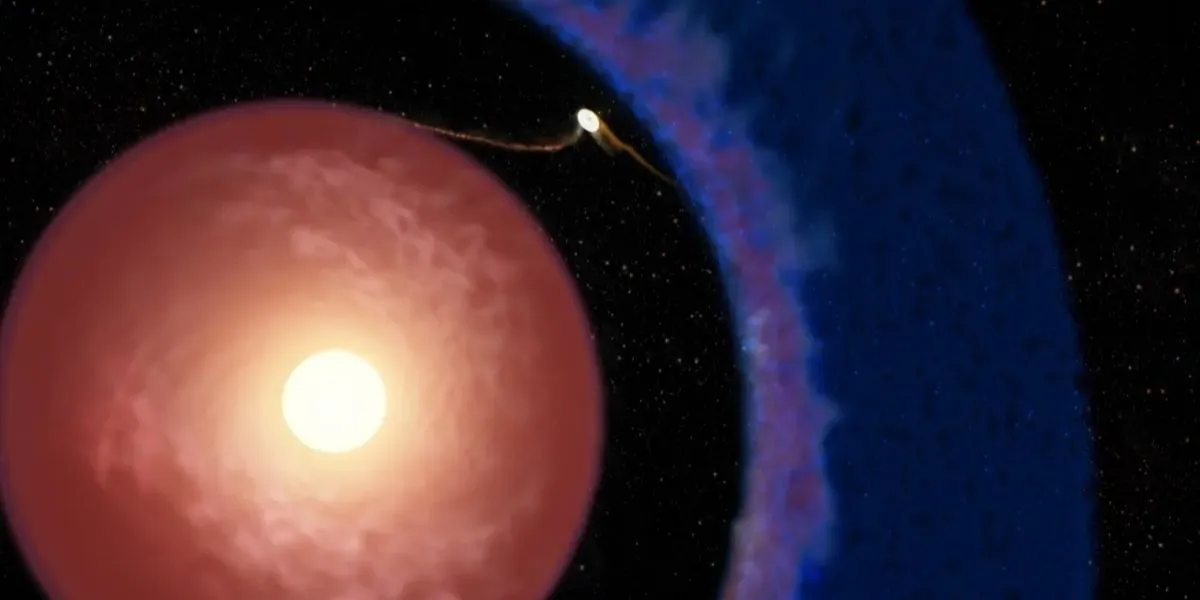
In a significant development, the National Aeronautics and Space Administration (NASA) announced the confirmation of Elias 2-24 b, the youngest known planet ever discovered. The planet is less than 1 million years old, making it significantly younger than the previous record holders.
The discovery is particularly interesting as the planet is still in the process of forming and remains surrounded by the gas and dust from which planets are generally born. NASA has also provided details about the planet's size and age, giving scientists an opportunity to study a giant planet during its early stages of formation.
In this article, we will explore the key details of this recent discovery including the planet's major details.
What is Elias 2-24 b?
Elias 2-24 b is the youngest known planet discovered so far. It is also termed a “baby planet” because of its age of less than 1 million years. Scientists and astronomers have also confirmed that it is located about 450 light years away from Earth and is roughly the size of Jupiter.
The planet is located within a disk of gas and dust surrounding its young host star. Below are the key details of the planet.
| Feature | Details |
| Planet | Elias 2-24 b |
| Age | Less than 1 million years |
| Size/Mass | Roughly Jupiter-mass |
| Host Star | Elias 2-24 |
| Distance from Earth | About 450 light-years |
| Status | Youngest known planet |
| Location | Inside a disk of gas and dust |
How Was the Youngest Planet Found?
It was discovered by a group of astronomers under the lead of Andrea Bernardi, who checked the archived observations made at the Keck Observatory and proved that the faint object was indeed a planet.
-
Observations made by ALMA:About 10 years ago Atacama Large Millimeter/submillimeter Array (ALMA) found out about a large gap in the dusty disk around the young star Elias 2-24.
-
Faint object observed at the VLT: Then European Southern Observatory's Very Large Telescope discovered a faint object inside the gap. But scientists weren't sure if it was a planet.
-
Observations made at Keck: Then Andrea Bernardi and his team analyzed the images of the Keck Observatory Archive from 2018 and 2020.
-
Movement proved that the object is a planet: By comparing the object's position in the two observations, researchers found that it was moving around the host star. This confirmed that the object was Elias 2-24 b, a planet rather than a background star or imaging error.
Source: science.nasa.gov
How Young Is Elias 2-24 b Compared to Other Planets?
Elias 2-24 b is extremely young compared with most known planets. The planet is less than 1 million years old and is still forming inside the disk of gas and dust surrounding its young host star.
Before the discovery of Elias 2-24 b, the youngest known planets were more than around 5 million years old. This means Elias 2-24 b is at least several million years younger than the previous record holders.
| Planet | Approximate Age |
| Elias 2-24 b | Less than 1 million years |
| Previous youngest known planets | More than 5 million years |
| Earth | About 4.5 billion years |
The difference becomes even more striking when compared with Earth. Our planet is about 4.5 billion years old. In comparison, Elias 2-24 b is only a tiny fraction of Earth's age and is being observed at a very early stage of its development.

Varun Verma is an education and sports journalist with over three years of experience in journalism, with a strong focus on cricket . He has previously worked with SportsYaari and CricketTimes.com, where he developed a strong news sense and a knack for storytelling while covering breaking news and major sporting events. He holds a PG Diploma in English Journalism from the Indian Institute of Mass Communication (IIMC), New Delhi. Beyond sports, his interests include geopolitics, Indian polity and government policies. Inspired by the grit and passion of Ben Stokes, he strives to bring the same depth in his life.
For inquiries or professional insights, you can reach him directly at varun.verma@jagrannewmedia.com