NSE IPO 2026: India’s Biggest Stock Exchange to Go Public; Here’s Why And What It Means
NSE IPO opens September 17-21, 2026, aiming ₹22,562 crore. India’s biggest exchange goes public after years of delays, marking a historic shift in capital markets and investor participation growth.

The Indian stock market is seeing its biggest stock exchange going public. The National Stock Exchange of India (NSE), which is also the nation’s premier stock exchange and a global derivatives heavyweight, has taken the route of IPO after many debates and decisions. The IPO opened from September 17 and the last day for the IPO is September 21, 2026.
This is a landmark public issue in the history of the Indian stock market. NSE aims to raise up to Rs 22,562 crore, making itself the largest ever listing on Dalal Street.
After almost a decade, and with all the twists and turns by the regulatory body, the exchange is going to become publicly accessible. It is now stepping into the public spotlight, making a historic shift in the capital markets of India. This is a transition from a market operator to a stock market listed player.
NSE IPO Details You Should Know
- IPO Timeline: The National Stock Exchange of India (NSE) has launched its IPO from September 17 to September 21, 2026.
- Fundraising Target: The issue aims to raise ₹22,562 crore.
-
Market Significance: It is among the largest public offerings in India’s stock market history.
-
Market Role: NSE is India’s leading exchange, handling most equity and derivatives trading.
-
Delay Factor: The IPO comes after nearly a decade of regulatory delays and approvals.
-
Key Detail: NSE transitions from a private market operator to a publicly listed institution.
Why The NSE Is Going Public Now?
The National Stock Exchange is going public and this is not a one-day sudden decision. It has been a long time for it to be open to the public. The IPO talks started taking shape in 2016. NSE filed its initial Draft Red Herring Prospectus (DRHP) in December 2016, before regulatory obstacles, governance reviews and prolonged co-location cases popped up and slowed the journey with SEBI.
NSE has now resolved almost all these challenges, and it is finally stepping back into the limelight. It is also very crucial to note that in the financial markets, the Indian stock market as well as other global markets are witnessing rapid expansion and changes.
The Indian market is transitioning because India is shifting towards more digital investing and participants are through demat accounts and trading apps. As retail enthusiasm for equities grows and traditional assets lose their monopoly, NSE’s move reflects a strategic push to ride this long-term wave of market participation, this time as a listed market leader itself.
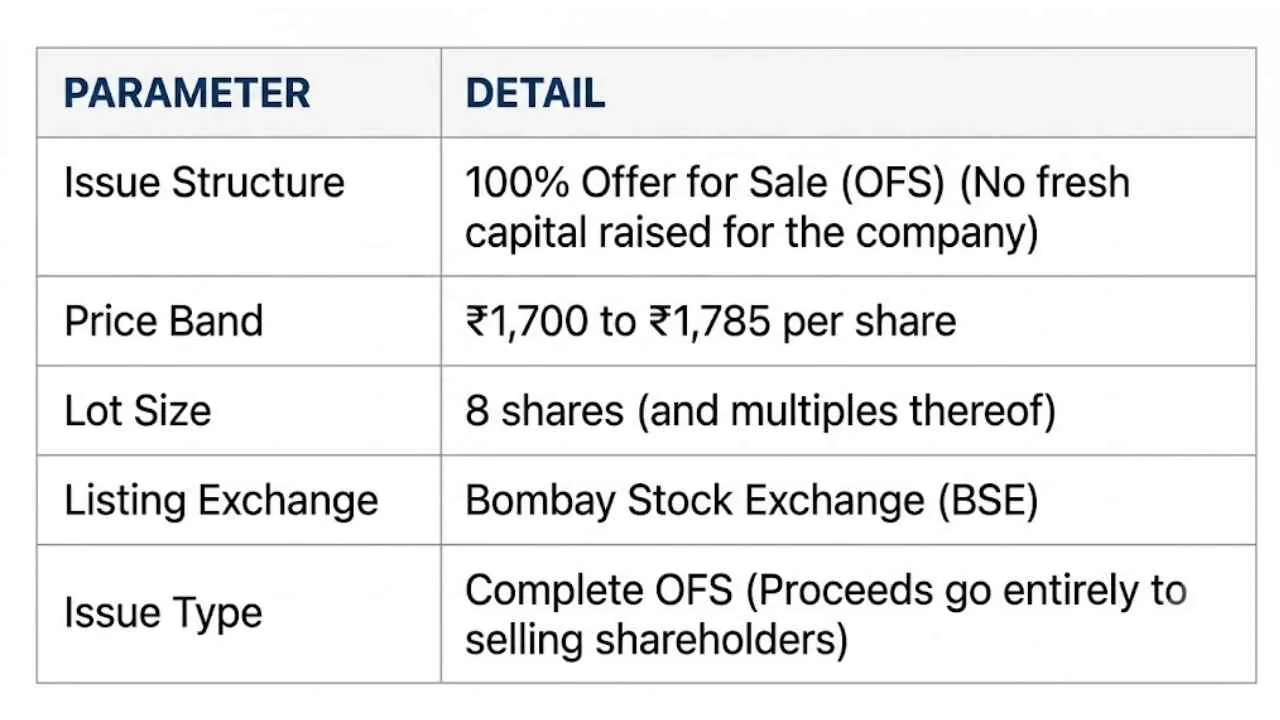
NSE IPO Structure Details
(Image:AI Gebertaed, Source:NSE)
How Does NSE Earn Money?
The National Stock Exchange has a silent revenue machine for the Indian stock market and for itself as well. The NSE functions as India’s financial toll booth; this helps it earn revenue every time a trade comes through its system.
Nearly 80% of its income is generated from transactions and charges in equities and derivatives. This makes NSE deeply tied with stock market activities.
NSE is the world’s largest derivatives exchange by volume, and now you can imagine how its scale is unmatched.
In FY2026, NSE has reported strong growth in its income and profits. These are all driven by high-margin operations and rising participation from around the globe.
Its position gives it almost a monopoly-like hold over the nation’s capital market ecosystem. This makes the National Stock Exchange irreplaceable and highly profitable.
What Does It Mean As India’s Biggest Exchange Enters Public Markets?
As on the last day of its subscription, the NSE IPO is drawing major attention. So much so that it is also uplifting Dalal Street and keeping the excitement high. The main reason behind the attention it is drawing is its scale, profitability, and commanding market position. Even after SEBI’s recent tightening of derivatives regulations, there is a note of caution raising concerns over short-term revenue pressure, as derivatives remain a key earnings driver. The point to be noted is that the long-term story remains intact. It is supported by rising financial literacy, expanding retail participation, and India’s fast-growing capital market ecosystem.
This NSE listing is more than just an IPO; it is a calculated structural shift of Indian financial markets, turning it into a public market. Everyone is watching subscription momentum and valuation cues, which will ultimately set the tone for its debut on the BSE.
NSE IPO Subscription Breakdown (Latest Updates)
NSE Subscription 17 September-21 September
| Category | Shares Offered | Shares Bid | Subscription (Times) |
| 1. Qualified Institutional Buyers (QIBs) | 2,52,07,867 | 13,52,24,952 | 5.36 |
| (a) Foreign Institutional Investors (FIIs) | - | 7,91,88,336 | - |
| (b) Domestic Financial Institutions (Banks / FIs / Insurance) | - | 1,23,07,928 | - |
| (c) Mutual Funds | - | 98,75,472 | - |
| (d) Others | - | 3,38,53,216 | - |
| 2. Non-Institutional Investors (NIIs) | 1,89,00,483 | 8,31,57,448 | 4.40 |
| 2.1 Bids above ₹10 Lakhs | 1,26,00,322 | 6,50,96,392 | 5.17 |
| 2.1(a) Corporates | - | 44,50,416 | - |
| 2.1(b) Individuals (Other than RIIs) | - | 5,70,17,136 | - |
| 2.1(c) Others | - | 36,28,840 | - |
| 2.2 Bids between ₹2 Lakhs to ₹10 Lakhs | 63,00,161 | 1,80,61,056 | 2.87 |
| 2.2(a) Corporates | - | 1,64,264 | - |
| 2.2(b) Individuals (Other than RIIs) | - | 1,73,55,776 | - |
| 2.2(c) Others | - | 5,41,016 | - |
| 3. Retail Individual Investors (RIIs) | 4,41,01,125 | 3,83,32,944 | 0.87 |
| 3(a) Cut Off | - | 3,41,07,568 | - |
| 3(b) Price Bids | - | 42,25,376 | - |
| 4. Employees | 4,33,436 | 6,64,328 | 1.53 |
| 4(a) Cut Off | - | 4,94,240 | - |
| 4(b) Price Bids | - | 1,70,088 | - |
| Total | 8,86,42,911 | 25,73,79,672 | 2.90 |
(Source: NSE)
Disclaimer: This article is for educational and informational purposes only. It does not constitute financial advice. Readers should verify details independently before making any investment decisions.

Aishwarya Samant is a journalist with over 4 years of experience navigating the fast-paced corporate media landscape. She specializes in decoding business news, world economy, personal finance, and stock market trends, often adding a subtle touch of political perspective to keep things interesting.
Having worked with reputed organizations like ZEE, TV9, News24, and NewsX, she is no stranger to the newsroom hustle and the demands of real-time storytelling. Her writing style is fast-paced, engaging, and crafted to connect seamlessly with diverse audiences across platforms. She approaches every story from the reader’s point of view, breaking down complex topics into clear, relatable narratives backed by solid facts and credible sources. While she’s confident in expressing strong viewpoints, she ensures balance with insights. Sharp, fact-driven content that informs, engages, and keeps readers coming back for more.


-1789978920126_t.webp)