This Day in History: What Happened Today in History – 6 November
November 6 has seen major political and cultural milestones across centuries. On this day in 1860, Abraham Lincoln was elected U.S. President, triggering Southern secession and the Civil War. In 355, Roman Emperor Constantius II named Julian as Caesar, shaping imperial succession. Henry VI was crowned King of England in 1429. In 1962, the UN condemned apartheid in South Africa, marking global resistance to racial segregation. And in 2012, Tammy Baldwin became the first openly gay U.S. Senator
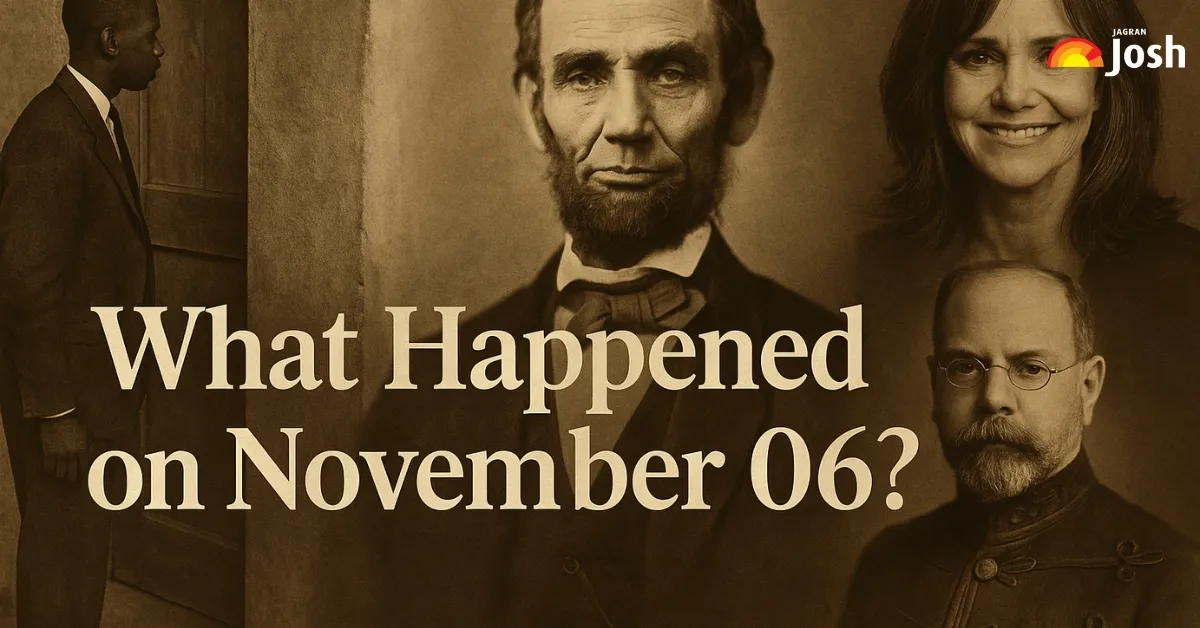
Every day has a story. Every date holds moments that changed lives, nations and ideas. Have you ever wondered what echoes from the past are tied to today, November 6? On this day, we look back at milestones that have shaped our world. On November 6 in history: in 1860, Abraham Lincoln was elected the 16th president of the United States, a victory that set the stage for the Civil War. In 1947, the TV show Meet the Press debuted, beginning a new era in media. In 1962, the United Nations General Assembly condemned apartheid in South Africa. And in 1984, Ronald Reagan won a landslide re-election in the U.S. In this article, we'll walk through more of the key events tied to November 6, tell the stories behind them and reflect on their impact.
What Happened On This Day – November 6?
Here's what happened in history on November 6:
1492 – Columbus Crew Encounters Tobacco
- On November 6, 1492, Christopher Columbus noted in his journal that Arawak Indians introduced his crew to smoking tobacco.
- Back in Spain, one crew member was jailed after frightened locals believed blowing smoke from the mouth and nose was the work of Satan.
1528 – Spanish Explorer Cabeza de Vaca Lands in Texas
- The Spanish conquistador Álvar Núñez Cabeza de Vaca ran aground off the coast of Texas.
- He became the first European to set foot on Texas soil.
- His unintentional journey turned into a struggle for survival marked by hunger and exhaustion.
1860 – Abraham Lincoln Elected President
- On November 6, 1860, Abraham Lincoln became the 16th President of the United States.
- He won despite gaining only about 40% of the popular vote.
- His victory led to Southern secession and the outbreak of the Civil War.
1861 – Jefferson Davis Elected Confederate President
- On this day in 1861, Jefferson Davis was elected President of the Confederate States of America.
- The election confirmed his role after months as provisional president.
- Like Lincoln, he was born in Kentucky.
1869 – First College Football Game
- On November 6, 1869, Rutgers University defeated Princeton University 6–4 in the first intercollegiate football game.
- The match was played with a soccer-like ball and resembled rugby.
- Only about 100 spectators attended in New Brunswick, New Jersey.
1917 – British Victory at Passchendaele
- After more than three months of fighting, the British captured the Belgian village of Passchendaele.
- The victory ended the Third Battle of Ypres.
- The campaign was one of the bloodiest battles of World War I.
1917 – Bolshevik Revolution in Russia
- On November 6, 1917, Bolshevik revolutionaries led by Vladimir Lenin launched a coup in Petrograd.
- The uprising overthrew the Provisional Government and brought the Communists to power.
- Within two days, Lenin became head of the new Soviet state.
1947 – Meet the Press Premieres
- On this day, the TV show Meet the Press debuted on NBC.
- It went on to become the longest-running television program in U.S. history.
1962 – UN Condemns Apartheid in South Africa
- On November 6, 1962, the United Nations General Assembly passed a resolution condemning apartheid.
- It called for economic and diplomatic sanctions against South Africa.
- The move marked one of the earliest global actions against racial segregation.
1977 – Toccoa Falls Dam Disaster in Georgia
- On this day in 1977, the Toccoa Falls Dam collapsed, killing 39 people.
- The earthen dam, built in 1887, gave way after heavy rain.
- The tragedy devastated the nearby Christian college campus.
1984 – Ronald Reagan Re-Elected in Landslide
- On November 6, 1984, Ronald Reagan defeated Walter Mondale to win a second term as U.S. President.
- He carried 49 of 50 states, one of the most significant electoral victories in history.
1988 – Soviet Dissident Andrei Sakharov Visits the U.S.
- Soviet scientist and human rights activist Andrei Sakharov began a two-week visit to the United States.
- His visit symbolised easing Cold War tensions.
1962 – Man Outside a Segregated Restroom
- This image became a symbol of racial injustice during the apartheid era.
- The same year, the UN officially condemned South Africa's segregation policies.
Which Famous Personalities Were Born and Died on November 6?
November 6 marks notable birthdays and deaths of influential figures throughout history, celebrating legacies in the arts, science, and sports.
Born on November 6
John Philip Sousa (1854–1932)
- American composer and conductor known for patriotic marches.
- His famous works include Semper Fidelis and The Stars and Stripes Forever.
Sally Field (1946 – )
- Oscar-winning actress known for roles in Norma Rae, Places in the Heart, and Steel Magnolias.
- Celebrated for portraying strong and resilient women.
Bowen Yang (1990 – )
- Comedian and actor, the first Chinese-American cast member on Saturday Night Live.
- Also appeared in the movie Wicked.
Notable Deaths on November 6
- Pyotr Ilyich Tchaikovsky (1840–1893): Russian composer famed for ballets like Swan Lake and The Nutcracker. He died on November 6, 1893.
- Charles X of France (1757–1836): Last king of the senior Bourbon line in France. He died on November 6, 1836.
- Gene Tierney (1920–1991): American actress known for films such as Laura and Leave Her to Heaven. She died on November 6, 1991.
- Erich Raeder (1876–1960): German admiral and naval leader during World War II. He died on November 6, 1960.

Kriti Barua is a skilled digital journalist and communications professional with 4+ years of experience, currently writing for the General Knowledge section at Jagran New Media. She has established herself as a subject matter expert in History, Geography, Trending National and International News, Sports, Science, and Defence, producing clear, reliable, and search-optimised content that connects with readers worldwide.
Kriti holds a BA degree from Delhi University and a one-year diploma in TV Production and Journalism, an academic background that adds research depth and strong storytelling instincts to her writing. Her experience spans brand writing, content marketing, and digital media, giving her a sharp understanding of what makes content both helpful to readers and visible in search.
At Jagran New Media, she applies this expertise to national and international news coverage, query-based articles, and in-depth pieces across her specialist subject areas. Her content is defined by easy language, factual accuracy, strong keyword strategy, and reader-friendly storytelling.