Which River is Known as the Lifeline of Jammu and Kashmir?
Lifeline of Jammu & Kashmir: The Jhelum River is unequivocally the lifeline of Jammu and Kashmir, particularly the beautiful Kashmir Valley. Rising from the Verinag spring at the Pir Panjal foothills, the Jhelum flows through Srinagar, providing essential water for irrigation, transport, and drinking. This historic river, known as 'Vitasta' in ancient texts, supports the region's famous floating markets and biodiversity.
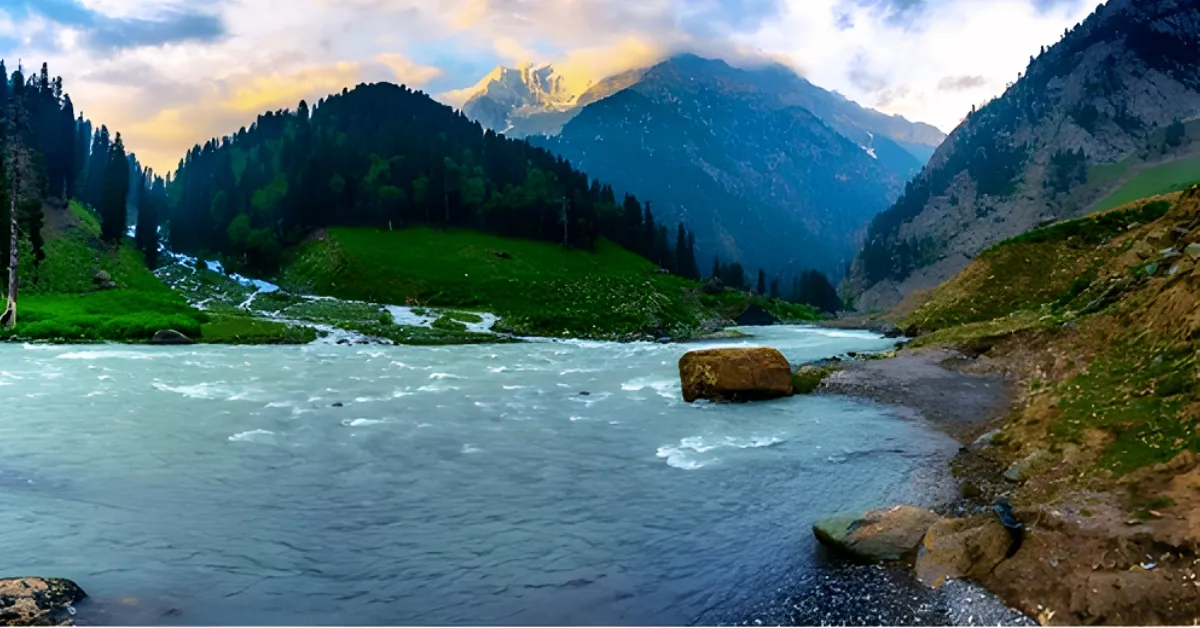
Jammu and Kashmir (J&K) is a land blessed by nature, featuring an extensive network of rivers and streams. The region is home to several major river basins, making its geography unique. Did you know India is home to mighty rivers like the largest river in India by volume (the Brahmaputra), the longest river in India (the Ganga), and the widest river in India (also the Brahmaputra)? These large waterways sustain millions. The rivers of J&K are equally vital.
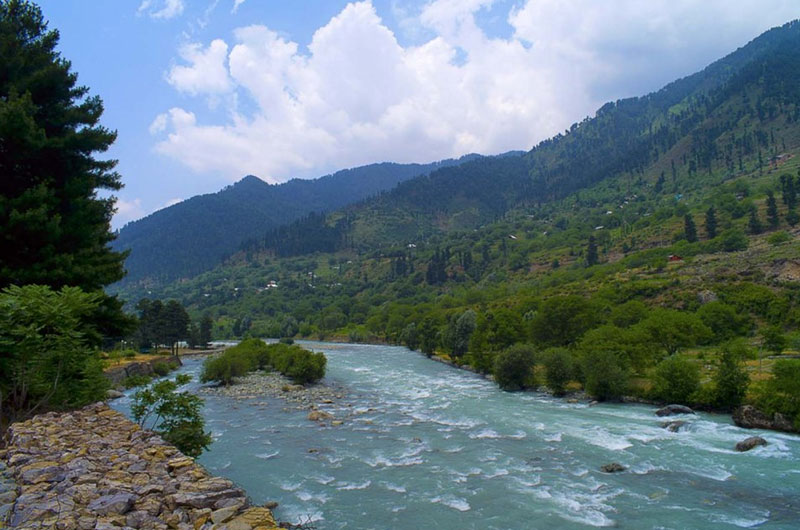
Different rivers in the region are often known by various local names or historical names. These names reflect their immense cultural and economic importance. For instance, do you know which river is nicknamed the 'Vitasta' in ancient texts? This particular river is a crucial source of irrigation and supports the famous floating markets of the region. In this article, we’ll take a look at the most significant river that serves as the lifeline of Jammu and Kashmir, exploring its journey, impact, and historical significance.
Which River Is Known As The Lifeline Of J&K?
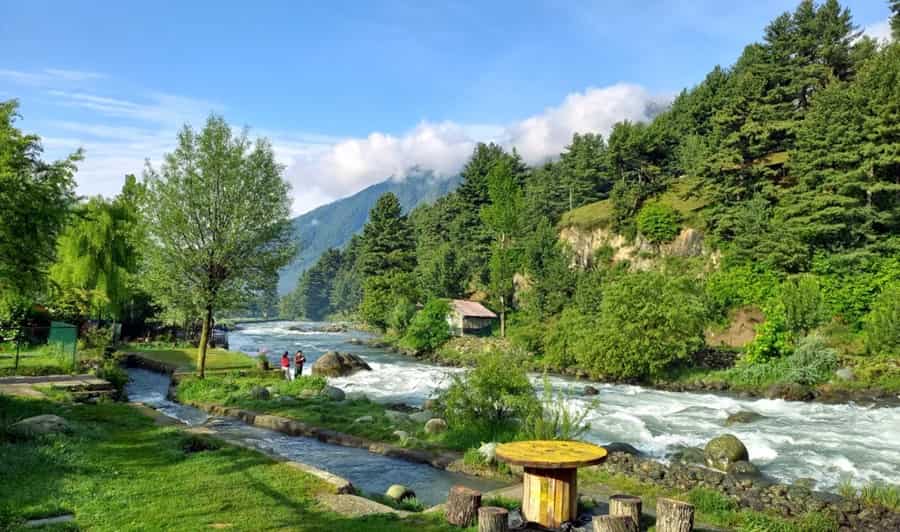
The Jhelum River is rightly called the lifeline of Jammu and Kashmir, especially the beautiful Kashmir Valley. It is also considered the lifeline of the Kashmir Valley. It starts from a deep spring called Verinag, located at the foothills of the Pir Panjal mountains in the Indian Union Territory of Jammu and Kashmir. The river flows northwestward through the entire Kashmir Valley, passing directly through the city of Srinagar, which it divides into two parts.
It then flows into the large Wular Lake, which helps control the river's flow and acts as a natural flood reservoir. From there, it flows into Pakistan-administered Kashmir before finally joining the Chenab River near Trimmu in Pakistan's Punjab province, eventually emptying into the Indus River System. The Jhelum provides crucial water for irrigation, transport, and hydropower to the region.
10 Lesser-Known Facts About the Jhelum River

- The Jhelum river was known as the 'Vitasta' in ancient Sanskrit texts.
- It is historically famous as the 'Hydaspes', the site of a major battle between Alexander the Great and Indian King Porus in 326 BCE.
- The Jhelum is one of the few Himalayan rivers that shows well-developed meanders (curving bends) even in its upper, youthful stage, due to the flat valley floor.
- The old city of Srinagar is historically connected by nine prominent wooden bridges (known as Kadal) across the river.
- The Jhelum's waters are governed by the Indus Waters Treaty (1960) between India and Pakistan.
- It is a tributary of the Chenab River, not directly of the Indus, though both are part of the larger Indus River System.
- The famous Dal Lake in Srinagar is partly fed and drained by canals connected to the Jhelum River.
- According to Hindu mythology, the river was created by Lord Shiva's spear, which struck the ground to create the spring, giving it the name Vitasta, meaning "that which is spread out like a vitasti" (a measure of 12 fingers).
- The massive Mangla Dam, one of the largest earth-fill dams in the world, is built on the Jhelum River in Pakistan.
- In the Kashmiri language, the river is often referred to as 'Vyeth' or 'Vyath'.

Kriti Barua is a skilled digital journalist and communications professional with 4+ years of experience, currently writing for the General Knowledge section at Jagran New Media. She has established herself as a subject matter expert in History, Geography, Trending National and International News, Sports, Science, and Defence, producing clear, reliable, and search-optimised content that connects with readers worldwide.
Kriti holds a BA degree from Delhi University and a one-year diploma in TV Production and Journalism, an academic background that adds research depth and strong storytelling instincts to her writing. Her experience spans brand writing, content marketing, and digital media, giving her a sharp understanding of what makes content both helpful to readers and visible in search.
At Jagran New Media, she applies this expertise to national and international news coverage, query-based articles, and in-depth pieces across her specialist subject areas. Her content is defined by easy language, factual accuracy, strong keyword strategy, and reader-friendly storytelling.