Which was the World's First University? Check Its History & Origin Here!
Explore the history of the world’s first University & learn about one of the earliest universities. Learn about its founding in 5th century CE, libraries, global influence & legacy.

Disclaimer: Earlier versions of this article highlighted only al-Qarawiyyin University as the oldest university. To provide a more complete perspective and avoid misinformation, references to Nalanda University have now been included, recognising its historical significance in ancient higher learning.
When we ask which institution deserves the title of the world’s first university, the answer largely depends on how we define “university.” Long before the modern European model emerged, several ancient cultures developed organised, residential centres of higher learning, each with its own methods, traditions, and legacies.
Among these, Nalanda University in ancient India stands out as one of the earliest and most sophisticated learning institutions. Yet, when considering a university that has been continuously operating into the modern era, international bodies such as UNESCO and Guinness World Records recognise al-Qarawiyyin University in Fez, Morocco.
Which Was the World’s First University?
The Nalanda University was founded in the 5th century CE during the Gupta period. It was a fully residential institution that attracted thousands of students from India and across Asia. Moreover, its vast libraries (Dharmaganja), organised curriculum, international student body, and faculty governance were comparable to much later medieval universities. It also served as a global knowledge hub, influencing education, culture, and scholarly exchange across Asia. Scholars from China, Korea, Tibet, and Southeast Asia travelled long distances to study, debate, and collaborate.
Nalanda University: One of the Earliest Great Universities
It offered structured instruction in:
-
Philosophy
-
Logic
-
Mathematics
-
Astronomy
-
Medicine
-
Buddhist studies
However, Nalanda’s continuity was broken after its destruction in the 12th century, which is why it is not considered the oldest continuously operating university.

(Visual of Nalanda University Ruins)
Why al-Qarawiyyin Is Recognised as the World’s Oldest Operating University?
International authorities such as UNESCO and Guinness World Records recognise al-Qarawiyyin as the oldest existing and continually operating educational institution in the world. While medieval universities like Bologna and Oxford developed formal university structures in the 11th and 12th centuries, al-Qarawiyyin had already been an academic hub for centuries.
Founded in 859 CE by Fatima al-Fihri, a learned and wealthy woman of Tunisian origin, al-Qarawiyyin began as a mosque and community learning centre in Fez, Morroco. Over time, it expanded into a major centre of structured scholarship.
Scholars were drawn to its growing reputation, and advanced study emerged in fields such as:
-
theology
-
jurisprudence
-
mathematics
-
astronomy
-
grammar
-
philosophy

(Credits: Guide in Fes)
Nalanda University Today
The modern Nalanda University was established in 2010. It was inspired by its ancient predecessor, and the modern continues the legacy of international scholarship and cultural exchange.
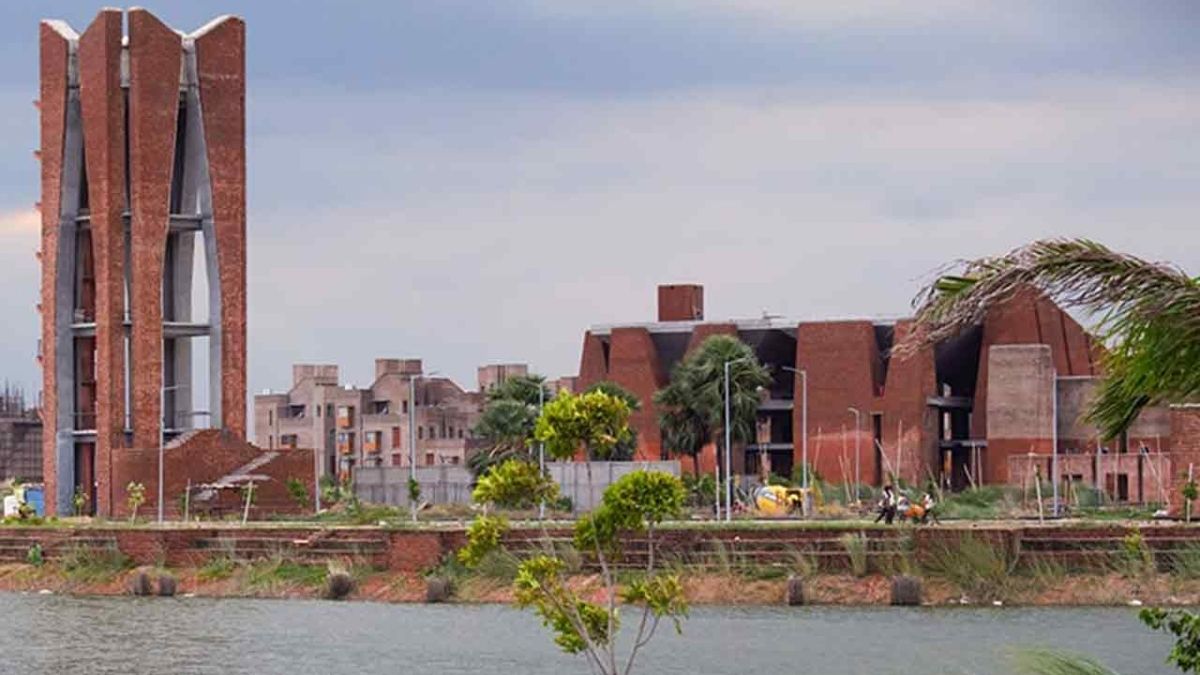
(Credits: Building Material Reporter)
While not a direct continuation, it symbolises one of the earliest and most influential universities in human history.
Conclusion
Therefore, both the institutions highlight the rich global heritage of higher learning, with Nalanda representing the ancient intellectual pinnacle and al-Qarawiyyin exemplifying continuity into the modern era.
-
Nalanda University: Among the earliest great universities, influential across Asia, but destroyed in the 12th century.
-
Al-Qarawiyyin University: Recognised as the oldest continuously operating university globally, with over 1,160 years of uninterrupted scholarship.
The vision of founders like Fatima al-Fihri and the scholarly achievements of ancient India underscore the enduring legacy of education across cultures.
You May Also Like to Read:
Which was the first city in the world, Check Here!
Different cultures developed organised systems of higher learning long before the modern model took shape, and several historic centres claim this distinction. Each university and learning method is backed by its own tradition, legacy, and official recognition.