Gandhi Jayanti 2026 Activities for School Students: Creative Ideas to Celebrate October 2
Gandhi Jayanti 2026 activities for school students: Check 10 creative ideas including poster making, essay writing, quiz, speech and cleanliness drive.
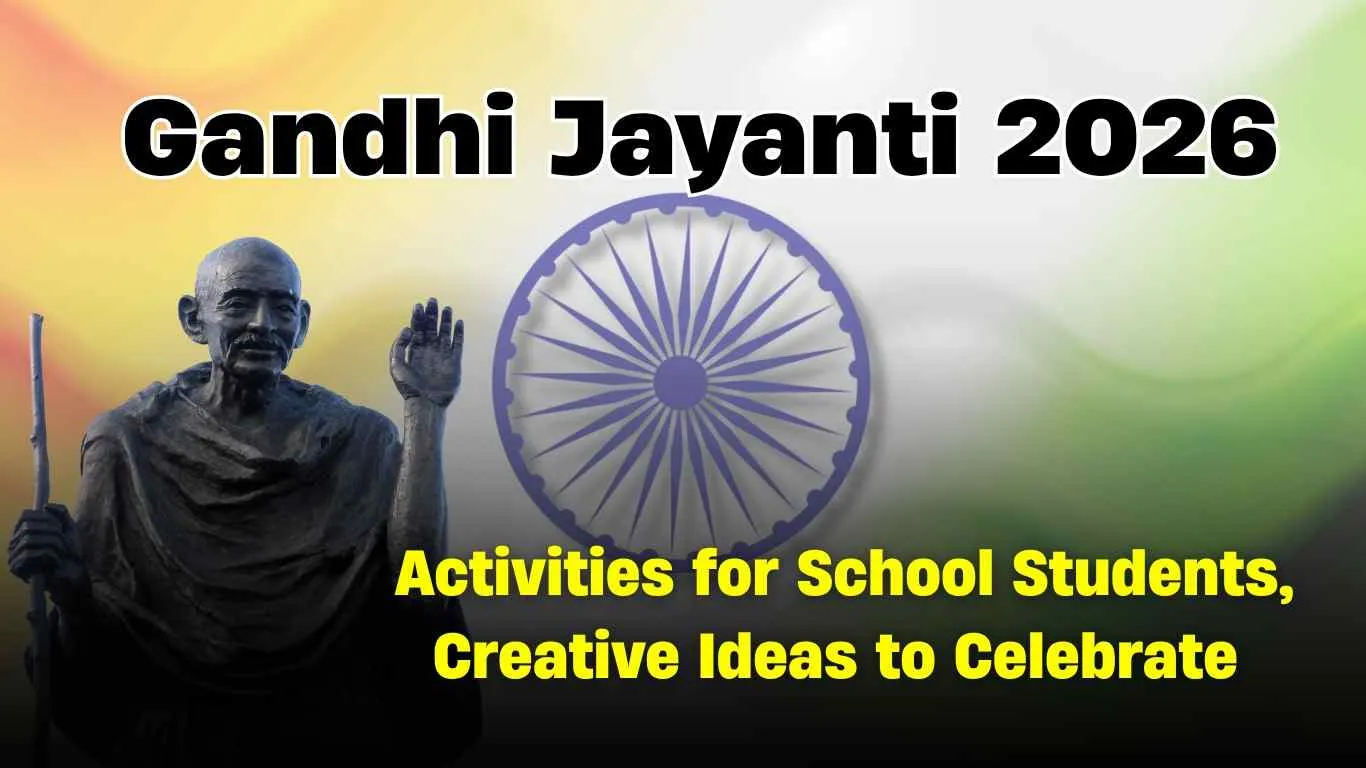
Gandhi Jayanti Activities for School Students: Gandhi Jayanti is observed every year on October 2 to commemorate the birth anniversary of Mahatma Gandhi. Schools across India organise special activities, competitions and awareness programmes to introduce students to Gandhi's principles of truth, non-violence, cleanliness and simplicity.
In 2026, Gandhi Jayanti will be observed on Friday, October 2. Schools can use the occasion to organise age-appropriate activities that encourage students to understand Gandhian values while participating in creative and educational programmes.
Also Read l School Holidays in October 2026: Check State-wise School Closure
Gandhi Jayanti Activities for School Students
From poster-making competitions to cleanliness drives, schools can organise several activities for students on Gandhi Jayanti. Here are some ideas that can be conducted for different age groups.
1. Gandhi Jayanti Poster Making Competition
Poster making is a simple and engaging activity for school students. Teachers can give students themes such as "My India, My Responsibility", "Clean India" or "Non-Violence" and ask them to create posters using drawings, slogans and short messages.
The activity can be conducted individually or in groups, with separate categories for different classes.
2. Essay Writing Competition
Schools can organise an essay writing competition on topics related to Mahatma Gandhi and his contribution to India's freedom movement. Possible topics include "Mahatma Gandhi and Non-Violence", "Importance of Truth in Our Lives" and "What Gandhi's Values Mean to Students Today".
The activity can help students improve their writing skills while encouraging them to explore Gandhi's ideas.
3. Gandhi Jayanti Speech Competition
A speech competition can be organised for students to speak about Mahatma Gandhi, his role in India's freedom struggle and the relevance of his principles today.
Students can also be encouraged to speak about values such as truth, peaceful conflict resolution, self-discipline and community service.
4. Cleanliness Drive
Schools can organise a cleanliness and awareness drive on the occasion of Gandhi Jayanti. Students can clean designated areas of the school campus under appropriate supervision and create posters encouraging responsible waste disposal.
The activity can be linked to Gandhi's emphasis on cleanliness and personal responsibility.
5. Gandhi-Themed Quiz
A Gandhi Jayanti quiz can test students' knowledge of Mahatma Gandhi and India's freedom movement. Questions can cover important events, places, movements, writings and people associated with Gandhi.
Schools can conduct separate quiz rounds for junior and senior students to make the activity suitable for different age groups.
6. Role Play on Mahatma Gandhi
Students can participate in a short role play based on important moments from Mahatma Gandhi's life and India's freedom movement. Scenes can focus on events such as the Dandi March, Champaran Satyagraha or the Quit India Movement.
Teachers can use the activity to explain the historical context of these events rather than focusing only on costumes and performances.
7. Gandhi Jayanti Drawing and Painting Competition
Younger students can participate in a drawing or painting competition. Suggested themes include Mahatma Gandhi, cleanliness, peace, non-violence and India's freedom movement.
The activity can allow students to express their understanding of Gandhi Jayanti through art.
8. Reading Session on Gandhi
Schools can conduct a special reading session featuring age-appropriate extracts from writings about Mahatma Gandhi or accounts of important events from his life.
Teachers can follow the reading with a discussion where students share what they learned and identify values that they can apply in everyday situations.
9. "One Good Deed" Activity
Schools can ask students to perform and document one helpful activity on or around Gandhi Jayanti. This could include helping a family member, assisting someone in school, reducing waste or participating in a community activity.
Students can share their experiences in class and discuss how small actions can contribute to the community.
10. Gandhi Jayanti Slogan Writing
Students can write short slogans based on themes such as truth, peace, non-violence, cleanliness and responsible citizenship. The best slogans can be displayed on classroom boards or around the school campus.
Also Read l Dussehra 2026 School Holiday: Check State Wise School Closure List and More
Gandhi Jayanti Activities for Different Classes
Schools can select activities according to students age groups and learning levels.
| Classes | Suggested Activities |
| Classes 1–3 | Drawing, colouring, storytelling, slogan writing |
| Classes 4–5 | Poster making, quiz, cleanliness awareness |
| Classes 6–8 | Essay writing, speech, role play, quiz |
| Classes 9–12 | Debate, essay competition, presentations, documentary screening |
NOTE: Activities can be adapted according to the school's available resources and academic schedule.
Why Do Schools Celebrate Gandhi Jayanti?
Gandhi Jayanti provides schools with an opportunity to introduce students to important aspects of India's history and Mahatma Gandhi's role in the freedom movement. Activities conducted around October 2 can combine historical learning with discussions about values such as non-violence, truth, discipline and social responsibility.
Instead of limiting the celebration to speeches and cultural programmes, schools can use interactive activities to encourage students to engage with these themes in practical ways.
Also Check:

Apeksha Agarwal is an Education Journalist with over 3.5 years of experience. She covers a wide range of topics, including school board examinations, entrance tests, admissions, results, scholarships, and higher education updates. Over the years, she has closely tracked major examinations such as JEE Main, NEET UG, CUET, and various state-level entrance exams, helping students stay informed throughout their academic journey. Apeksha has a Master's degree in Journalism and Mass Communication and a certificate in Digital Journalism. She is passionate about transforming complex educational developments into clear, accessible, and useful information. Her reporting focuses on providing students, parents, and educators with accurate updates and practical insights on examinations, results, and policy changes. She believes that quality education journalism can make a meaningful difference by helping students make informed decisions about their future.