Understanding the Concept of Torque: Definition, Types, Formula and Calculation
This article is an informative source for students to understand the definition, meaning, application and more for the Understanding the Concept of Torque
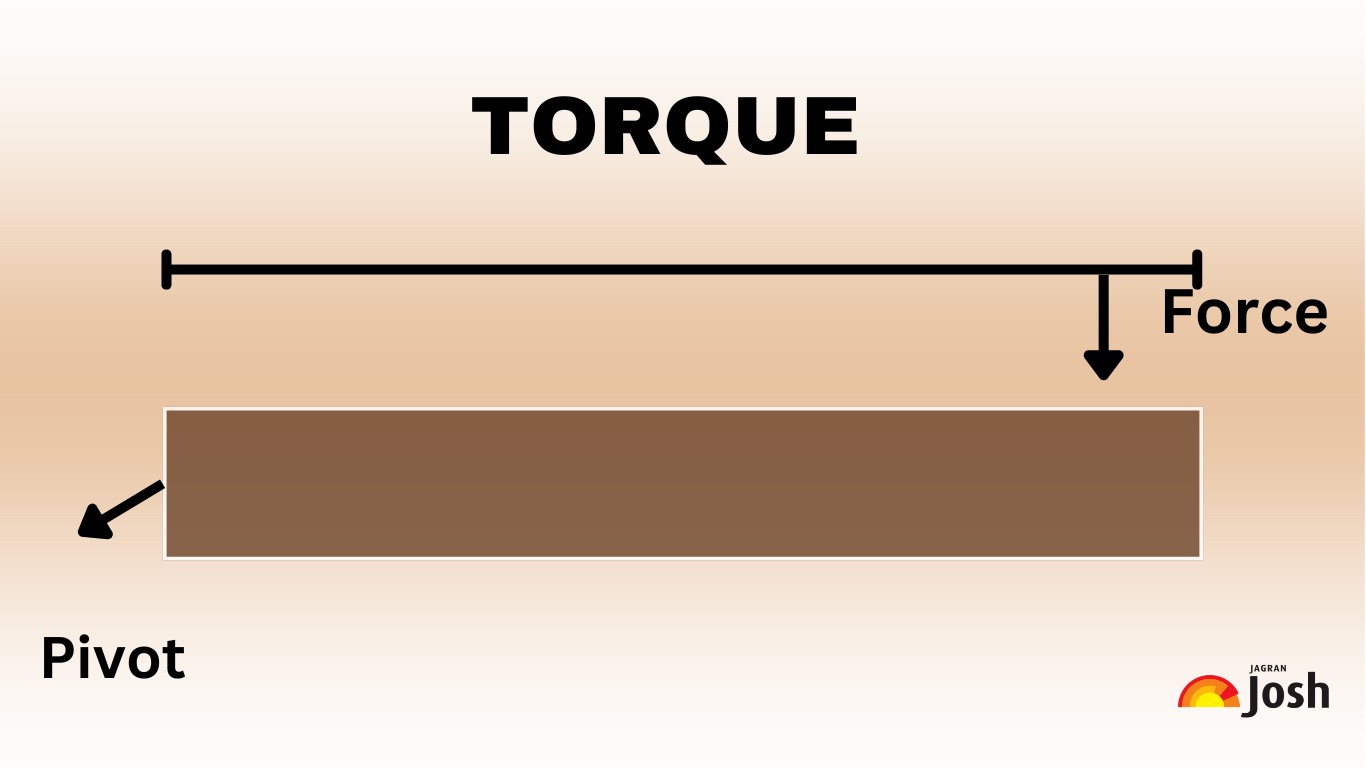
Torque is that twisting force which makes objects spin, not to move in a straight line. The stronger your push and the farther you are from the hinges (the twisty bit), the more torque you create, making the door open wider. Torque is like a fancy way of saying "twisting force," and it's super important for things that spin, just like force is important for things that move in a straight line.
Torque Definition
The force that can cause an object to rotate along an axis is measured as torque. In linear kinematics, force is what drives an object’s acceleration. Similar to this, an angular acceleration is brought on by torque.
Torque Formula
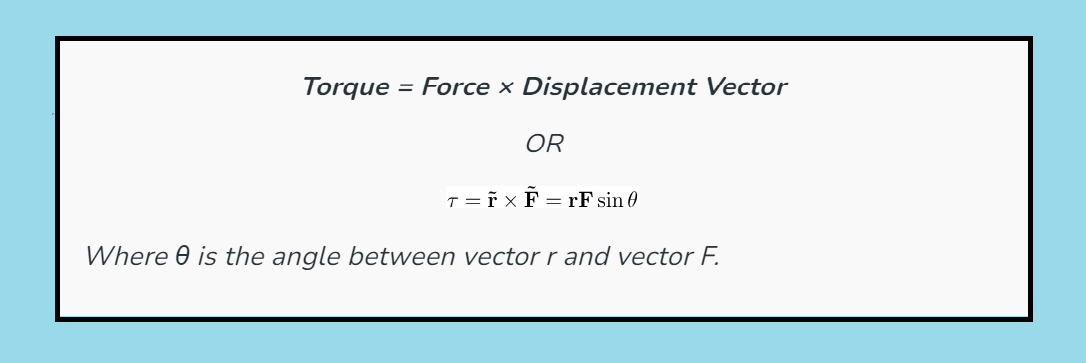
Torque Formula is given by the cross product between Force and the displacement vector from the pivot point. Thus, mathematically, torque can be written as:
How is Torque Calculated?
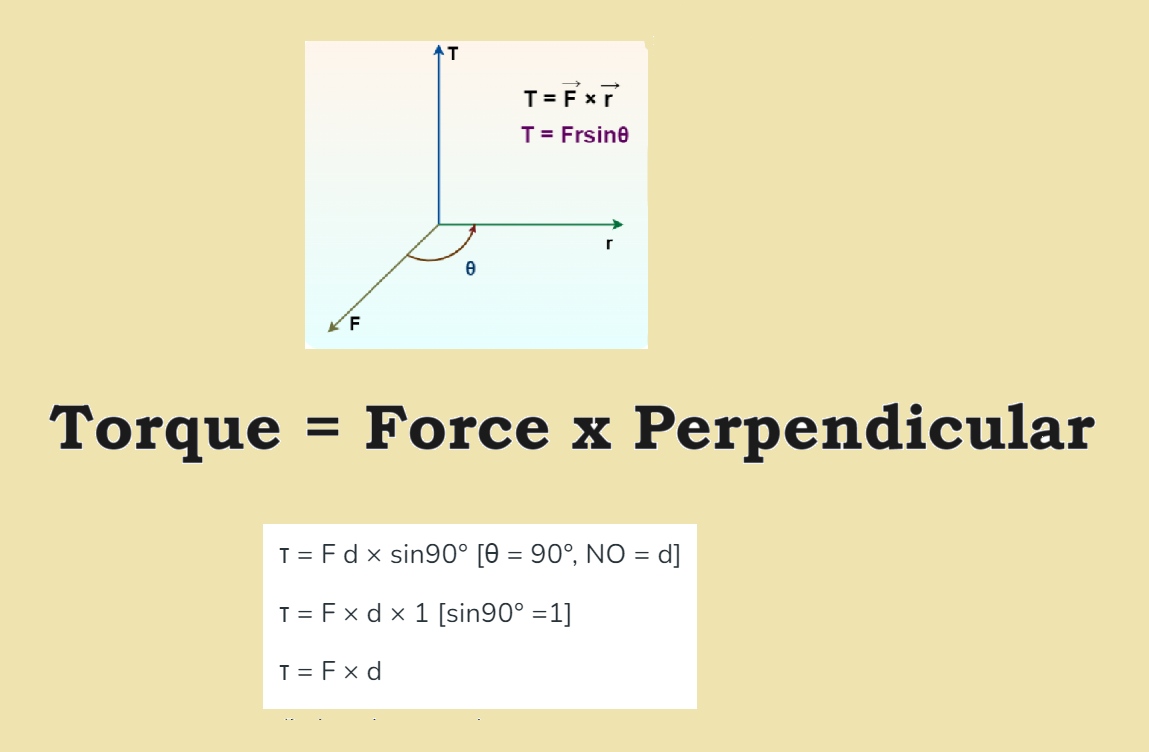
As shown in the below image N denotes the axis of rotation, F is the horizontal force applied at p to rotate and d represents the moment of the arm (perpendicular distance between the line of action force to the axis of rotation).
Types of Torque
The two types of torque are static and dynamic, discussed as follows:
-
Static Torque
-
Dynamic Torque
Static Torque: This type of torque acts on an object that is not rotating. Static torque is the twisting force that holds the object in position, preventing it from rotating. For example, the force you apply to a wrench to keep a bolt from loosening is static torque.
Dynamic Torque: This type of torque acts on an object that is already rotating or in circular motion, causing it to start rotating. The force you apply to a wrench to tighten a bolt is dynamic torque, as it creates a turning motion.

Anisha Mishra is journalist with over 3 years of experience in covering the Indian education sector. She has worked extensively in the K12 domain, with focus on the state board as well as central board examinations, policy structure of seconday and higher secondary education as well as the entrance examinations like JEE, NEET, CLAT, etc. Her extensive experience in the domain has helped her provide students with concise accurate information in all aspectes of school life and education. Her key interest lies in decoding the changes in the curriculum, NEP implementation and changing education ecosystem in the country. Besides working, she enjoys traveling, exploring new places and cultures, and painting.


-1789127407555_t.webp)