Difference Between CV and Resume
A CV typically covers in-depth academic and career details, making it longer and more formal. Resumes, however, focus on showcasing relevant skills and experiences for specific jobs, making them shorter and adaptable. Both documents play key roles in different job applications worldwide.
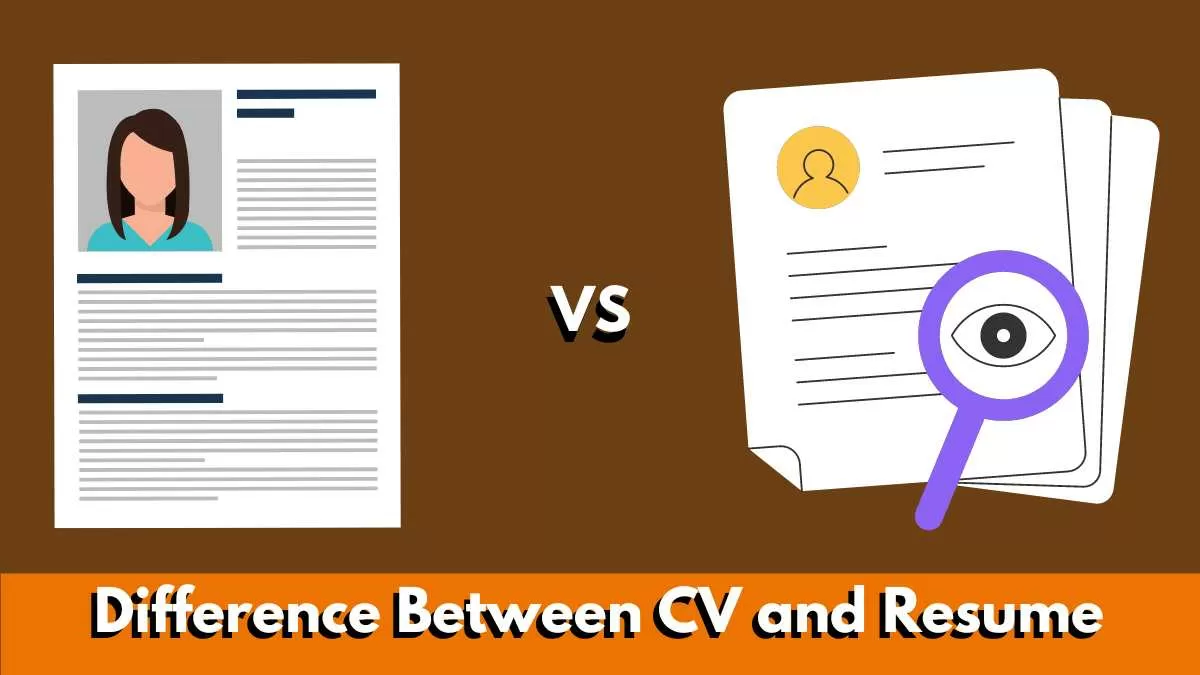
CVs and resumes serve different purposes based on their length, content, and context. While a CV provides an extensive overview of one’s academic and professional history, a resume is a concise document highlighting relevant skills and experience. Understanding these differences is crucial for making the right job application choice. CVs and resumes differ basically in the length, their use and what they contain-
Length
CV: Generally longer and may take anything from two pages to several pages and this depends on the candidate’s experience and accomplishments. There’s no numerical word or page limit.
Resume: In general, brief, most commonly not to exceed one or two pages, and should highlight the applicant’s work experience and skills which are called into application.
Purpose
CV: It is primarily used for positions in institutions of learning such as schools, colleges or Universities, and research organizations. It is a compilation that includes educational background, published works, research output and teaching experience in an individual’s career.
Resume: Mainly used in career opportunities in several fields. It is more focused on certain occupations emphasizing the abilities and accomplishments associated with a given applied position.
Content
CV: They include education, work experience, list of publications, presentations, honours and awards and association membership. This makes it the perfect record of one’s academic and professional background.
Resume: Emphasizes summary of important qualifications, skills and experiences which meet the description of the job. This is normally made flexible for the specific purpose of application to accentuate the most appropriate details.
Usage Context
In the USA and Canada, the CV is much more formal and is used when applying for academic positions while ‘resume’ is used for general application. On the other hand, in many other countries, for instance, European countries, the document is called a CV in a way that it is similar to a resume or a brief document of jobs.
Hence, both CVs and resumes have specific uses depending on the job or academic role being applied for. Knowing which document to use and how to tailor it effectively increases the chances of standing out in the competitive job market or academic application process.
Also Read | Difference Between Acids and Bases
Also Read | Difference between Sea and Ocean

Kirti Sharma is a journalist in the education domain with three and a half years of experience creating high-quality content for the education technology (EdTech) and digital media industries. She has an expertise in covering education news. Kirti has experience in writing data backed informational pieces on General knowledge.
Kirti holds a Bachelor of Arts degree, which helped build her strong foundation in writing and research. Over the course of her career, she has brought her skills to a variety of well-known companies, including ThoughtPartners Global, Infinite Group, and MIM-Essay. Through these roles, she has learned how to take complex information and turn it into engaging, easy-to-understand content for readers online.