What is the Oldest Alphabet in the World? Check What Historians Discovered!
Discover what the oldest alphabet in the world is. Learn how the oldest script has shaped modern writing and transformed human communication, exploring its history & significance.
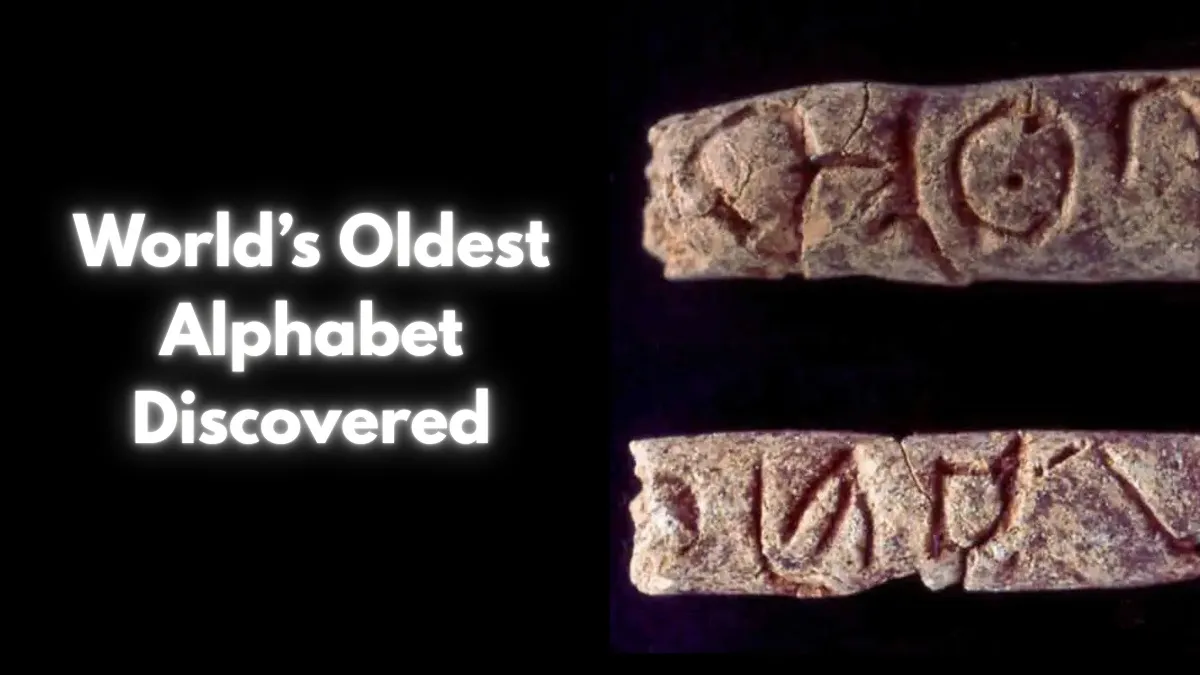
For centuries, historians and linguists have highlighted a deceptively simple question, what is the oldest alphabet in the world? While early writing systems like cuneiform and hieroglyphs are far older, modern scholarship now largely agrees on one answer when it comes to the first true alphabet.
After decades of archaeological discoveries and comparative research, most historians point towards one script as the earliest known alphabetic system. Let us discover through this blog about its history, significance, and relevance till today.
What Makes an Alphabet Different From Early Writing?
Before alphabets existed, ancient civilisations relied on complex systems where symbols represented entire words or ideas. Alphabets changed everything by representing individual sounds (phonemes) instead. This innovation made writing:
-
Easier to learn
-
Faster to reproduce
-
Accessible beyond elite scribes
That shift is what defines a true alphabet, and why Proto-Sinaitic matters.
What is the Oldest Alphabet Known to Man?
The Proto-Sinaitic script, also known as Proto-Canaanite, is the oldest alphabet known to man. Its history dates back roughly 4,000 years (c. 1800–1700 BCE). It was developed by Semitic-speaking workers in the Sinai Peninsula. It was particularly around sites such as Serabit el-Khadim, where Egyptian turquoise mines operated.
Instead of copying Egyptian hieroglyphs directly, these workers simplified and repurposed them, assigning symbols to sounds rather than meanings. This produced a consonant-based system (abjad) with a limited number of signs. It was an idea that would reshape human communication.
Why Proto-Sinaitic Was Revolutionary?
-
Used symbols for sounds, not objects
-
Required only 22–30 characters
-
Could be learned without elite training
-
Laid the groundwork for later alphabets
Also read: What was the First University in the World? Check Here!
How the First Alphabet Evolved?
A lot of you might not know, but Proto-Sinaitic did not remain isolated. Over centuries, it evolved and spread across the ancient Near East. Moreover, the Phoenician alphabet refined the Proto-Sinaitic alphabet and spread it widely through trade. Further, the Greeks came in and added vowels to create the first full alphabet, which eventually led to the Latin script used in English today.
| Alphabet / Script | Approx. Date | Place of Origin |
| Proto-Sinaitic | c. 1800 BCE | Sinai Peninsula |
| Phoenician | c. 1050 BCE | Eastern Mediterranean |
| Greek | c. 800 BCE | Greece |
| Latin | c. 700 BCE | Ancient Rome |
Sources: Encyclopaedia Britannica, British Museum, British Library; research by Orly Goldwasser; The Story of Writing by Andrew Robinson.
Why Some Letters Disappeared Over Time?
As alphabets evolved, not every sound remained necessary. It also suggests that languages change, pronunciations shift, and certain letters become redundant. This is why later alphabets dropped or merged characters. It further led to questions like why certain letters vanished from English.
You may also like to read: Which was the first city in the world? Check Here!
Therefore, the invention of the alphabet was one of humanity’s greatest breakthroughs. By reducing language to sounds anyone could learn, the Proto-Sinaitic script quietly transformed civilisation, and influenced nearly every alphabet still in use today.


-1790664705824_t.webp)
-1790499764814_t.webp)