Which is India’s Oldest Language? Cabinet Adds 5 Tongues to Classical Linguistic Roster
India's linguistic history reaches back thousands of years through monumental literary traditions and newly uncovered stone inscriptions. Following recent Union Cabinet approvals expanding India's classical languages list to 11, fresh scholarly debates highlight how Tamil, Sanskrit, and ancient regional tongues evolved over time.
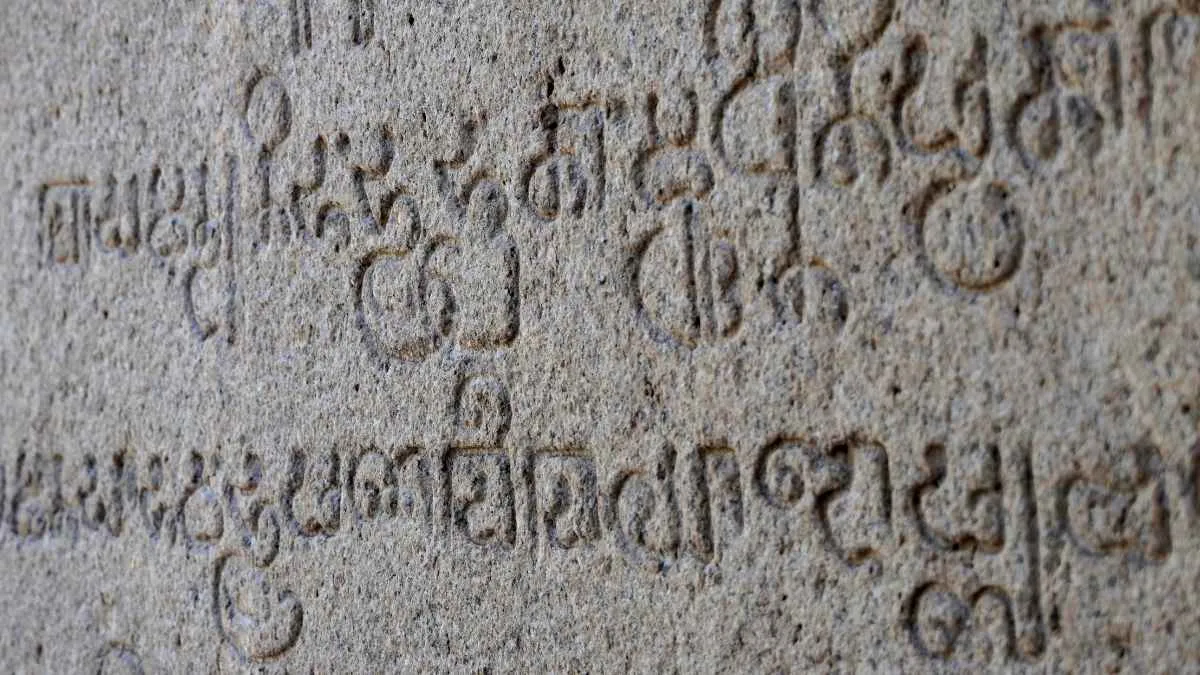
An official notice issued by the Ministry of Culture in India now includes 5 more classical languages in its oldest languages. Recent findings of inscriptions on rocks in various parts of South and West India have helped to affirm the antiquity of the languages.
According to the Archaeological Survey of India (ASI) recent dates assigned to the inscribed rocks have affirmed that these ancient Indian languages have been used consistently over a period of 3000 years.
Which is the Oldest Language in India?
In order to know the answer for which is the oldest language in India, one must look into the records of epigraphic inscriptions along with oral histories. Ancient texts and excavations prove that the chronology is headed by the Dravidian and Indo-Aryan languages.
| India's Oldest Language | Language Family | Recorded Epigraphy | Estimated Origin | Classical Language Status Granted |
| Tamil | Dravidian | c. 3000 BCE | Sangam Era | 2004 |
| Sanskrit | Indo-Aryan | c. 2000 BCE | Vedic Corpus | 2005 |
| Kannada | Dravidian | c. 450 BCE | Halmidi Inscription | 2008 |
| Telugu | Dravidian | c. 400 BCE | Bhattiprolu Inscriptions | 2008 |
| Malayalam | Dravidian | c. 500 CE | Proto-Tamil-Malayalam | 2013 |
| Odia | Indo-Aryan | c. 7th - 10th Century CE | Proto-Odia | 2014 |
Tamil
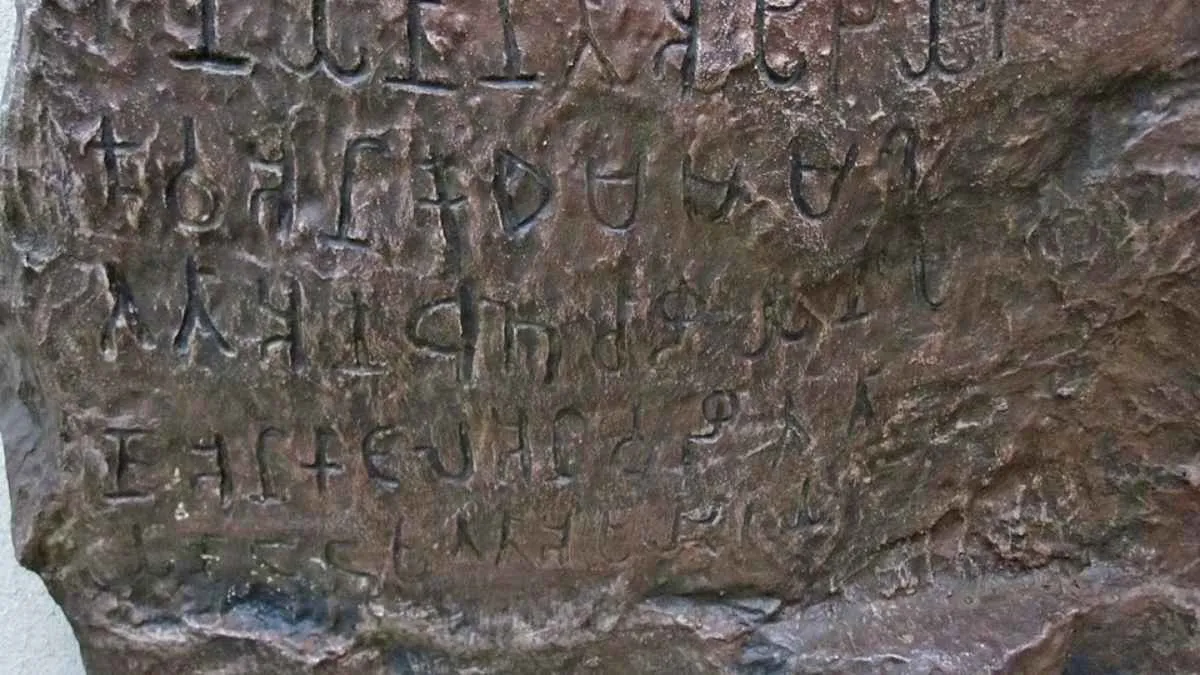
Mangulam Tamil Brahmi inscription in Mangulam (c. 400 BCE – c. 200 CE) (Photo: Wikimedia)
One of the most ancient continuously spoken languages in the world, Tamil enjoys a literary tradition of more than 5,000 years of unbroken history. The earliest Tamil literature, Keeladi inscriptions, and excavations provide evidence that Tamil was being written from the 6th century BCE onwards.
Sanskrit
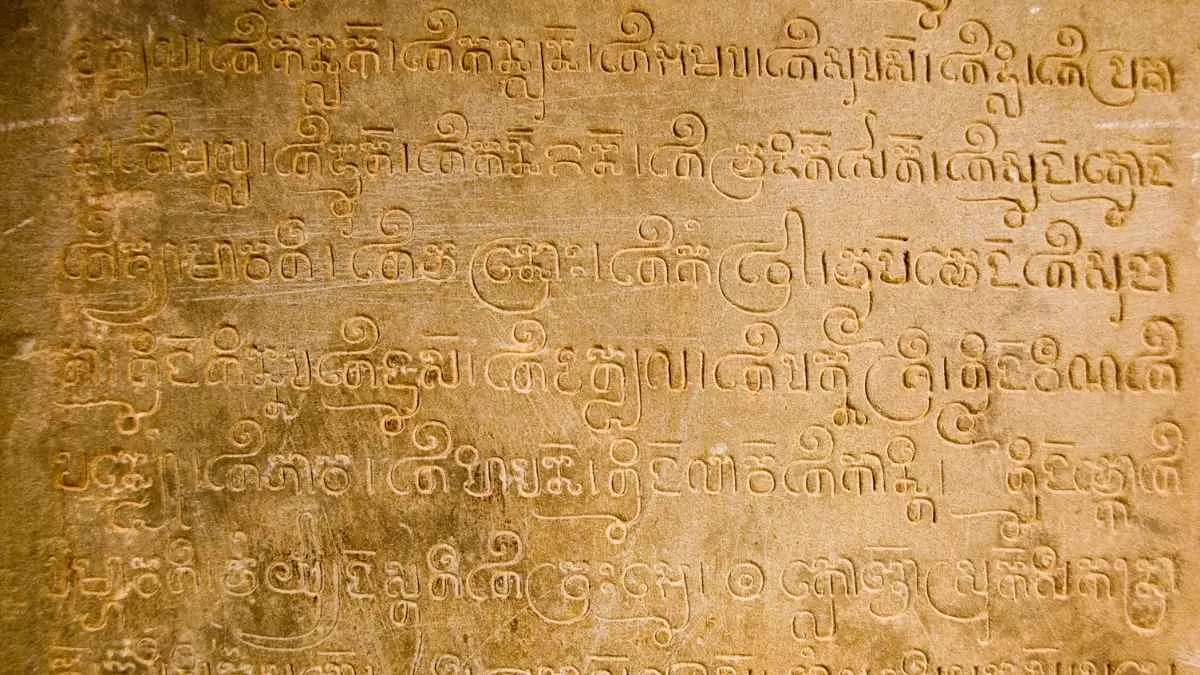
Ancient Sanskrit inscription on the entrance of Lolei Temple
The Vedic Sanskrit language was used primarily as the ritualistic language of Hinduism, Jainism, and Buddhism and predates Brahmi written script by several centuries. Classical Sanskrit grammar was systematised by Panini during the 5th century BCE.
Kannada
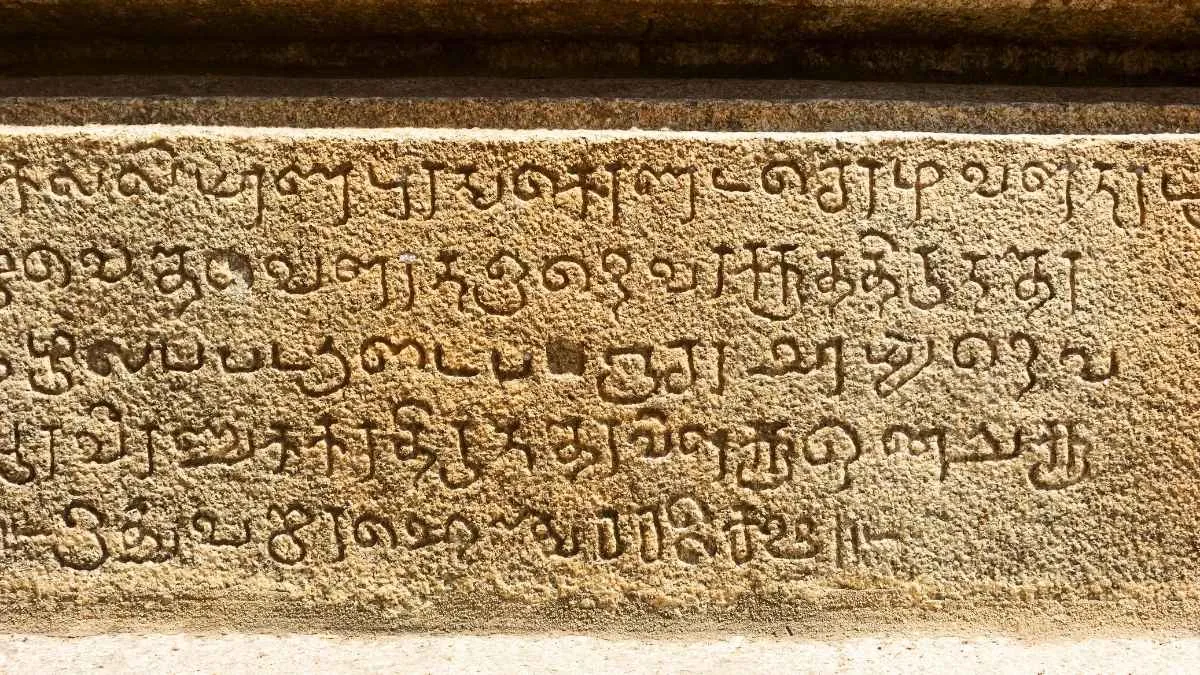
Ancient Kannada letters on stone of Lakshmanlingeshwara Temple, Karnataka, India
Kannada, which derives from Proto-Dravidian, has a consistent inscription history of over 1,500 years. An important historical inscription of Kannada is the 5th century Halmidi stone inscription.
Telugu
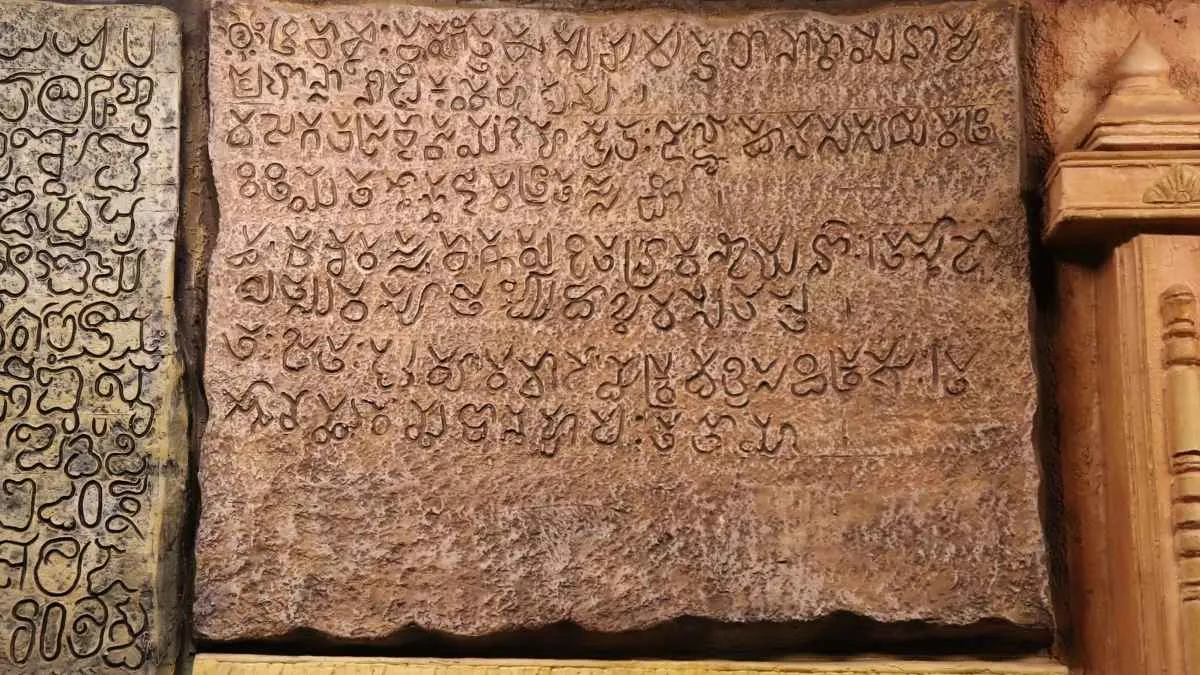
Ancient Telugu script in a museum (Photo: Wikimedia)
Developed out of early branches of Dravidian languages, Telugu can be seen to have early epigraphical evidence in various parts of Andhra Pradesh and Telangana. Inscriptions from Bhattiprolu speak of its literary history for centuries past.
Malayalam
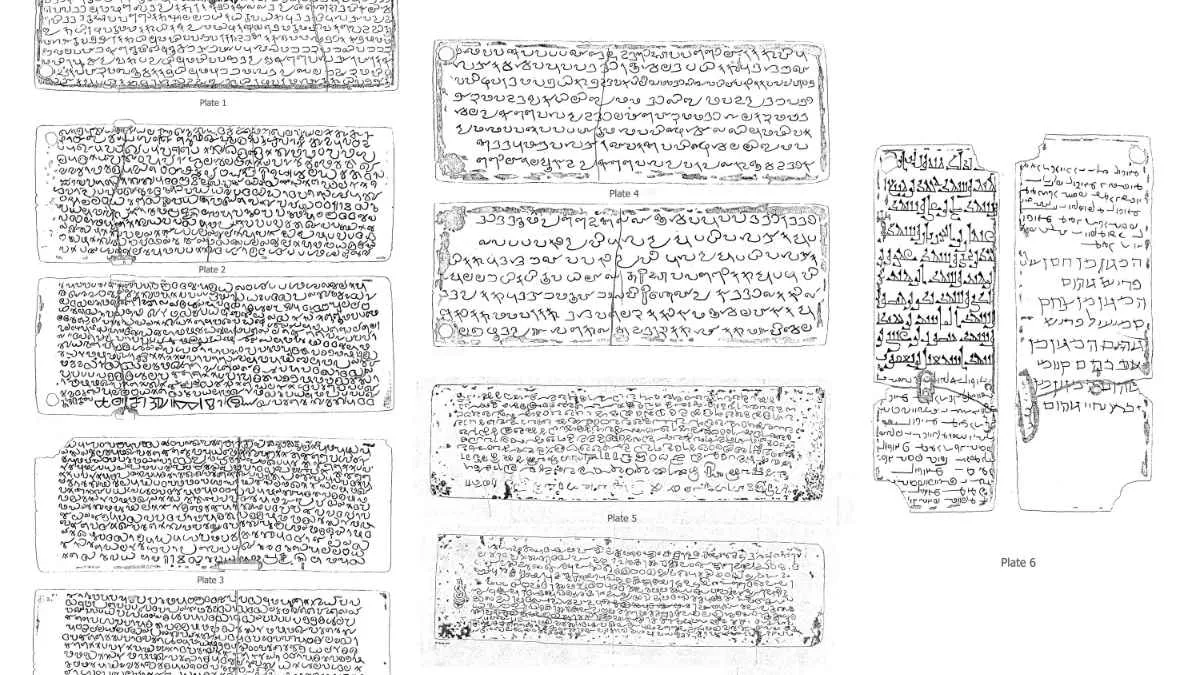
The Quilon Syrian copper plates (849/850 CE) are the oldest available inscription written in Old Malayalam. (Photo: Wikimedia)
The evolution of Malayalam occurred along the Malabar Coast and was a language that boasted of a wealth of literary tradition, emerging from early dialects spoken in West Coast Dravidian regions.
Odia
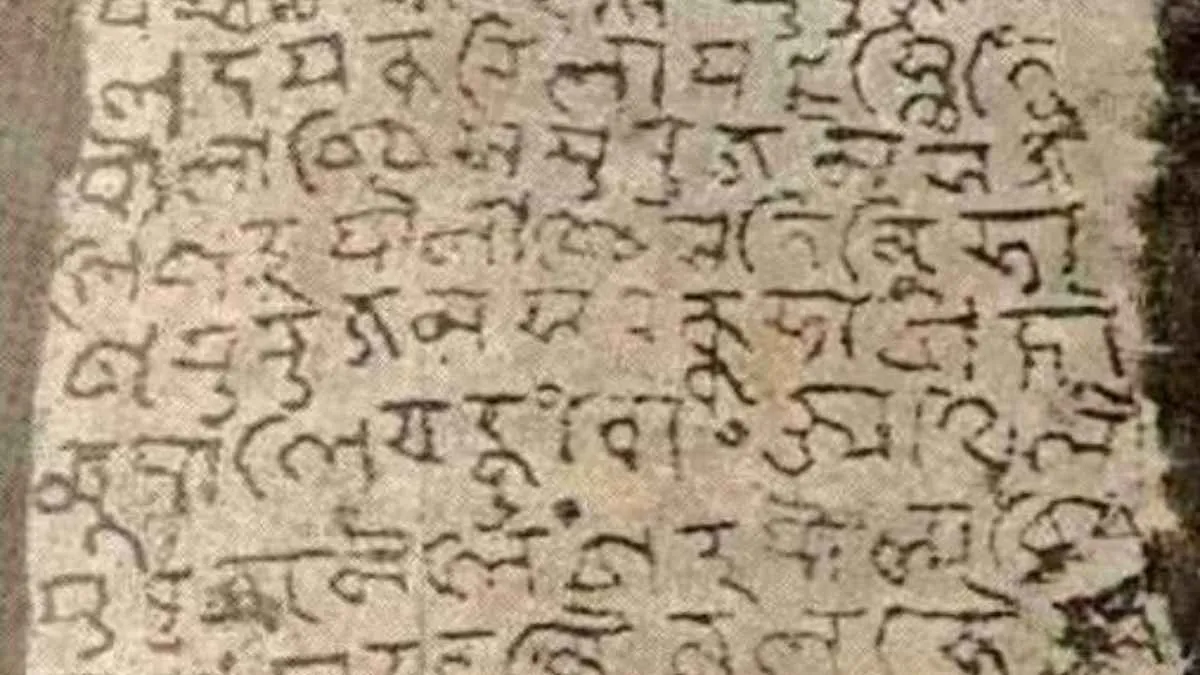
Urajam inscription in Old Odia (Photo: Wikimedia)
As one of the constituent languages of the Eastern Indo-Aryan language family, Odia has an independent literary tradition that began with medieval inscriptions and palm leaf manuscripts.
Which are 5 New Classical Tongues Added to the Oldest Languages List of India?
The Union Cabinet approved classical status for five additional native languages of India which are Marathi, Pali, Prakrit, Assamese, and Bengali. This historic expansion brings the total roster to 11 classical languages.
Modern Marathi language has its origin in Maharashtri Prakrit language, which was employed as the official language in the courts of Satavahana rulers.
The Prakrit and Pali languages stand for the spoken languages of the ancient populace, while Pali is the religious language for the Buddhist canon. The origins of Assamese and Bengali languages lie in the Magadhi Prakrit language.
Which is the Oldest Language in the World?
Most scholars regard Sumerian, Egyptian, and Tamil to be some of the oldest written languages in the world.
From cuneiform texts from Mesopotamia, it can be deduced that Sumerian is the oldest human written language to date, which has been documented from around 3100 BCE.
Among the oldest languages, Tamil is noted for its uninterrupted usage in both speaking and writing mode of a language. Unlike Sumerian and Egyptian languages which have gone extinct, Tamil has been continually used in writing and speech for more than three thousand years.

Harshita Singh is an education and general knowledge journalist with over 5 years of experience in educational writing. Specializing in US affairs and GK, Harshita has a track record of breaking down intricate geopolitical and historical subjects into clear, digestible insights for learners. Her strong background in text analysis, coupled with a Bachelor of Arts (Hons) in English from the University of Delhi, helps her produce authoritative, thoroughly researched content that empowers readers to engage confidently with global current affairs. For inquiries or academic insights, you can reach out to her directly at harshita.singh@jagrannewmedia.com.