US Tariffs on India: Why Is Donald Trump Planning Fresh Import Duties on 16 Economies, and How Will They Affect India?
US Tariffs on India: The Trump administration is preparing fresh import tariffs on India and 15 other economies. Find out why the US is investigating government subsidies under Section 301 and what the proposed duties mean for Indian exporters.
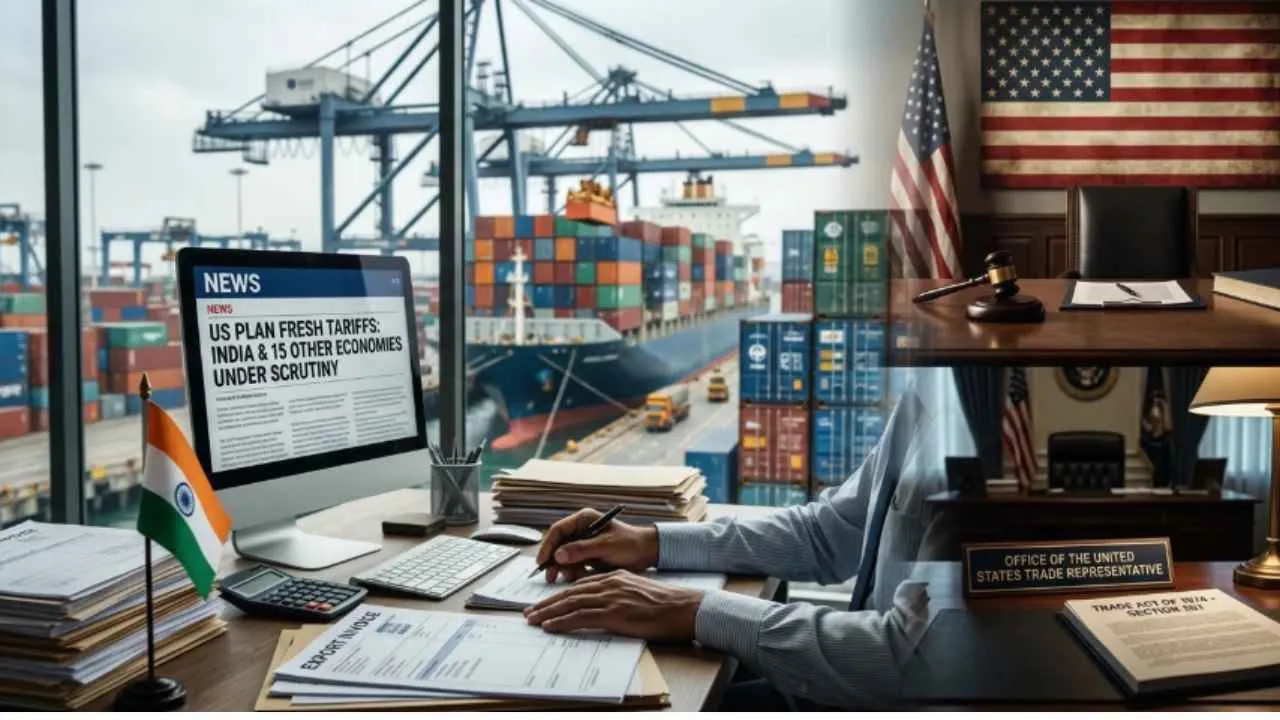
US Tariffs on India: Washington is right now gearing up to impose shocking new tariffs on a list of countries, and yes, India is on the list. This raises a big question: How will this affect India and other economies while we are all trying to escape the geopolitical stress of the past six months? This also brings fresh concerns for investors about where to adjust their sentiments.
According to reports, the United States is preparing to impose a fresh round of import tariffs on India, China, the European Union and 13 other economies. This puts global trade under the spotlight, with renewed pressure.
But why are these countries facing higher duties, and what makes their products a concern for Washington?
The proposed tariffs come after the US Trade Representative (USTR) investigated government support that allegedly allows these countries to produce more goods at lower costs.
For India, the move could mean higher export costs, tougher competition and fresh challenges for domestic manufacturers. Interestingly, it comes while New Delhi and Washington are still negotiating a bilateral trade agreement.
Let's analyse the scenario right now and decode this tactical move by the US.
Why Is The US Planning To Impose Fresh Tariffs On India and 15 Other Economies?
The Donald Trump administration is gearing up to introduce fresh import duties. This follows an investigation launched by the Office of the United States Trade Representative (USTR) on March 11, 2026.
But what exactly is Washington investigating, and why has India come under its radar? Here are the key points to understand:
- Investigation Into Government Subsidies
The USTR is examining a few things on a broader basis for the US government. It is looking into whether government subsidies and other forms of financial support are encouraging excessive industrial production in 16 economies. The list of countries being investigated includes India, China, Japan, South Korea and the European Union.
- Why Is Washington Concerned?
According to US Trade Representative Jamieson Greer and a WSJ report, government support allows companies in these countries to manufacture goods at lower costs and then sell them at competitive prices in international markets. According to the US, this creates an uneven playing field for American manufacturers.
- What Is Section 301?
Did you know whether it is legal to investigate other countries over trade practices? Here is the catch: The investigation is being conducted under Section 301 of the Trade Act of 1974. This provision gives the US government the authority to investigate foreign trade practices that it considers unfair or harmful to American businesses.
- What Happens Next?
After the investigation under Section 301, if the investigation establishes strong evidence against the targeted economies, there could be strict measures. If the investigation establishes that the countries are engaging in unfair trade practices, Washington could impose additional import duties on their products.
In simple terms, this could make goods from these countries more expensive for American importers.
- Why Does It Matter?
The proposed duties could reshape trade competition between major economies, putting exporters under pressure and potentially changing the cost advantage of imported goods in the US market.
How Will The New US Tariffs Affect India?
| Key Areas | Possible Impact on India |
| Higher Export Costs | New duties could add to the existing 10%–12.5% levies introduced in July 2026, increasing the cost of Indian goods entering the US market. |
| Industry Pressure | Textiles, pharmaceuticals and engineering goods could face higher costs and reduced competitiveness, forcing exporters to absorb duties or pass them on to US buyers. |
| Global Competition | Indian goods could become more expensive than products from competing exporters such as Bangladesh, Vietnam and Cambodia. |
| Trade Negotiations | The tariffs could pressure India to accelerate its trade deal with the US while protecting sensitive sectors such as agriculture and dairy from unfavourable market-access terms. |

Aishwarya Samant is a journalist with over 4 years of experience navigating the fast-paced corporate media landscape. She specializes in decoding business news, world economy, personal finance, and stock market trends, often adding a subtle touch of political perspective to keep things interesting.
Having worked with reputed organizations like ZEE, TV9, News24, and NewsX, she is no stranger to the newsroom hustle and the demands of real-time storytelling. Her writing style is fast-paced, engaging, and crafted to connect seamlessly with diverse audiences across platforms. She approaches every story from the reader’s point of view, breaking down complex topics into clear, relatable narratives backed by solid facts and credible sources. While she’s confident in expressing strong viewpoints, she ensures balance with insights. Sharp, fact-driven content that informs, engages, and keeps readers coming back for more.