Facts about Vande Mataram (The National Song of India)
'Vande Mataram’ is the national song of India. Celebrating 150 Years of Vande Mataram, India honours its national song’s legacy, history, and patriotic spirit. National Song of India, "Vande Mataram" is written by Bankim Chandra Chattopadhyay, to praise the "Mother India" on 7th November, 1875, and was published in a Bengali fiction novel ‘Anandmat. This iconic anthem inspired freedom fighters and continues to unite the nation through its revolutionary message and cultural significance. Let us read some important facts about the National Song of India 'Vande Mataram'.
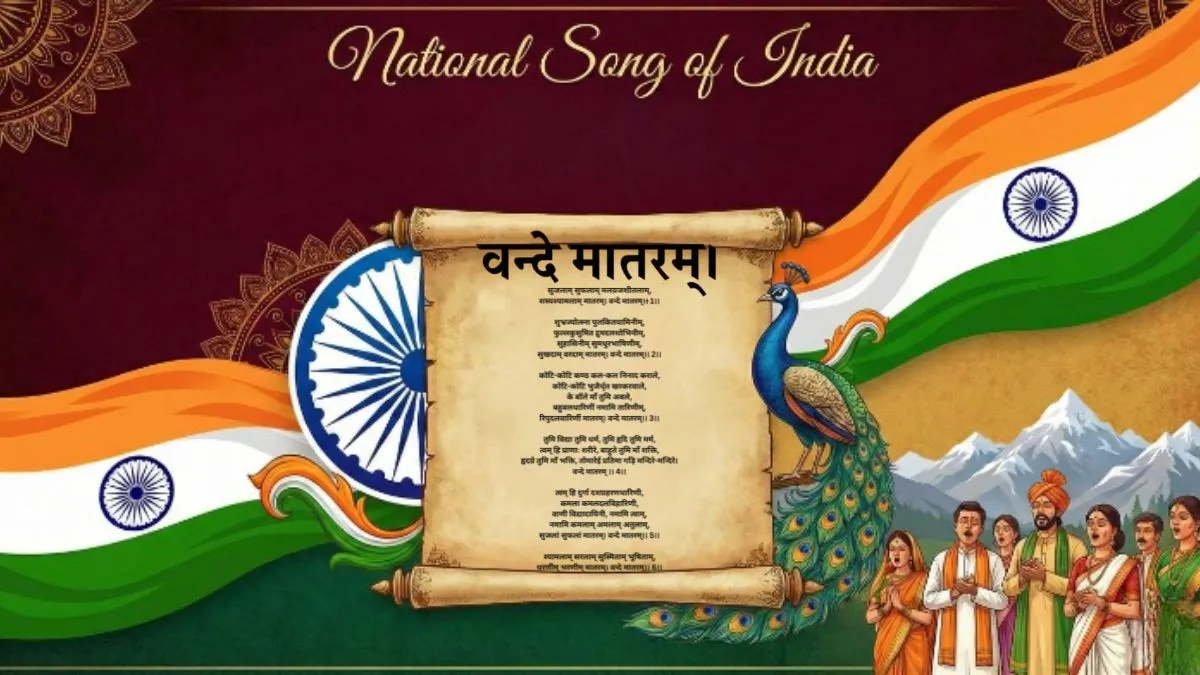
The 150th anniversary of Vande Mataram marks a national celebration dedicated to honouring the emotion, history, and unity that this iconic song represents. Vande Mataram is far more than a patriotic verse—it has been the heartbeat of India’s collective spirit and a powerful call that inspired countless freedom fighters during the independence movement.
On 1st October 2025, the Cabinet gave its approval for nationwide celebrations to commemorate this historic milestone. The aim is to create a vibrant, meaningful movement that reconnects citizens—especially young people and students—with the original revolutionary essence of the song. Through these celebrations, the timeless message of Vande Mataram will be remembered, cherished, and passed on, ensuring that its legacy continues to inspire future generations.
‘Vande Mataram’ is the national song of India. It was written by Mr. Bankim Chandra Chattopadhyay to praise the "Mother India" on 7th November, 1875, and was published in a Bengali fiction novel ‘Anandmath’.
Vande Mataram' Meaning:
The title 'Vande Mataram or Bande Mataram' means "I praise thee, Mother" or "I praise to thee, Mother".
The term "mataram (माताराम)" in the first line means the motherland of India or the Bangamata (Mother Bengal) and Bharat Mata (Mother India).
Facts at a Glance:
1. Vande Matram is the national song of India, which was composed by the Bankim Chandra Chatterjee, originally in Sanskrit & Bengali.
2. He wrote Vande Mataram at Chinsurah, near the river Hooghly (near Mallik Ghat).
3. It is assumed that the concept of Vande Mataram clicked to Bankim Chandra Chattopadhyay when he was serving as a government official (a District Collector), around 1876.
Peacock the National Bird of India: Facts at a Glance
4. Jadunath Bhattacharya was asked to set a tune for this poem just after it was written
5. It was adopted on January 24, 1950, by providing it equal status with national anthem Jana Gana Mana.
6. It is taken from the novel Anand Math published in 1882.
7. It was sung for the first time at the congress session at Calcutta in 1896.
8. It is formed for the proclamation of Mother Land. It played a vital role in the Indian independence movement.
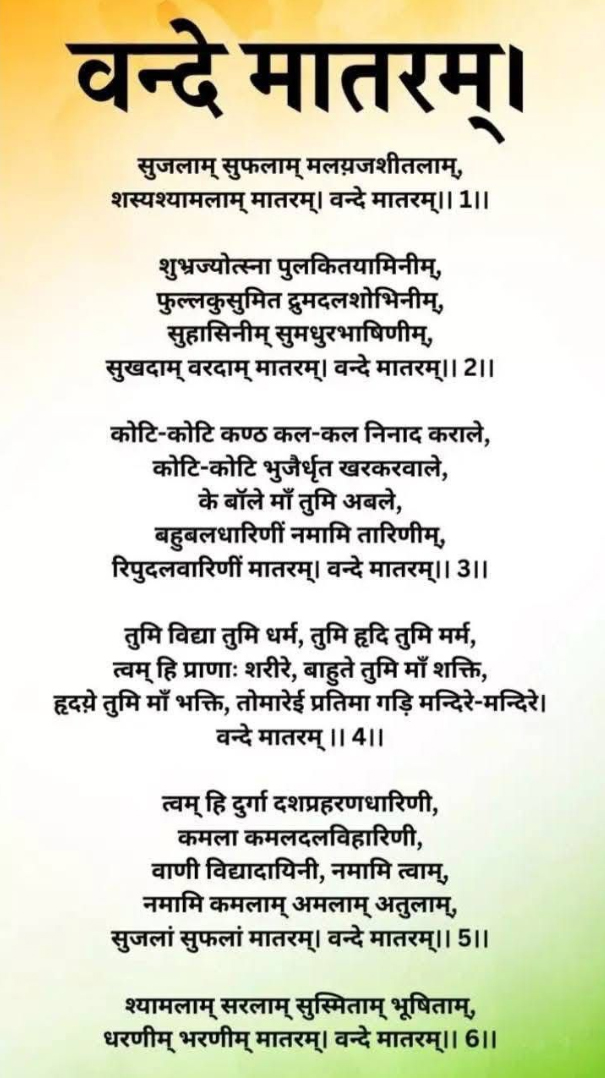
9. The original Vande Mataram comprises of 6 stanzas.
10. It was translated in prose by Shri Aurobindo in Karmayogin on 20 November 1909.
Source: amritkaal
Conclusion
The 150th anniversary of Vande Mataram reminds India of the song’s timeless power to unite, inspire, and awaken national pride. As the nation celebrates this milestone, its historic message of devotion to the motherland continues to guide future generations, keeping alive the spirit that once fuelled India’s freedom movement.

Prabhat Mishra is a Subject Matter Expert and digital journalist with an extensive background in the competitive exam landscape and over 4 years of experience in education, national and international news, and current affairs. Over his tenure with top knowledge platforms like Mentorship India, IAS BABA, IAS SARTHI, and now Jagran Josh, he has a deep understanding of government exams like UPSC and State PCS, including UP and Bihar, as he has already qualified for the UPPCS 2022 Mains and Bihar 68th Mains. With his core expertise in history, polity, geography & current affairs, he specialises in creating well-researched, aspirant-centric content and simplifying complex topics for competitive examinations.

-1789481527292_t.webp)