Why Do Earthquakes Happen?
Earthquakes happen due to sudden movement of tectonic plates and stress release along fault lines beneath the Earth’s crust. Learn causes of earthquakes, tectonic activity, seismic waves, earthquake zones and key geological facts.
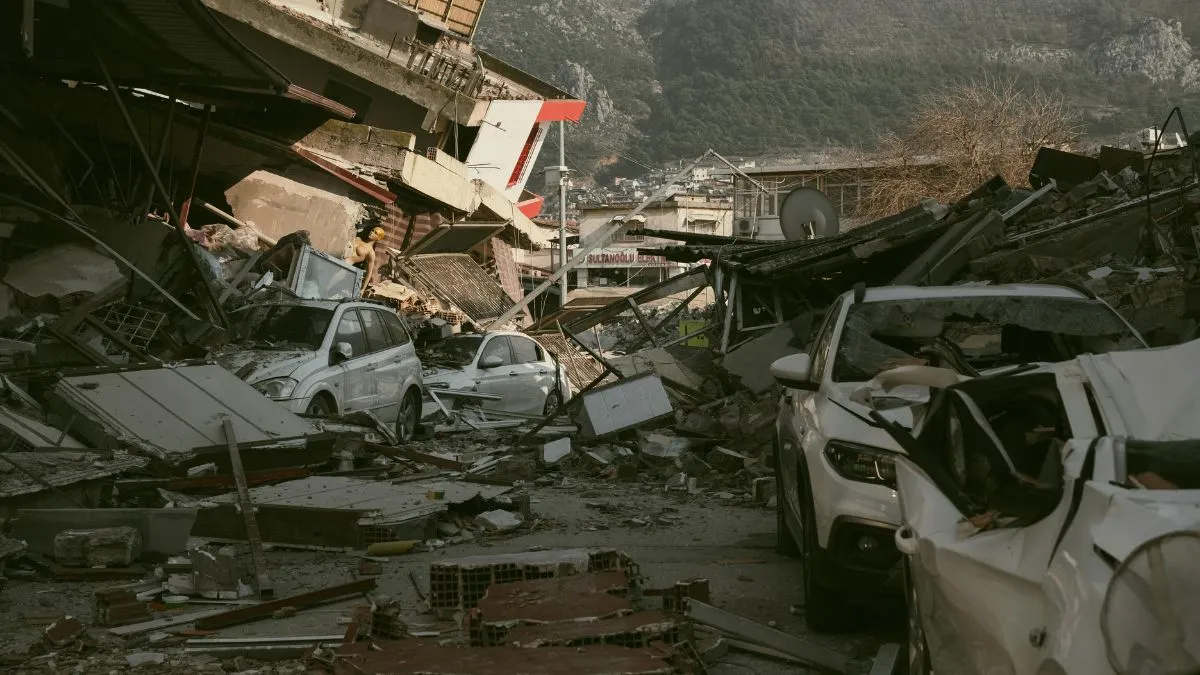
Cause of Earthquakes: Earthquakes happen due to the sudden movement of tectonic plates beneath the Earth’s crust. When stress builds up along plate boundaries or fault lines and the rocks can no longer withstand pressure, they break and release seismic energy, which causes the ground to shake.
Why Earthquakes Occur?
Earthquakes occur because of stress and friction between large tectonic plates that constantly move under the Earth’s surface. When this stored energy is released suddenly, it produces vibrations called seismic waves that travel through the ground.
Tectonic Plate Movements
Most earthquakes occur along tectonic plate boundaries where plates collide, slide past each other, or move apart. These zones create fault lines where stress accumulation leads to sudden rupture and ground movement.

Types of Earthquake Causes
Tectonic Earthquakes (Major Cause)
Caused by movement of tectonic plates and faults in the Earth’s crust.
Volcanic Earthquakes
Occur near volcanoes due to magma movement and pressure beneath the surface.
Human-Induced Earthquakes
Triggered by activities such as deep mining, large dams, drilling, or underground explosions, though these are limited and localised.
Focus and Epicenter of an Earthquake
The focus (hypocenter) is the point inside the Earth where the earthquake originates. The epicenter is the point on the Earth’s surface directly above the focus where shaking is felt strongest.
Earthquake Zones and Risk Regions
Earthquakes are more common in seismically active regions such as plate boundary belts, mountain ranges formed by collisions, and regions with major fault systems and crustal stress zones.

Interesting Facts About Earthquakes
Measured on Seismographs and Magnitude Scales
Earthquake strength is recorded using instruments that measure seismic waves and calculate intensity and magnitude levels.
Most Earthquakes Are Too Small to Be Felt
Thousands of tiny earthquakes happen daily worldwide but only strong ones cause noticeable ground shaking.
Plays a Role in Shaping Landforms
Earthquakes contribute to mountain building, fault formation, crustal uplift, and long-term geological changes.
Linked to Tsunamis in Certain Conditions
Undersea earthquakes can disturb ocean floors, generating powerful tsunami waves in coastal regions.
Helps Scientists Study Earth’s Interior
Seismic waves provide information about rock layers, crust thickness, and the structure of the Earth’s interior.
Read more:Which Mountain Is Known as the Third Pole of the Earth?
Earthquakes happen due to the sudden release of energy caused by tectonic plate movements, fault ruptures, and crustal stress. They are natural geological processes that shape the Earth’s surface while also requiring preparedness and scientific monitoring in high-risk regions. Keep reading for more such topics.

Jasreet Kaur is a journalist with over 3 years of experience in digital media and news content creation. She specializes in covering Trending News, including major National and International developments, with a focus on delivering accurate, engaging, and reader-friendly stories. Prior to this, she worked with Zee News as a Content Writer, where she gained extensive experience in news reporting and content strategy. Driven by curiosity, credibility, and a passion for impactful journalism, Jasreet aims to contribute to informed public discourse while supporting positive growth in organizations, society, and the world.

-1789481527292_t.webp)