Delhi to Jaipur in 30 Mins? India's First Hyperloop Test Track Takes Shape
India has launched its first hyperloop test track at IIT Madras, a key step toward ultra-fast transportation. Developed with support from the Ministry of Railways, the project explores high-speed, collision-free travel. With future commercial prospects, this innovation could redefine connectivity and boost economic growth in India's transport sector.
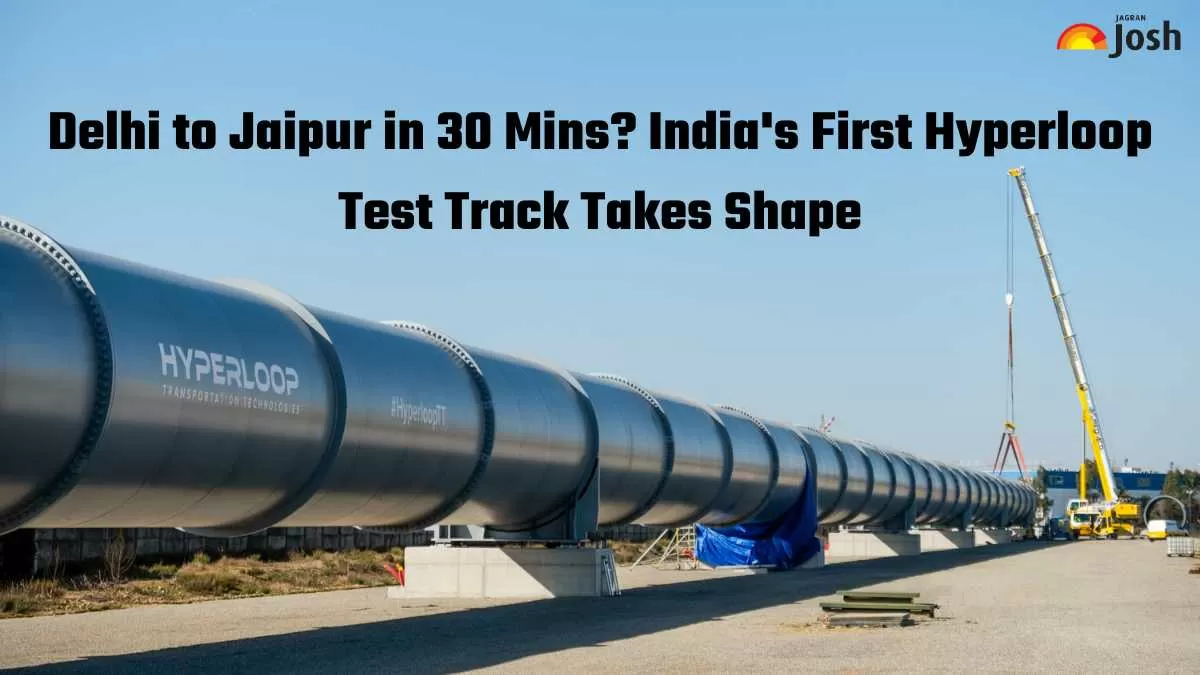
India has made a major step towards future transportation with the construction of its first hyperloop test track at IIT Madras. The 422-meter long track, a joint initiative between IIT Madras and the Ministry of Railways, is a key step towards unlocking the potential of hyperloop technology in India. The project aims to cut travel time significantly, with the potential to travel distances such as Delhi to Jaipur (about 300 km) in just 30 minutes.
Introduction to Hyperloop Technology
The hyperloop system, also known as the 'fifth mode of transport,' is meant for long-distance, high-speed travel. It consists of carrying passengers and freight in special pods or 'capsules' that move through a vacuum or low-pressure tube. The lower air resistance and friction enable these pods to achieve extremely high speeds.
Also Read | Famous Shiva Temples in India and Worldwide: Check All Details Here
Key Features of the Hyperloop System
According to a government-issued press release, the hyperloop works by utilizing an electromagnetically levitated pod inside of a vacuum tube. This negates friction and air drag, allowing the pod to travel potentially at speeds up to Mach 1.0. To help put that in perspective, Mach 1 is roughly 761 miles per hour at sea level on an average day.
The advantages of hyperloop technology extend beyond speed. It promises a collision-free commute that is immune to weather disruptions, ensuring reliable travel regardless of external conditions. Furthermore, the system is designed for low power consumption and incorporates energy storage capabilities for 24-hour operations, making it a sustainable and efficient transportation solution.
Development and Funding
Union Minister Ashwini Vaishnaw, posting the news on social media, underlined the significance of cooperation between the government and academia in developing innovation in future transport. The project, which has been fully sponsored by the Ministry of Railways, has been built inside the IIT Madras campus. Impressed with the early outcome, Vaishnaw has announced additional financial assistance to IIT Madras for ongoing development of the hyperloop project. The Railways also intend to roll out their first commercial hyperloop project soon.
The hyperloop project at @iitmadras; Government-academia collaboration is driving innovation in futuristic transportation. pic.twitter.com/S1r1wirK5o
— Ashwini Vaishnaw (@AshwiniVaishnaw) February 24, 2025
Future Prospects and Impact
Successful development of the test track for this at IIT Madras is a momentous occasion for India's transport industry. It offers a foundation for future research, development, and testing of hyperloop systems, which in turn could set the stage for future commercial implementations. The endeavor not only boasts India's capability in technology but also promises to transform long-distance travel, unifying cities and regions like never before. As the project develops, it is likely to make a major contribution to India's infrastructure.
Also Read | Who is Prakriti Malla? The Girl with the Most Beautiful Handwriting in the World

Kirti Sharma is a journalist in the education domain with three and a half years of experience creating high-quality content for the education technology (EdTech) and digital media industries. She has an expertise in covering education news. Kirti has experience in writing data backed informational pieces on General knowledge.
Kirti holds a Bachelor of Arts degree, which helped build her strong foundation in writing and research. Over the course of her career, she has brought her skills to a variety of well-known companies, including ThoughtPartners Global, Infinite Group, and MIM-Essay. Through these roles, she has learned how to take complex information and turn it into engaging, easy-to-understand content for readers online.