Explainer: What Is A Bomb Cyclone?
Central and eastern parts of the United States and Canada have been hit by a bomb cyclone, a meteorological phenomenon caused by a rapid pressure drop within 24 hours.
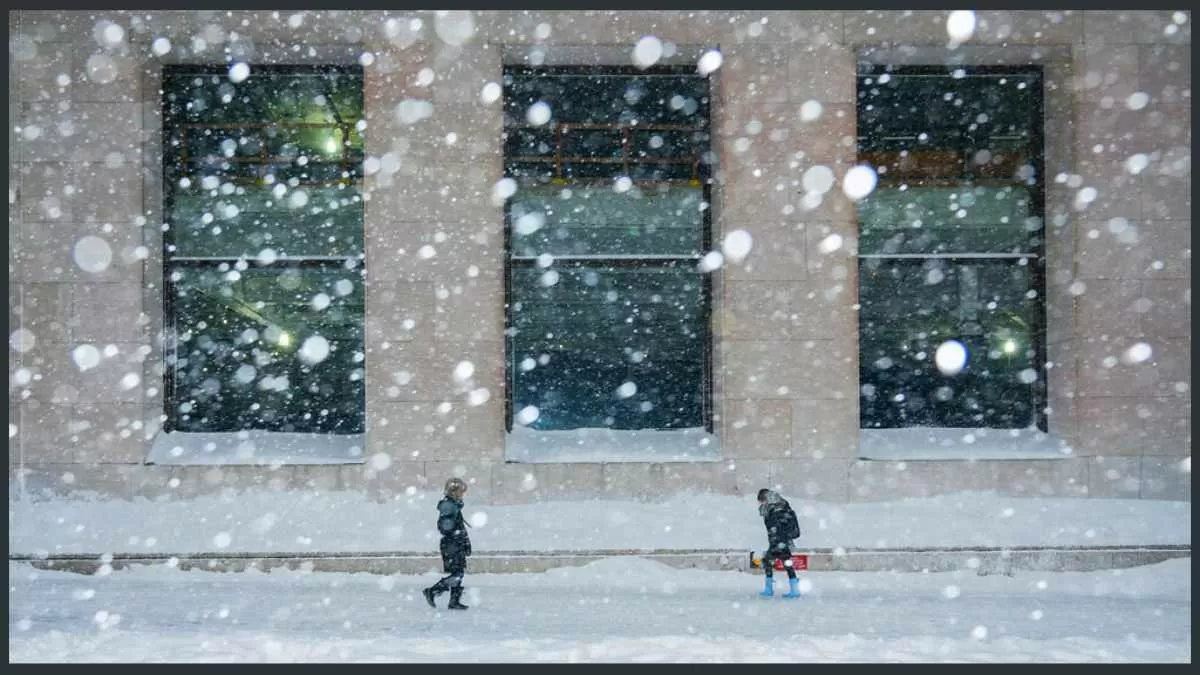
The majority of the central and eastern United States and Canada were battered by a huge winter storm that produced a rare weather phenomenon, a bomb cyclone. The icy cyclone has impacted millions of people along its path and dumped heavy snow, powerful winds, and dangerous wind chill levels.
According to the local media, at least 38 people in the US and Canada have perished because of this bomb cyclone. 34 of the 38 victims were registered across the US, with Buffalo and New York accounting for the majority. Additionally, Vermont, Ohio, Missouri, Wisconsin, Kansas, and Colorado all recorded storm-related fatalities.
The other four victims died when a bus overturned on an ice road close to Merritt, which is located in British Columbia's westernmost province.
SEICHE and winds gusting over 70 mph chasing tree damage at Buffalo Naval Park. The Sullivans are floating and debris barriers are holding the debris. Dangerous #blizzard conditions have arrived now with plume @NWSBUFFALO @accuweather pic.twitter.com/lGFw5QFajn
— Reed Timmer, PhD (@ReedTimmerAccu) December 23, 2022
What is a bomb cyclone?
SEICHE and winds gusting over 70 mph chasing tree damage at Buffalo Naval Park. The Sullivans are floating and debris barriers are holding the debris. Dangerous #blizzard conditions have arrived now with plume @NWSBUFFALO @accuweather pic.twitter.com/lGFw5QFajn
— Reed Timmer, PhD (@ReedTimmerAccu) December 23, 2022
Storms form when low-pressure masses collide with high-pressure masses. As the two masses collide, they begin rotating around each other, generating strong winds. A bomb cyclone is a powerful low-pressure system that is created when a powerful low-pressure system intensifies quickly, causing the atmospheric pressure to drop rapidly by at least 24 millibars in 24 hours.
A millibar is the unit of measurement for air pressure. According to the National Oceanic and Atmospheric Administration (NOAA), a decrease in millibars means lower air pressure, which is an indication that the storm is intensifying.
A bomb cyclone is also known as bombogenesis or explosive cyclogenesis, and it occurs when a storm intensifies quickly over a short period of time.
According to the BBC, over 2 million people in the US and Canada have lost power, and thousands of flights have been canceled.
Following the bomb cyclone, the US is experiencing record-breaking freezing temperatures as Arctic air blasts through large portions of the nation. According to the weather reports and analyses, this winter is the coldest one the country has experienced in over 40 years. The temperatures in the US state of Montana have dipped as low as -45 degrees celsius.
Related | What Is The Difference Between A Cyclone, Hurricane, And Typhoon?
It is so cold that even boiling water freezes in a matter of seconds.
There weren't enough clouds on this snowy day in Missoula, Montana, so the National Weather Service decided to make their own by throwing water into the frigid air as temperatures dropped to -17 degrees Fahrenheit. https://t.co/U6xnVXqK4D pic.twitter.com/6boF0IJ1zy
— CBS News (@CBSNews) December 22, 2022
The drop in temperature is predicted to become life-threatening in the upcoming week. There is a greater chance of hypothermia (a medical emergency where the body loses heat much faster than it produces it) and frostbite (when the skin and the underlying tissues freeze), which develop significantly more quickly under these circumstances.
People who have asthma are also very vulnerable because when it is extremely cold outside, the body loses fluids more quickly since the dry air sucks moisture from the body.
Americans and Canadians are advised to stay inside their homes and take precautionary measures to stay safe during this unexpected cyclone.
Also Read | The Difference Between Weather And Climate
Reminder: A #BombCyclone occurs when excess heat from other areas of the planet pushes on the artic cap forcing that cold air to be displaced somewhere else.
— Mike Hudema (@MikeHudema) December 23, 2022
Unmitigated global warming will make them more likely and intense.#ActOnClimate #climate pic.twitter.com/6TgGjC8W6J

I hold a degree in Public Relations and Media, and my experience has been cultivated through immersive internships, allowing me to refine my communication strategies and engage effectively with diverse audiences. This practical exposure has honed my ability to tailor content for captivating storytelling. Proficient in English, I bring a meticulous approach to crafting impactful narratives that resonate with readers. At Josh, I cover the General Knowledge (GK) section, where I write on a diverse range of beats, ranging from science and sports to economics. In content creation, I try to do my best at offering new viewpoints in every project. Whether its explaining complex scientific ideas, examining sports trends, or exploring economic details, my primary gal is to inform, inspire, and engage readers. The challenges of content creation drive me to continually push my boundaries. Each new project is an opportunity to explore uncharted territories and refine my craft. This dedication to growth keeps me attuned to the latest industry trends and best practices, ensuring that my work remains relevant and impactful. In a world that values effective communication, I am committed to contributing my expertise. With a solid educational background, practical experience, and a passion for creating engaging and informative content, I am excited to embrace new opportunities that allow me to make meaningful contributions to the world of knowledge-sharing.