History and Significance of Dhanteras in Hindu Culture
Dhanteras, or Dhanatrayodashi, marks the onset of Diwali and emphasizes wealth, health, and family unity. Rooted in Hindu mythology, it celebrates Goddess Lakshmi and Lord Dhanvantari, with practices like Lakshmi puja, home cleaning, and purchasing valuable items to attract prosperity and well-being for the upcoming year.
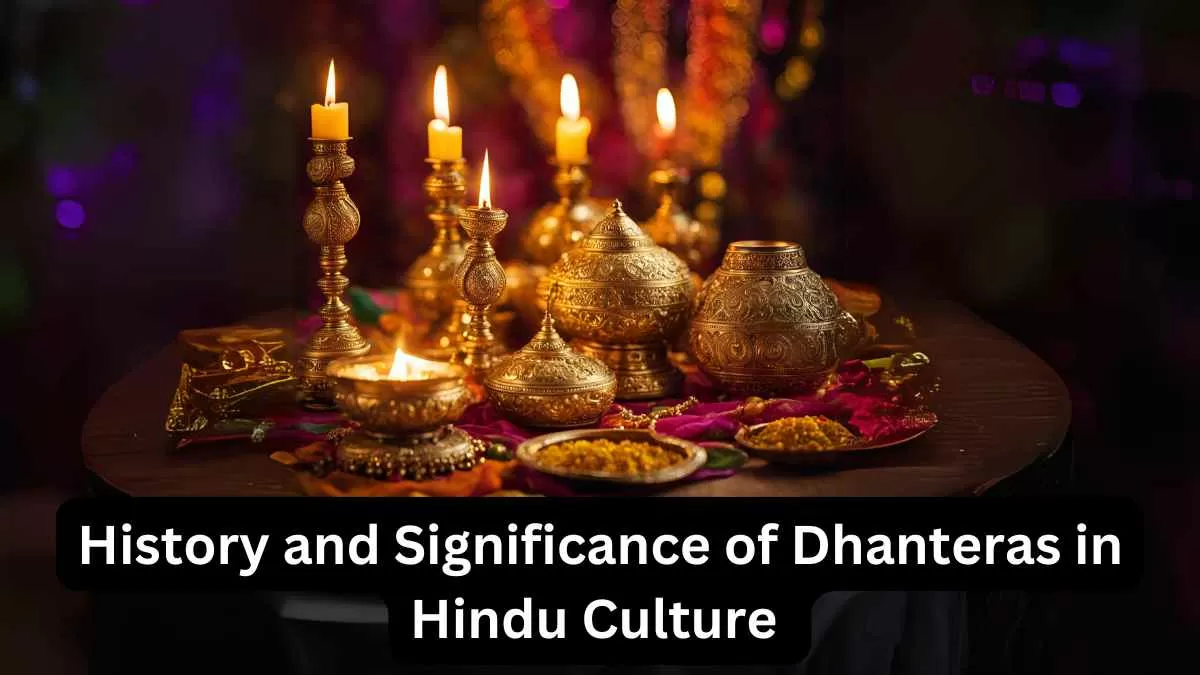
Dhanteras, also known as Dhantrayodashi, is one of the most important festivals in Hinduism. It marks the beginning of the five-day Diwali celebrations and is observed with great enthusiasm across India. In 2026, Dhanteras falls on Friday, 6 November.
The festival is celebrated on the thirteenth lunar day (Trayodashi Tithi) of Krishna Paksha in the Hindu month of Kartik. The word 'Dhanteras' comes from two Sanskrit words: 'Dhan', meaning wealth, and 'Teras', meaning the thirteenth day.
Dhanteras is associated with wealth, prosperity, good health and happiness. On this day, devotees worship Goddess Lakshmi, Lord Kubera and Lord Dhanvantari. People also purchase gold, silver, jewellery, utensils and other household items, as these purchases are traditionally considered auspicious.
Also Read: What to Buy on Dhanteras? Discover 5 Auspicious Items to Bring Home
Dhanteras 2026: Date and Significance
Dhanteras 2026 will be celebrated on Friday, 6 November. It is also known as Dhantrayodashi and Dhanvantari Trayodashi.
The festival holds special importance because it celebrates both material prosperity and good health. While Goddess Lakshmi is worshipped for wealth and prosperity, Lord Dhanvantari is remembered as the divine physician associated with Ayurveda and healing.
According to the Hindu Panchang, Trayodashi Tithi begins at 10:30 AM on 6 November and ends at 10:47 AM on 7 November 2026. The exact puja timings vary according to the location.
Historical and Mythological Background
Dhanteras has deep roots in Hindu mythology. One of the most popular stories associated with the festival is connected with Samudra Manthan, or the churning of the ocean.
According to Hindu mythology, the gods and demons joined together to churn the ocean to obtain Amrit, the divine nectar of immortality. During this cosmic event, several divine beings and valuable objects emerged from the ocean.
Goddess Lakshmi appeared during Samudra Manthan and became associated with wealth, fortune and prosperity. Lord Dhanvantari also emerged from the ocean carrying a pot of Amrit. He is regarded as the god of Ayurveda and medicine.
Lord Kubera, the deity associated with wealth and treasures, is also worshipped by many devotees on Dhanteras. Together, these divine associations make the festival a celebration of wealth, health and well-being.
Also Read: ChatGPT Dhanteras AI Image Prompts 2026: 20 Best Prompts to Create Stunning Festive Images
The Story of King Hima's Son
Another popular legend associated with Dhanteras revolves around the son of King Hima.
According to the story, the prince was destined to die from a snakebite on the fourth day after his marriage. When his wife learned about the prediction, she decided to protect her husband.
On the predicted night, she collected gold and silver ornaments and coins and placed them near the entrance of their room. She also lit numerous oil lamps and kept the room brightly illuminated. To keep herself awake, she sang songs and narrated stories throughout the night.
When Yama, the god of death, arrived in the form of a serpent, the brightness of the lamps and the shining ornaments blinded him. He could not enter the room and take the prince's life.
The prince survived, and the story became associated with the tradition of lighting lamps on Dhanteras. It highlights the themes of love, courage, intelligence and devotion.
Cultural Relevance
Dhanteras is a day where, apart from worship activities, other cultural activities are also partaken:
Worship Ceremonies: This is the evening when, according to tradition, families start doing Lakshmi Puja where they light diyas to invite Goddess Lakshmi into the homes. The puja requires the following offerings; sweets and flowers.
Auspicious Purchases: The buying of new articles, especially gold or silver jewellery and utensils, is considered very auspicious on Dhanteras. This act is believed to bring prosperity into homes.
Home Decoration: Homes are thoroughly cleaned and decorated with colourful rangoli designs to make the atmosphere welcoming for divine blessings. Lighting diyas symbolizes the victory of light over darkness.
Celebratory Practices
There are several traditional practices in the celebration of Dhanteras:
Cleaning and Decorations of Home: A day before, families clean up their houses to prevent the evil spirit. The entrance is decorated with rangoli in bright colours.
Illuminating Diyas: Lighting Diyas represents hope. They light up the wick all night as a prayer to the goddess of wealth, Lakshmi and the god of death, Yama.
Family Gathering: All the family members gather during Dhanteras and share gifts, and food, and pray together to attain good luck.
Dhanteras is a highly significant festival in Hindu culture as it relates to wishes for wealth, health, and well-being. This festival not only marks the start of Diwali but also strengthens the bond between the family due to common rituals and festivals.
The worship of the deities that are considered to be connected with prosperity and health will call for those blessings that would echo all through their lives. So, the cultural practices as well as mythological stories make Dhanteras a very meaningful festival in the Hindu tradition.
Prabhat Mishra is a Subject Matter Expert and digital journalist with an extensive background in the competitive exam landscape and over 4 years of experience in education, national and international news, and current affairs. Over his tenure with top knowledge platforms like Mentorship India, IAS BABA, IAS SARTHI, and now Jagran Josh, he has a deep understanding of government exams like UPSC and State PCS, including UP and Bihar, as he has already qualified for the UPPCS 2022 Mains and Bihar 68th Mains. With his core expertise in history, polity, geography & current affairs, he specialises in creating well-researched, aspirant-centric content and simplifying complex topics for competitive examinations.