India’s UN Security Council Bid Gets ‘Historic’ Backing: Why is it Seeking a Permanent Seat Since 30 years? Check Countries That Are Supporting It
The UNSC presently has 15 members: five permanent members — the United States, Russia, China, France and the United Kingdom — and 10 non-permanent members elected for two-year terms. The permanent five or the P5, have veto power over several resolutions.
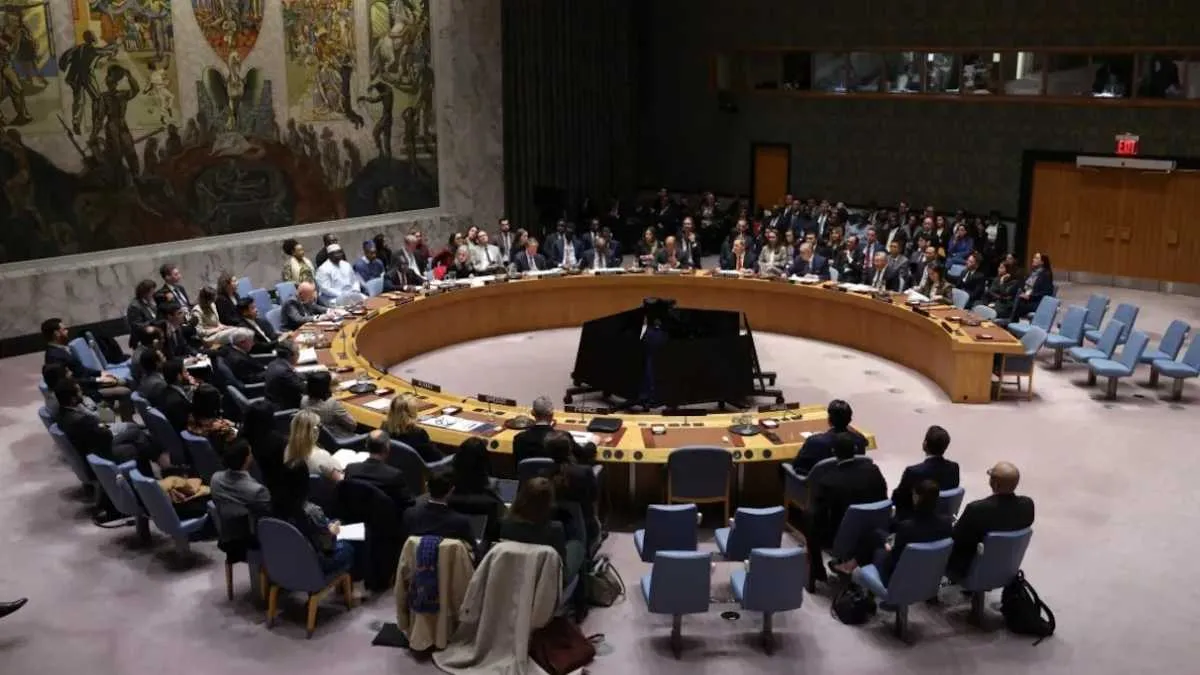
India’s bid for a permanent seat on the United Nations Security Council (UNSC) has received diplomatic backing, with Hungary, Poland, Slovakia and the Czech Republic supporting India’s candidature at the Visegrad Group (V4)-India foreign ministers’ meeting on September 22 in New York. The development comes as India sustaining its campaign for Security Council reform and a higher role for the Global South.
The group agreed to deepen cooperation in political, economic, technological, and defence and people-to-people ties, on the margins of the 81st session of the UN General Assembly.
“It was, in a sense, a new historic occasion,” Jaishankar said after the meeting.
What is India seeking?
The UNSC presently has 15 members: five permanent members — the United States, Russia, China, France and the United Kingdom — and 10 non-permanent members elected for two-year terms. The permanent five or the P5, have veto power over several resolutions.
India has served eight times as a non-permanent member, most recently in 2021-22. Now, India is seeking permanent membership, arguing that the Council’s structure, established in 1945, does not proportionately represent current geopolitical issues or developing countries’ representation.
Why does India want a permanent seat?
A permanent seat would offer India continuous representation on the Council rather than needing periodic elections. It would also facilitate a long-term role in decisions concerning international peace and security, including sanctions, conflicts and global security issues.
India has linked its demand to broader reform of the UN system and more representation for Asia, Africa and Latin America. It is also part of the G4 grouping with Brazil, Germany and Japan, which is also demanding for extension of the Council in both permanent and non-permanent categories. Turkiye, too has urged for the abolition of veto power.
Which countries support India’s UNSC seat efforts?
France, Russia, the United Kingdom and the United States have backed India’s permanent membership in various official statements. The freshsupport from the four V4 countries adds to India’s diplomatic push.
However, support for India’s candidature does not naturally mean agreement on the structure of an expanded Council. Unresolved contested concerns pile up over the number of new seats, regional representation, veto rights and the claims of other countries.
What is China’s stance?
China remains crucial because it is one of the five existing permanent members and has a decisive role in any UN Charter amendment. Previously, China has supported India and Brazil playing a greater role in the United Nations, including the Security Council, but has not replicated the same agreement openly for India’s permanent seat bid as France, Russia, the UK and US.
Russia Backs India’s UNSC Permanent Seat Bid
Addressing world leaders at the 81st United Nations General Assembly, Russian Foreign Minister Sergey Lavrov said any reform of the UN Security Council must preserve the Council’s existing powers, including those of its permanent members. Moscow also opposed any reform that would result in additional permanent seats being given to Western countries.
Lavrov called for a more inclusive and geographically balanced global architecture, while strongly supporting greater representation for countries from the Global South. He said Russia favoured expanding the representation of Asia, Africa and Latin America in the Security Council.
“We are in favour of broadening the representation of Asia, Africa, and Latin America. We support Brazil's and India's candidatures for a permanent seat,” Lavrov said.
He also stressed the need to address the interests of the African continent as part of any future reform process.
Russia’s support adds to growing backing for India’s long-standing campaign for permanent membership of the UN Security Council. Several countries voiced support for New Delhi’s candidature during the 81st UNGA session, while also calling for reforms to make the Council more representative of contemporary geopolitical and economic realities.
Mauritius was among the countries supporting India’s bid. Foreign Minister Dhananjay Ramful said Mauritius supported the positions of the G4 and L69 groups on Security Council reform and reiterated its backing for India’s candidature for a permanent seat, citing the country’s constructive role in global affairs.
India has also received support through the G4 grouping, which includes India, Brazil, Germany and Japan. Marshall Islands President Hilda Heine reaffirmed her country’s support for the G4 and said the Marshall Islands backed Japan and its G4 partners in their efforts to secure permanent membership of the Security Council.
Why are challenges to India’s UNSC permanent seat bid?
India cannot simply be voted into a vacant permanent seat because no such seat exists under the present UN Charter. Establish more permanent seats necessitates Charter reform.
Under Article 108, an amendment must be adopted by a two-thirds majority of the UN General Assembly and ratified by two-thirds of UN members, including all five permanent UNSC members.
The future of Security Council
India is prepping for a ninth elected term on the Security Council for 2028-29, with elections slated for June 2027. Its permanent-seat campaign dwells on broader and inclusive negotiations over the Council’s future structure and long-term reforms.

At Jagran Josh, she specialises in writing explainers and analytical stories on international news and current affairs. Over the years, she has developed strong expertise in leveraging digital and multimedia tools, along with SEO best practices, to enhance the speed, reach, and impact of her stories.