Clearest Signs of Life on Mars: Read What NASA says!
NASA released a report on September 10 on clearest signs of Life on Mars. Perseverance rover discovered potential biosignatures on Mars. This is the clearest sign of Life on Mars yet of ancient microbial life. Read about the signs, perseverance rover and next steps in Mars exploration here!
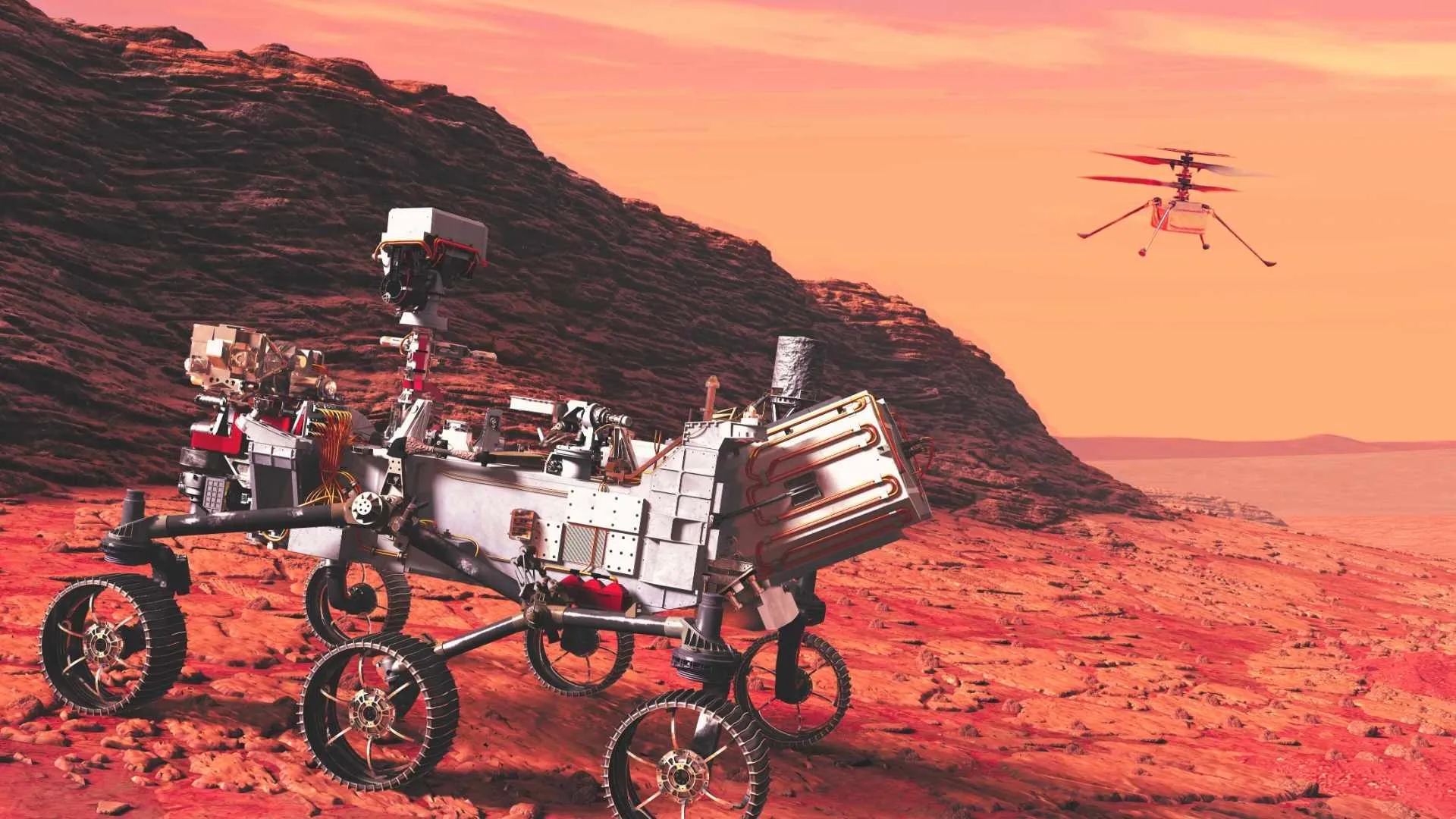
Life on Mars: Mars is the fourth planet from the Sun and has long fascinated scientists as a possible home for ancient life. According to NASA’s September 10, 2025 Report, clear signs of Life on Mars have been discovered. NASA’s Perseverance rover landed on Mars in 2021. It has been exploring Jezero Crater since 2021, and made a groundbreaking discovery in July 2024.
Mars rover collected a rock sample called “Sapphire Canyon” from a rock named “Cheyava Falls”, featuring unique leopard-like spots that may be signs of ancient microbial life. These sedimentary rocks date back over 3 billion years when Mars had rivers and lakes capable of supporting life. Formation of these rocks composed of clay and silt which are preservers of past microbial life on Earth. Read about the signs of life on Mars, perseverance rover and next steps in Mars exploration.
What Are the Clearest Signs of Life on Mars?
NASA's Perseverance rover discovered intriguing leopard-patterned spots on a rock sample named "Sapphire Canyon," collected in July 2024 from Jezero Crater’s ancient riverbed. These spots represent potential biosignatures—chemical and mineral indicators that could signal past microbial life. Scientists emphasize that while these signs don’t confirm life, they are the strongest evidence yet, offering new insight into Mars’ history of water and habitability. Official analysis took over a year and involved international peer review to ensure scientific accuracy.
How Did NASA’s Perseverance Rover Make This Discovery?
The rover drilled into a rock called "Cheyava Falls" to collect the Sapphire Canyon sample. This sedimentary rock is rich in organic carbon, sulfur, iron minerals, and phosphorus—elements that, on Earth, support microbial life. Instruments aboard Perseverance detected chemical signatures suggesting past microbial metabolisms, preserved in clay and silt that once formed from a water-rich environment more than 3 billion years ago.
What Are the Next Steps for Mars Exploration?
To confirm life’s presence, NASA plans to return these rock samples to Earth for detailed study with advanced laboratory equipment. International cooperation on Mars Sample Return missions is critical, setting the stage for future human missions. This landmark discovery underscores NASA’s commitment to exploring life beyond Earth and deepening our knowledge of the Red Planet.
Conclusion
NASA’s finding of potential biosignatures on Mars marks a historic milestone in space exploration. While more research is needed, the discovery guides future Mars missions and suggests microbial life could have existed on the Red Planet, expanding our view of life in the universe.

Alisha Louis is a US content specialist with over 3 years of experience in journalism and storytelling. A graduate with a Bachelor’s degree in Journalism and Mass Communication (BJMC), Alisha has focused her career on covering trending news and major educational developments across the United States. Her sharp eye for detail, combined with a strong journalistic point of view, helps her break down complex American educational topics into accessible, engaging narratives for a global audience. Dedicated to delivering timely and trustworthy reporting, she brings a fresh and insightful perspective to the evolving US academic landscape.


-1791375327804_t.webp)