Types of Language Families Explained!
Know where your Language comes from! Learn about the main types of language families in the world like Indo-European, Sino-Tibetan, Niger-Congo, and more, explained through major linguistic families, with simple examples, key features, and global statistics.
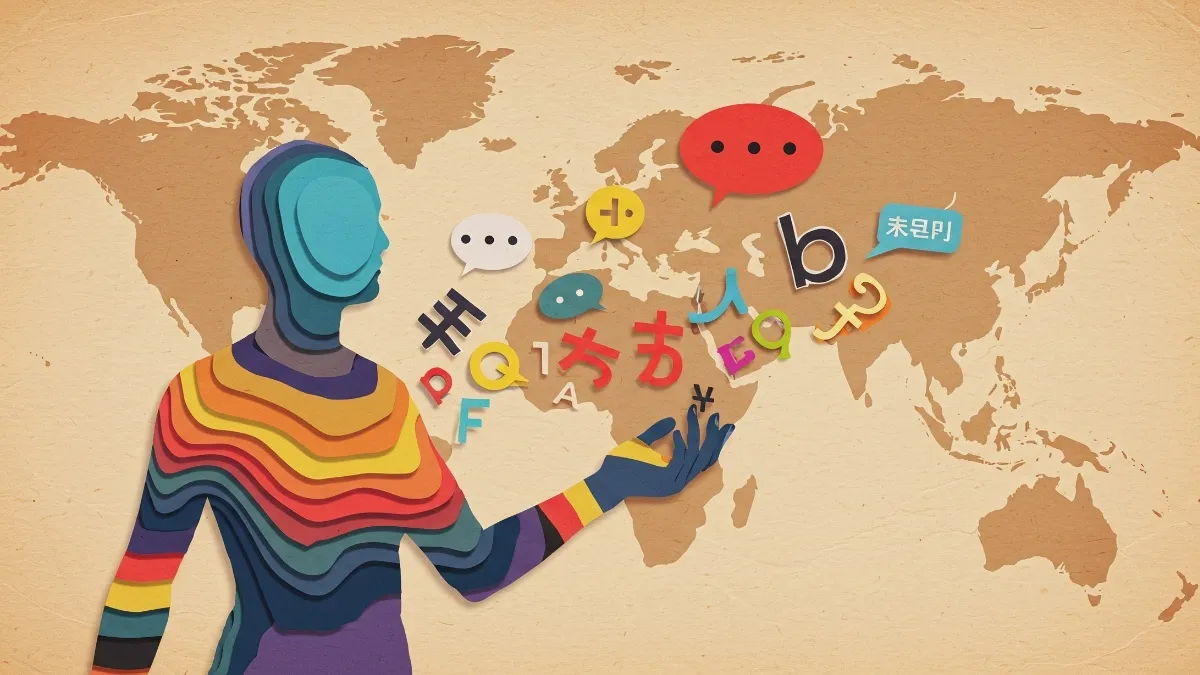
Types of Language Families: Language is the core tool humans use to share ideas, emotions, and culture. Linguists group individual languages into “families” based on shared ancestry, similar to a family tree.
According to the 2024 edition of Ethnologue, there are about 7,164 living languages, and the five largest language families by number of speakers—Indo-European, Sino-Tibetan, Afro-Asiatic, Niger-Congo, and Austronesian—account for almost 83% of the world’s population.
Understanding types of languages through these linguistic families helps students see patterns across continents, recognize how languages are related, and appreciate global diversity. Learn about the main types of language families in the world, explained through major linguistic families, with simple examples, key features, and global statistics.
What are the Types of Language Families?
When asking about “types of languages,” linguists often answer in terms of language families. Language Families are groups of languages that developed from a common ancestor, called a proto-language.
Major language families include:
-
Indo-European
-
Sino-Tibetan
-
Afro-Asiatic
-
Niger-Congo
-
Austronesian
-
Trans–New Guinea
Each family covers many individual languages spread across specific regions, sharing grammar, vocabulary roots, and historical origins.
Read | Quote of the Day by William Shakespeare
Indo-European languages
Indo-European is one of the best-known language families, covering many of the world’s most spoken languages.
-
Indo-European languages stretch from Europe to South Asia and include English, Hindi, Spanish, Portuguese, Russian, Bengali, and many more.
-
This family is divided into branches such as Germanic (English, German), Romance (Spanish, French, Portuguese), Slavic (Russian, Polish), and Indo-Aryan (Hindi, Bengali).
-
These languages all descend from a reconstructed Proto-Indo-European language spoken thousands of years ago, identified through shared sound patterns and core vocabulary.
Because many global trade, science, and education languages are Indo-European, this family has outsized influence worldwide.
Sino-Tibetan languages
Sino-Tibetan is another huge family, especially significant in East and Southeast Asia.
-
The family includes Chinese varieties (such as Mandarin) and many Tibeto-Burman languages like Burmese.
-
Mandarin Chinese alone has over 900 million native speakers, making it the single most spoken first language in the world.
-
Sino-Tibetan languages are known for tonal systems in many members (like Mandarin) and complex writing traditions in Chinese.
These languages dominate population centers in China and neighboring regions, contributing heavily to global communication and trade.
Afro-Asiatic languages
Afro-Asiatic languages are spoken across large parts of North Africa and the Middle East.
-
The family includes Arabic, Hebrew, Amharic (Ethiopia), and Hausa (West Africa).
-
Many Afro-Asiatic languages have long written histories and are tied to major religious traditions, including Islam, Judaism, and Christianity.
-
Shared features include certain consonant patterns and root systems, especially in Semitic languages like Arabic and Hebrew.
Afro-Asiatic languages play central roles in religion, diplomacy, and regional identity.
Niger-Congo languages
Niger-Congo is the largest language family by number of individual languages.
-
With over 1,500 living languages, Niger-Congo covers much of sub-Saharan Africa.
-
The Bantu subgroup includes widely spoken languages such as Swahili, Zulu, and Shona.
-
Many Niger-Congo languages use noun class systems (similar to grammatical gender but often more numerous) and rich verb morphology.
This family reflects the immense linguistic diversity of Africa, where many communities are multilingual.
Austronesian languages
Austronesian languages spread over a vast area from Madagascar across the Indian Ocean to the Pacific islands.
-
The family includes Malay/Indonesian, Tagalog/Filipino, Javanese, and many Polynesian languages such as Hawaiian and Māori.
-
Austronesian languages show how ancient sea travel led to related languages appearing on distant islands.
-
They often share similar sound systems and word roots despite geographic distance.
This family demonstrates how migration and navigation shaped language spread across oceans.
Trans–New Guinea languages
Trans–New Guinea languages dominate parts of Papua New Guinea and nearby islands.
-
This family includes hundreds of languages spoken by relatively small communities in mountainous and island regions.
-
It is one of the largest families by language count, though individual languages may have limited speaker populations.
-
Linguists continue to refine classifications here because the region is extremely diverse and sometimes under-documented.
Trans–New Guinea languages highlight how geography and isolation can produce high language diversity.
Check Out | What is the Difference between a Language and a Dialect?
Conclusion
Types of languages can be understood through the lens of language families—groups that share a common ancestor and structural traits. The major families such as Indo-European, Sino-Tibetan, Afro-Asiatic, Niger-Congo, Austronesian, and Trans–New Guinea together account for most of the world’s 7,000+ living languages. Learning these families helps readers see connections between languages they know and millions of speakers worldwide, deepening appreciation for global linguistic diversity.

Alisha Louis is a US content specialist with over 3 years of experience in journalism and storytelling. A graduate with a Bachelor’s degree in Journalism and Mass Communication (BJMC), Alisha has focused her career on covering trending news and major educational developments across the United States. Her sharp eye for detail, combined with a strong journalistic point of view, helps her break down complex American educational topics into accessible, engaging narratives for a global audience. Dedicated to delivering timely and trustworthy reporting, she brings a fresh and insightful perspective to the evolving US academic landscape.


-1790227286672_t.webp)
-1790256670900_t.webp)
![[Link Active] RRB NTPC UG CBT 2 Answer Key 2026 LIVE: Download CEN 07/2025 Response Sheet PDF](https://img.jagranjosh.com/images/2026/September/2492026/RRB-NTPC-UG-CBT-2-Answer-Key-2026.jpg)