What Is an Exoplanet? JWST Discovers Bizarre, Lemon-Shaped World PSR J2322-2650b
Astronomers using the James Webb Space Telescope have identified PSR J2322-2650b, a Jupiter-sized world distorted into a lemon shape by the extreme gravity of its host pulsar . Its unique atmosphere is dominated by carbon and helium, defying standard formation theories and potentially harboring a diamond-rich core.
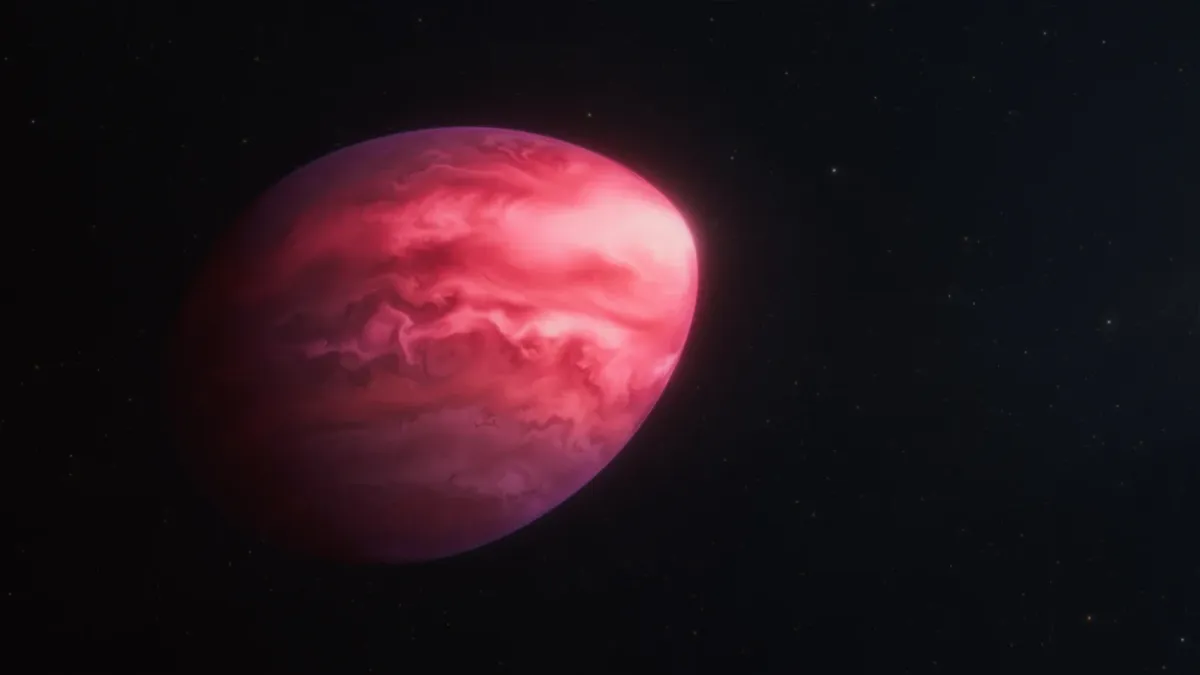
With more than 5,500 confirmed exoplanets; their discovery has completely changed the way astronomers view the universe. The newest discovery made by NASA's James Webb Space Telescope (JWST) shows a unique addition to that list: PSR J2322-2650b – a planet the size of Jupiter and shaped like a lemon or rugby ball due to massive tidal forces caused by the pulsar star it is orbiting (roughly 2,000 light years away). The extreme shape of PSR J2322-2650b challenges existing models of planetary formation with its elongated carbon-rich atmosphere.
What Is an Exoplanet?
An exoplanet (i.e., extrasolar planet) is any planet that is not located within our solar system but orbits a star other than the Sun. Exoplanets come in many varieties, including rocky "super-Earths" and extremely hot gas giants, which have been detected through methods such as:
| Detection Method | How It Works |
| Transit | Starlight dims as planet passes in front. |
| Radial Velocity | Star "wobbles" from planet's gravity. |
| Direct Imaging | Planet's light captured (rare for small worlds). |
| Microlensing | Planet bends starlight gravitationally. |
JWST excels at studying exoplanet atmospheres through spectroscopy, revealing compositions like the carbon-heavy air of PSR J2322-2650b.
The Lemon-Shaped Exoplanet: PSR J2322-2650b
Discovered in a "black widow" binary system (pulsar devouring companion), PSR J2322-2650b orbits a rapidly spinning neutron star (pulsar) remnant of a supernova. Key facts:
| Feature | Details |
| Location | ~2,000 light-years away |
| Size/Mass | Jupiter-sized (~1 Jupiter mass) |
| Orbit | Every 7.8 hours, just 1 million miles from pulsar |
| Shape | Lemon/football/ellipsoid due to tidal deformation |
| Atmosphere | Helium + carbon (C2, C3 molecules); possible diamond core from carbon crystallization |
| Temperatures | Dayside: 3,700°F (2,040°C); Nightside: 1,200°F (650°C) |
| Discovery | JWST spectroscopy; first such deformed planet confirmed |
It is the most distorted exoplanet to date because of its elongated shape due to the gravity of the pulsar we proposed it orbits.
The proximity of the pulsar creates such large gravitational tidal forces that the planet gets stretched out into a rugby ball shape due to the planet's orbit.
Why Is It Lemon-Shaped?
The planet is tidally locked meaning one side of the planet is always facing the pulsar (the "hot" side) and the opposite side is constantly facing away from the pulsar (the "cool" side).
The atmosphere on this exoplanet is unique, containing a mixture of carbon and helium, unlike anything we have seen through our theoretical models. There is no water on this exoplanet, no methane, nor CO2. Scientists theorize that the way carbon forms crystals deep within the planet due to the weight of the overlying rock with the helium-carbon clouds floating above leads to the lack of water.
Scientific Mystery and Implications
This discovery is a scientific mystery, raising many questions about how this planet formed. Currently, there is no known process to produce a planet made up mainly of carbon. Theories have been proposed that include being the remnants of a stripped star, but nuclear processes cannot produce pure carbon. Another theory suggests these exotic crystalline-forming processes separate the carbon and helium into two different atmospheric layers.
As Team member Peter Gao stated, "What the heck is this?" There is speculation that the discovery may lead to a new class of planets that blur the line between stars and planets. This will expand our scientific knowledge of extreme exoplanets that exist in pulsar systems that were previously thought of as too unstable to support a stable planet.

Kirti Sharma is a journalist in the education domain with three and a half years of experience creating high-quality content for the education technology (EdTech) and digital media industries. She has an expertise in covering education news. Kirti has experience in writing data backed informational pieces on General knowledge.
Kirti holds a Bachelor of Arts degree, which helped build her strong foundation in writing and research. Over the course of her career, she has brought her skills to a variety of well-known companies, including ThoughtPartners Global, Infinite Group, and MIM-Essay. Through these roles, she has learned how to take complex information and turn it into engaging, easy-to-understand content for readers online.