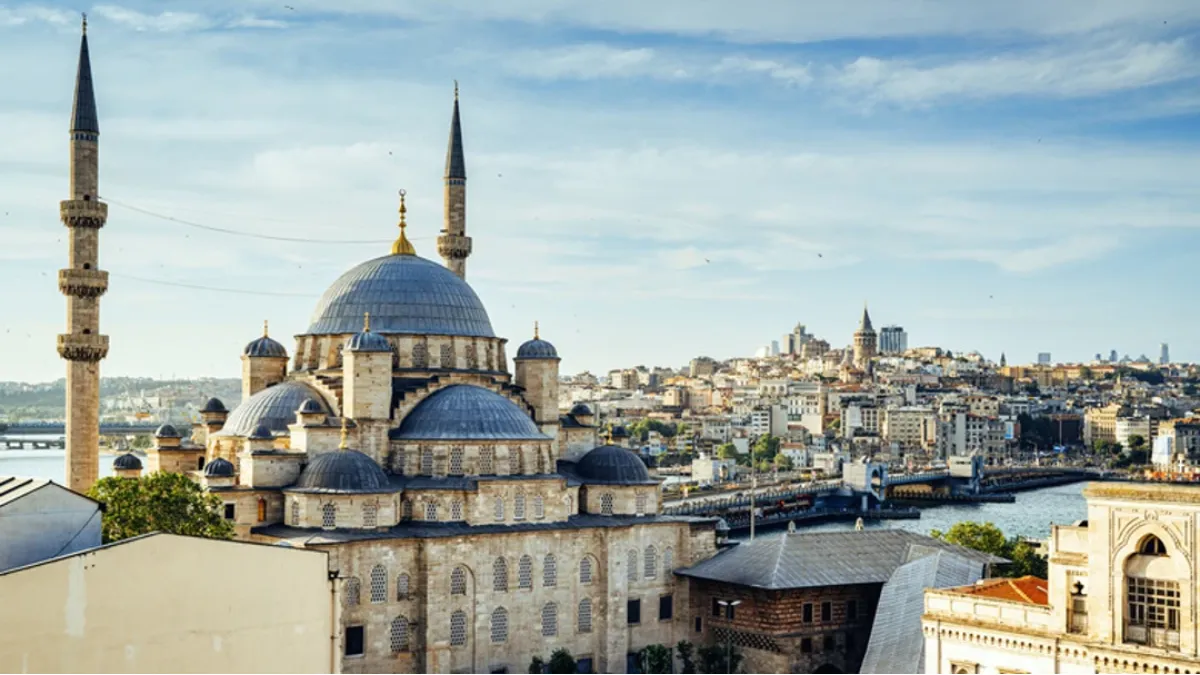
Originally, the phrase "Sick Man of Europe" referred to the Ottoman Empire, whose core territory is modern‑day Turkey, during its long period of political, military, and economic decline throughout much of the 19th and early 20th centuries.
What does "Sick Man of Europe" mean?
The term "Sick Man of Europe" is used for a European power suffering from deep internal weakness-such as poor leadership, economic crisis, territorial losses, and political instability-while still formally recognized as a major state. This is a metaphor: the state is a once-strong body that is weakened by long-term "illness," vulnerable to pressure and interference from other powers.
Which country was referred to as the Sick Man of Europe?
Historically, the Ottoman Empire, centered on present‑day Turkey, was referred to as the "Sick Man of Europe" in the 19th century. The phrase is widely credited as having first been used to describe the Ottomans by Russian Tsar Nicholas I, reflecting how European leaders saw an empire in decay, nearing collapse. The Ottoman state ended after World War I, but the phrase is sometimes loosely applied to modern Turkey in discussions on economic or political troubles.
Why was the Ottoman Empire called the Sick Man of Europe?
Several long‑term factors contributed to this label:
-
Political and administrative decline: The empire did not continue functioning well in the 16th century, during the reign of Suleyman the Magnificent, because of corruption, court intrigue, and weak sultans.
-
Military defeats and territorial losses: The Ottoman army, being weaker compared with the technological and tactical developments in Europe, had failed in some important wars and thus had lost territories like those in the Balkans.
-
Economic crisis and debt: Huge foreign debts, poor tax collection, and a growing reliance on European finance and trade made the empire increasingly vulnerable.
These weaknesses only encouraged the European powers to look at the empire as a failing state, ripe for intervention and partition.
European powers and the “Eastern Question”
Rival European states, especially Britain, France, Russia, and later AustriaHungary, competed to shape the fate of the weakening Ottoman Empire. This became known as the "Eastern Question"-the diplomatic struggle over how best to divide or otherwise control Ottoman territories. The term "question" was meant to echo fears of a sudden collapse that could destabilize Europe, trigger wars, and upend the balance of power, especially in strategic regions of the Balkans and the eastern Mediterranean.
Overview of the Ottoman Empire
-
Origins: Founded in the late 13th century by Osman I in Anatolia (modern‑day Turkey).
-
Extent: At its height, it ruled parts of southeastern Europe, Western Asia, and North Africa, controlling major routes and cities like Constantinople, now Istanbul, Cairo, and large areas of the Balkans.
-
Fall: Having declined for centuries, in World War I the empire sided with the Central Powers, succumbed to defeat, and was dismantled, thereby paving the way for the establishment of the modern Republic of Turkey by Mustafa Kemal Atatürk in 1923.
Today, is Turkey still referred to as the Sick Man of Europe?
Formally, no; some commentators periodically revive the phrase when referring to economic crises or political instability in modern Turkey. However, this would be more rhetoric than a historical reference.
Were there any other countries ever called “Sick Man of Europe”?
In later periods, journalists and analysts have used similar language for different European states facing crisis-for example, in economic commentary-but the classic original reference is to the Ottoman Empire.




Comments
All Comments (0)
Join the conversation